

How Bartenders Really Feel About Mocktails
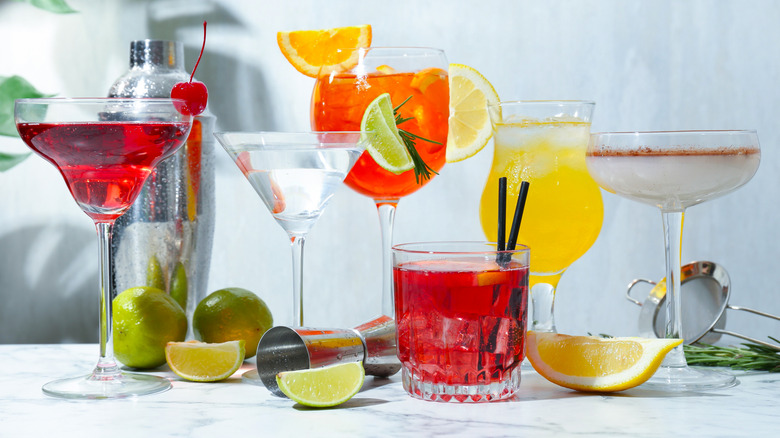
Beverage terms like "mocktails" have been around for a while, reportedly dating back as far as Prohibition years or earlier. However, the trend has picked up steam in recent years, inspiring movements such as "sober curious," along with a dedicated Dry January month. A 2021 Omnibus survey by NielsenIQ even found that 22% of consumers overall were drinking less alcohol for various reasons. All this begs the question of how the growing trend translates into social bar and restaurant scenarios, particularly when mocktails are specifically designed to mimic alcohol-based cocktails.
To get an inside look at this, Tasting Table reached out to an expert, Cody Nicoll, a sommelier and mixologist who is a managing partner of Ember Live Fire Grill and co-owner of Bar Ocelli, and the owner of Hospitable Nicoll. When asked how he really feels, as a bartender, about mocktails, Nicoll said, "Hear me out: the word 'mocktail' implies the drink is nonalcoholic, yet it also insinuates that it's a 'fake' cocktail. In today's cocktail industry, producers and bartenders are putting just as much care into their nonalcoholic products and cocktails, and there is nothing fake about them."
Noting that he is not the only bartender who feels this way, Nicoll noted that he personally supports an industry trend advocating against using the term "mocktail." Beyond the inherent misunderstanding behind this title, Nicoll points out that there's an element of inclusivity that comes with eliminating the word.
Bartenders are excited about integrating nonalcoholic drinks
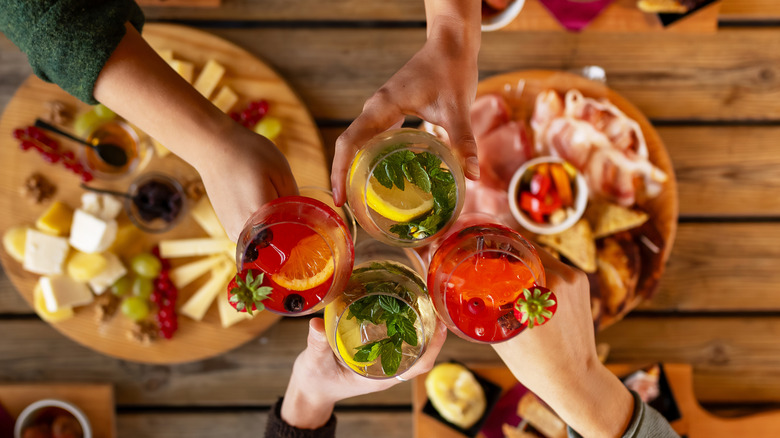
When joining friends and family for happy hours, cocktails, brews, or shots, it can feel isolating or awkward if you prefer imbibing with buzz-less beverages. Cody Nicoll agrees, pointing out that "eliminating the word 'mocktail' creates a more inclusive environment for non-drinkers," while noting the vastly more comprehensive drink menus available today.
"Gone are the days of limited beverage options for guests who don't drink alcohol, and don't want to be limited to juice or pop," he said, noting a level of excitement for bartenders embracing the nonalcoholic cocktail movement. "It provides a new level of inclusivity for the guest in cocktail bars and restaurants, and provides a new challenge for bartenders to rethink use of ingredients in the glass."
Nicoll confirmed that this segment of the beverage industry is continually growing, with new nonalcoholic spirit brands and accompanying ingredients being unveiled on a weekly basis. In essence, this expert fully embraced the concept — just don't call them "mocktails," please.