

Why Haribo Gummies Are So Hard
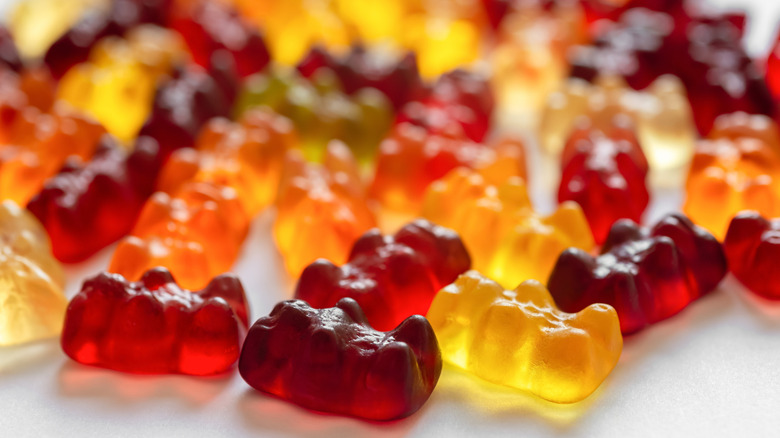
Everybody has an opinion about candy. Whether you reckon dark or milk chocolate is superior, or think Turkish delight is heavenly or despicable, it's all a matter of personal opinion. When it comes to gummies, texture preference is as influential as any other factor. Haribo is one of the world's most popular gummy producers, available in over 100 countries. Its Goldbears gummies were the first of its kind, originally called "Dancing Bears," (well, technically, "Tanzbären" in German), and inspired by a now-outdated circus attraction.
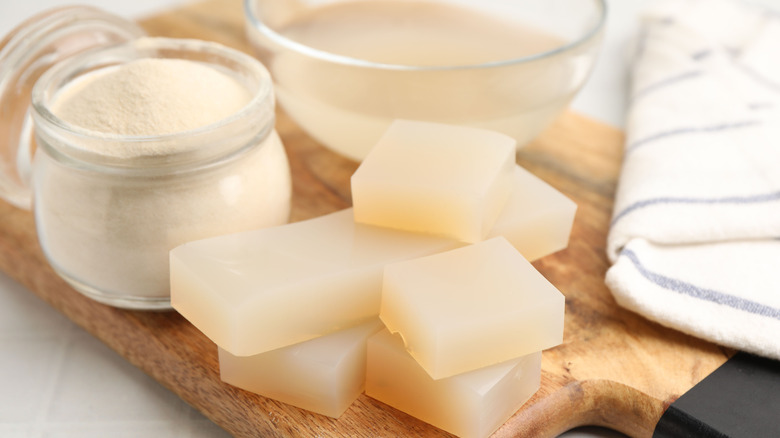
Using animal-based gelatin as the gelling agent was not a new practice in 1922 when Hans Riegel unveiled his confectionery dancing bears, but it has remained the sole gelling agent (apart from two varieties available in Australia) in Haribo gummies to this day. Using gelatin over other gelling agents, such as pectin or starch, is what gives its gummies their harder, more elastic texture.
Gelatin's strength and resistance is due to its chemical components. Derived from animal collagen, gelatin is comprised of a triple-helix structure of protein strands which, along with the application of heat in the production process, are unraveled and reconstituted into the candy's chosen shape. When the liquid gelatin cools, these protein strands attempt to return to their original shape, and in the process, lock the other ingredients and additives inside a soft-yet-firm form. Haribo uses primarily pork skin-derived gelatin, although halal versions are also produced from beef collagen.
Other gummies may use pectin or starch
The first two letters of Hans Riegel put the "HA" and the "RI" in Haribo, while the "BO" comes from his hometown of Bonn. This brand is now synonymous with gummy candy, and Haribo's practice of using only gelatin has stayed a trademark of the company's candy products. This differs from other gummies in the market, which may use starch or pectin instead of gelatin for different textures. Both are polysaccharides, which are complex carbohydrates in the form of sugar chains.
Pectin is slightly firmer, with less "bounce back," and is less stretchy than gelatin. The primary difference with pectin from an ingredient standpoint is that it's plant-based, and usually derived from fruits such as apples, lemons, cranberries, grapes, and plums. This is the gelling agent that gives structure to fruit candies and snacks as well as preserves. It's also a popular vegetarian or vegan alternative for those with dietary preferences.
The other common gelling agent that results in textures that are different than those of Haribo gummies is starch. Like pectin, starch is plant-based (its main sources are grains like wheat and rice, as well as corn and potatoes), less rubbery and stretchy than gelatin, and doesn't return to its shape when bent to the same degree as gelatin gummies. This means a chewier bite, but one that's also forgiving on the teeth. It also makes starch a viable vegan or vegetarian option.