

10 Things Restaurant Employees Know That Customers Don't
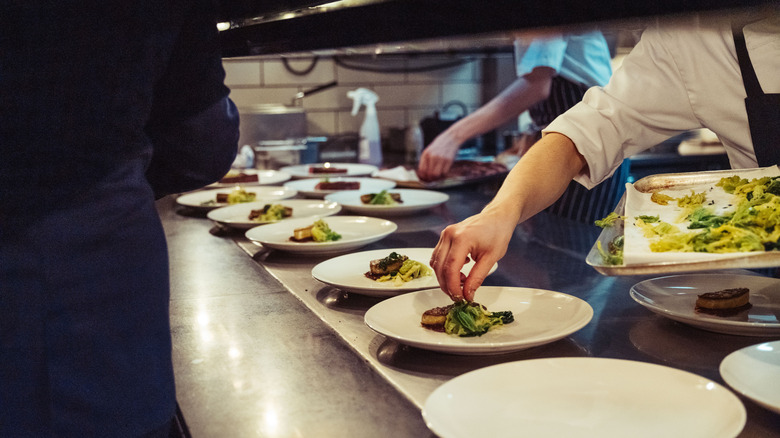
For many people, going out to eat is a full-on experience. Visiting a restaurant isn't just about getting a bite to eat; it's about enjoying the atmosphere, having a drink professionally crafted for you, and not getting stuck with the dishes at the end of the night. But, like the Wizard of Oz, there's a lot that goes on behind the curtain between your order being placed and the food being gracefully presented by a smiling server.
I was a garde-manger chef at various restaurants in the New England area for close to 15 years. I crafted appetizers, salads, and desserts every night, and I've watched the machinery of a professional kitchen moving smoothly (and occasionally not so smoothly) behind swinging doors and out of sight from the general public. There's a lot that goes on in a restaurant you might not be aware of.
No, we won't tamper with your food, but if you're rude, you're probably in for a wait
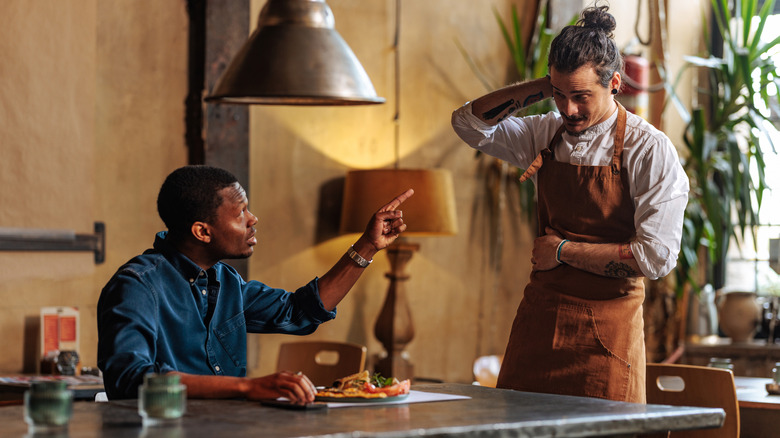
I have never, never in my time behind the line ever seen a cook, chef, or server defile someone's food, no matter how rude the customer. Spitting in food or putting in any foreign objects or bad-tasting chemicals, is beyond the pale for almost all food service professionals. Not only is it disgusting, but it's also actually a crime. No one in any reputable kitchen is going to risk a hefty fine or jail time just for petty revenge.
What probably will happen, though, is that your order will get bumped to the bottom of the priority list. Reddit threads dedicated to servers telling their stories are in pretty unanimous agreement that rude customers spend more time waiting for their meals than polite ones. It's a relatively harmless retaliation for impolite behavior toward restaurant staff. The kitchen, always in protective mode of our front-of-house brethren, might find that their burners are heating up just a bit slower if a server comes back in tears because of an uncouth customer.
If you want prompt service, be kind to your waitstaff. They're here to make your visit to the restaurant enjoyable and relaxing. You don't need to flex your attitude to get stellar service; a smile goes a lot farther than you'd think.
The main reason that restaurant food tastes so good? We salt the heck out of it!
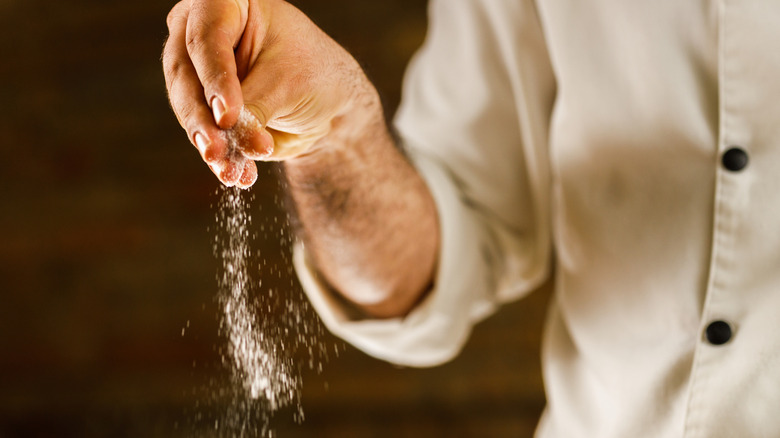
Salt is a chef's secret weapon. In the kitchen, we have massive bowls of salt close to hand, and we toss it about like a New England winter. Everything gets salted: Meat, vegetables, salads, desserts (yes, absolutely desserts). Salt is the easiest, least intrusive method of bringing out a food's natural flavor. Salt, unlike other seasonings, doesn't cover the taste of the food; it elevates it. It's an easy step to overlook in the home kitchen when you're just cooking on your own. Professional chefs salt proteins before they are put to heat and then add a final smattering of larger-flaked "finishing salt" to the final product before it heads to the table.
So why is salt such a boon? One of the reasons it is such a great flavor enhancer is that it displaces water in the food, which leads to higher flavor concentration. Salt also suppresses bitterness, which is why it is such a great complement to salad greens and dark chocolate, which are foods that otherwise might have too much of a bite without the hint of salt.
The real art is learning how not to oversalt the foods. If some is good, lots is better, right? Not so, as oversalting can make food unpalatable, while also giving delicate dishes like salads and fish a gritty mouthfeel.
There's onions in basically everything
One of the first culinary concepts that chefs learn in school is the process of flavor development. No single flavor can stand on its own without layers of additional, complementary flavors. For example, chocolate's flavor is almost always enhanced with background notes of coffee, vanilla, and salt in order to make the richness of the chocolate itself stand out.
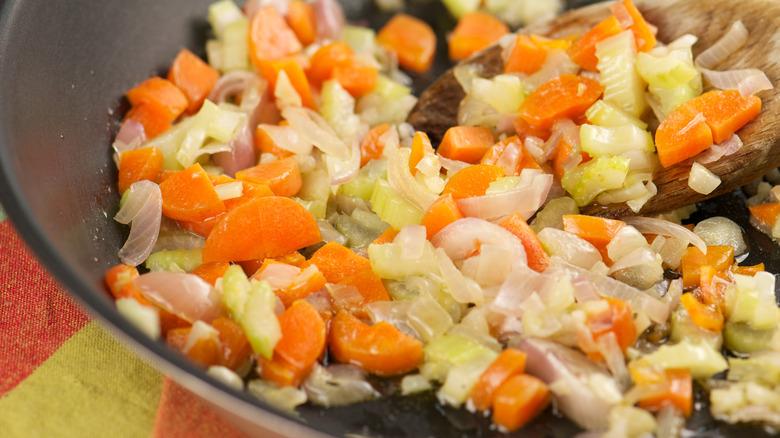
To that end, mirepoix is one of the most elemental ingredients in most Western cooking. Mirepoix is a 1:1:2 ratio of carrots, celery, and onions. The vegetables are chopped, then cooked down, releasing all of their flavors, and then added to stocks, sauce bases, soups, and roasted meats. Most times, the vegetables themselves are often strained out and discarded, leaving just the aroma and flavors they built up behind. Vegetable stocks, chicken stock, bone broth, and all the aromatic liquids that are used in a traditional kitchen all start with the base of mirepoix. Vats of stock are kept on the line to deglaze pans or make sauces thinner.
Depending on the style of cuisine you're preparing, the makeup of the aromatics can vary. Spanish dishes are built on a base of sofrito (onions, garlic, and tomato), Cajun's tentpoles are onions, celery, and bell pepper, and then there's Italy's baseline of battuto, which is onions, celery, carrots, parsley, garlic, and fennel. One thing they all have in common: onions. They bring the flavor, and most dishes would taste flat and lacking without them.
It's actually better that some dishes aren't available year-round
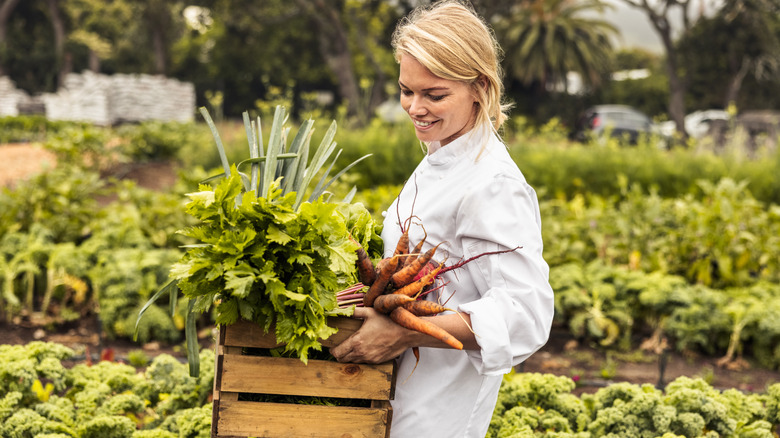
Most kitchens I personally worked in functioned within a farm-to-table ethos. That means that our menus were designed around what foods were fresh and in season. Most produce came from farms within a 50-mile radius, and because I'm located in New England, fish was brought in daily directly from the seaports. Most chefs prefer working with fresh ingredients, as the best flavor comes from foods that are grown and harvested within their natural cycle. Food that is harvested in-season is also more nutritious, as produce can lose nutrients the longer it is stored.
It wasn't uncommon to get complaints that we weren't offering things like strawberry shortcake in February or corn on the cob in April. In this readily available world, it would be easy to order frozen strawberries or import corn year-round. The truth is, it's actually good when restaurants limit their menu to what's fresh and available as opposed to using less flavorful out-of-season produce that would create a lackluster final product. So while you might have a wicked craving for pumpkin bisque in June, you may have to wait a few months until fall.
The kitchen really appreciates when you call ahead with special requests
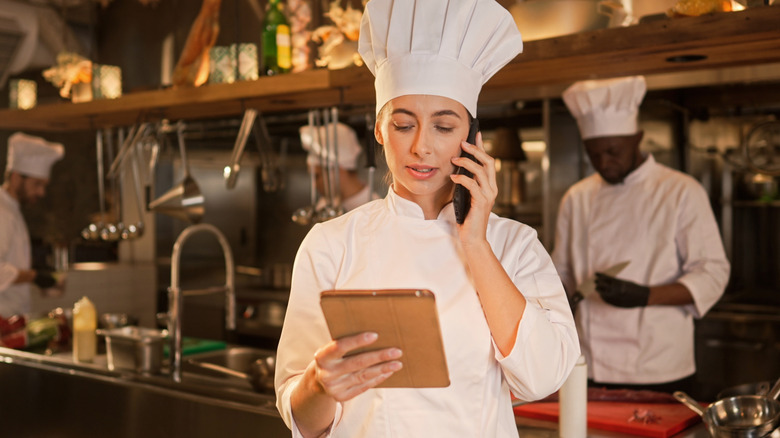
It used to be fairly common for the waitstaff to come back into the kitchen with little business cards that they had been handed by diners with massive lists of allergies, dietary preferences, sensitivities, and other "no-gos." They would hand these lists to the cooks and say, "This lady wants to know what she can eat here." Almost 99% of the time, this was during the dinner rush when we barely had a moment to refill our waters, let alone come up with an allergen-sensitive dish on the fly. No one was ever happy when this happened. The kitchen staff would have to scrounge through already-made prep, trying to Frankenstein's-monster some hodgepodge dinner that is sure to disappoint.
Here's the thing: Restaurants really don't mind making special accommodations if you give us a heads up. If you are a person who has special food needs, we want to help you out and make sure that you get a dish that is representative of our talents in the kitchen. So call ahead. Speak with someone at the restaurant and let them know what your dietary needs are a day ahead of time, and we can build you an awesome meal because we'll actually have the time to prep and make bespoke food that we will set aside for you so that there's no cross-contamination.
We take food allergies super seriously
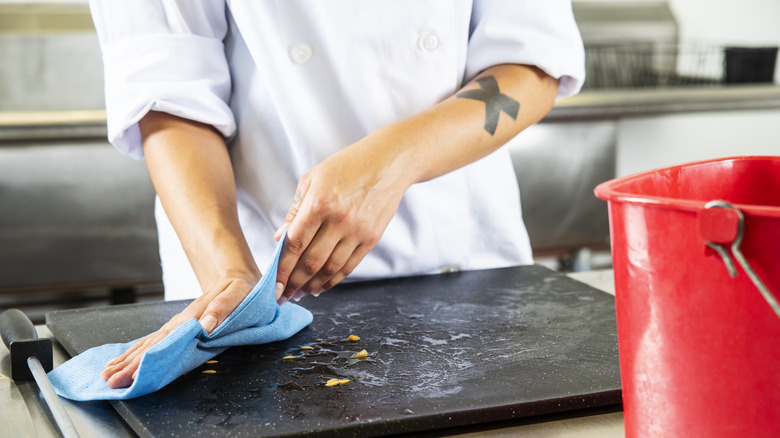
Any professional kitchen run by a half-decent chef knows how serious food allergies are. If a server comes back to us with the report that their table has a food allergy, it typically means that we're going to have to switch out our knives and cutting boards, do a full and thorough wipe-down of our work surface, and get new tongs. Sometimes that even means changing our aprons, depending on the severity of the allergy. Cross-contamination is something that inevitably happens in a busy kitchen. The same knife that we slice the chicken with is wiped with a cloth and used to slice steak within the span of 12 seconds. All of our prepped ingredients are in the same cooler, and cheese can fall into the tomatoes in the rush.
At the height of the dinner rush, if we need to do a full switch out of our gear to accommodate an allergy, it disrupts the flow of the service in a way that can offset the rhythm for the rest of the night. It also might not be possible to accommodate allergies if we're not informed ahead of time. A garlic or onion allergy could exclude more dishes than you might think (see above for how prevalent onions are), which means trying to construct dishes on the fly without the allergen.
It should go without saying, but never claim to have an allergy just because you don't like an ingredient. It might end up adding unnecessary time to your meal because we're allergen-proofing the kitchen.
Prep work started hours before the dinner rush
For our anniversary one year, my husband and I went to a tiny Italian restaurant where the chef boasted that everything was made to order. They were not kidding. Each order of pasta was made from flour to ravioli as soon as our order hit the kitchen. Not shockingly, dinner lasted almost five hours. Granted, that's a very unique situation. Most from-scratch kitchens absolutely do make everything themselves; they just do it well ahead of time.
Most side dishes, like rice, potatoes, vegetables, beans, and risotto, are par-cooked. Par-cooking typically means that the food is cooked about three quarters of the way and then held at a safe temperature until the orders come in. While the proteins are on the grill, the cook will use the time to finish cooking the side dishes the rest of the way, timing everything perfectly so that all components of the meal are hitting the plate at the same time.
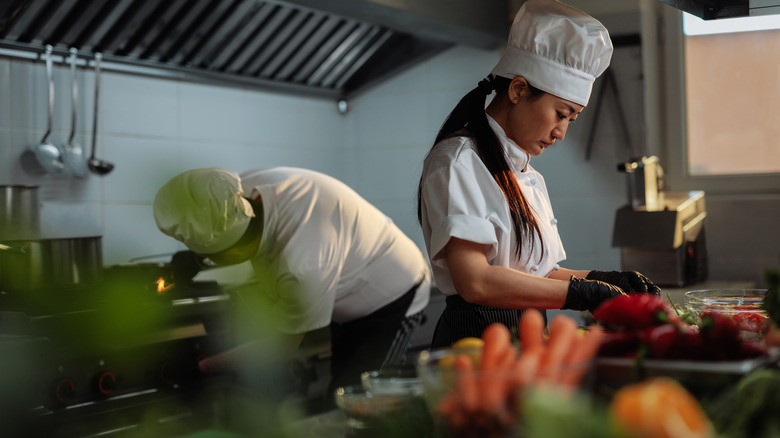
There's typically a whole shift of cooks who come in during the morning hours to get the prep work done. Getting vegetables ready for service is incredibly labor-intensive between making sure that the dinner crew is fully stocked on what they need and making huge batches of stock and sauces. The work of prep cooks is truly admirable and often invisible to customers.
An executive chef is probably not cooking your meal
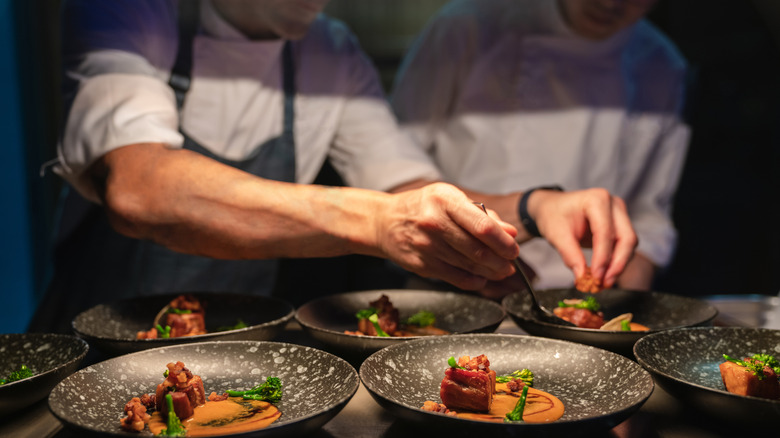
Let's talk kitchen hierarchy. Auguste Escoffier, the father of modern French cooking, created the brigade system, which is most commonly used in contemporary kitchens. It sets out very clear roles for the kitchen staff, along with a chain of command.
Not everyone on the kitchen line is a chef. The chef de cuisine, also known as the executive chef, is at the top of the food chain. This position is responsible for all the staff, all the administrative work of the kitchen, creating menus, ordering fresh ingredients, and taking responsibility for the overall functioning and standards of the kitchen. The sous chef is the second-in-command, usually being the hands-on manager, while the executive chef handles the administrative side of the kitchen. Line cooks hold various positions, from grill to saute to garde-manger.
An executive chef might be the draw to a given restaurant. The chef's name might be all over the sign and the menu, but on a busy Friday night, it's definitely not the executive chef in the thick of the rush with a spatula in their hand. The line cooks are the muscle of the kitchen, powering the vast machinery of the joint. That excellent meal you just ate might have been the brainchild of the executive chef, but the practiced talent of the line cooks actually produced it for you. Their names don't show up anywhere, but they're the ones putting the food on plates and keeping the ship upright.
There's way more butter in your food than you think
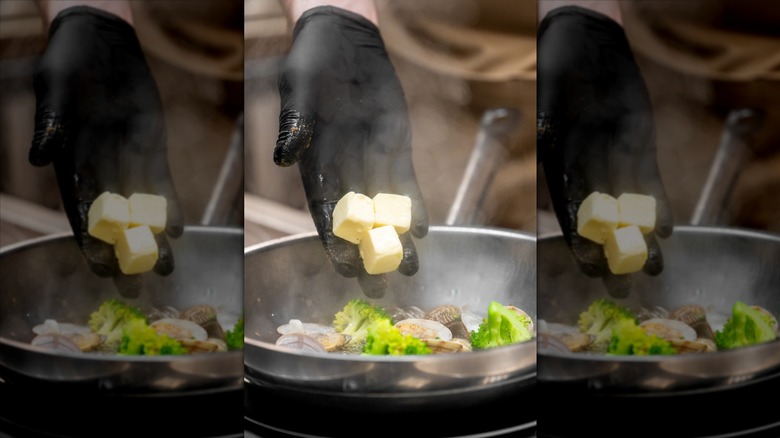
To say that butter is used liberally in kitchens would be an understatement. Butter is a magical substance that brings that silky mouthfeel and richness to dishes. My husband bemoans my heavy butter hand in the home kitchen, where I can easily go through half a stick of the stuff just toasting hamburger buns.
Slapping hunks of butter into sauces to give them a creamy finish or pouring ladlefuls of melted butter into a pan to baste carrots and beets as a side dish aren't uncommon practices. Compound butter, which is butter that has spices or herbs folded into it, is often sliced and placed on top of hot steaks or fish filets before they are sent to the table.
Don't be fooled by the dainty pats of butter brought to your table with the bread; it's actually a butter bash in the kitchen. That's just another reason restaurant food tastes so much better than what you're making at home. Most people would never go as hog-wild with butter as the average line cook.
Most restaurants are operating on a razor-thin profit margin

The common urban legend in the industry is that about 80% of restaurants fail within the first two years. The truth of the matter is not quite so dire. According to an analysis by the Auguste Escoffier School of Culinary Arts, not only do 86% of restaurants make it through their first year, but the overall survival rate remains over 50% all the way through year six. So, hey, it's not all bad news! However, restaurants do still remain a risky financial endeavor.
Initial start-up costs for opening a restaurant — getting the proper equipment for the kitchen, training up and bank-rolling a decent staff, building up a proper pantry of supplies, stocking the bar — add up to a massive initial output of capital. Creating a menu with fresh ingredients and using organic and local produce can get expensive, and not all of that cost can be passed along to the customers without pushback.
Most restaurants are operating on a margin of 5% or less. What that means is that a few low-attendance weeks in a row, a major malfunction of a main piece of equipment, an interruption in food supply, or a sudden uptick in cost can really be a matter of solvency or bankruptcy for a lot of restaurants.
Moral of the story: Don't open a restaurant if you're looking to get wealthy. If you want to join the industry party, we'd love to have you. But come for the love of the game, not the money you'll make. Food is love!