

Andrew Zimmern Swears The Midwest Was Doing This Food Trend Long Before It Had A Name
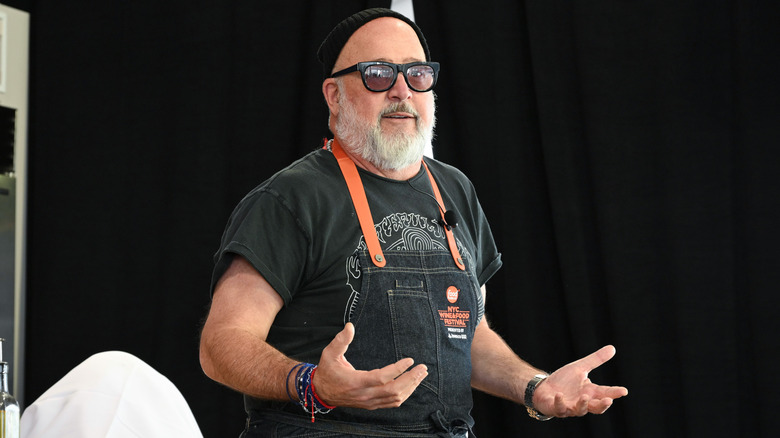
It's not uncommon to hear some people claim, often with much justification, that certain movements and phenomena began long before they were widely recognized — that Lou Reed was making punk rock and that Jules Verne was writing science fiction years before those terms had even been coined. So if you are under the impression that the farm-to-table movement is a relatively recent historical development, know that Andrew Zimmern begs to differ, arguing that what we currently think of as farm-to-table is something that's been done in the Midwest since before the 19th century.
In a July 2025 interview with GQ Magazine, the chef, cookbook author, and host of the TV show "Bizarre Foods With Andrew Zimmern" says that the expression "farm-to-table" causes him to laugh, because "all of those things are things that people in Minnesota have been doing for 150 years." Living in Minnesota himself, Zimmern explains that if he wants to enjoy local bounty, "I just have to reach out and touch the person next to me." With a farm only a mile and a half away from his house, Zimmern says, "We're buying from the farm stand almost 12 months a year."
The philosophy behind farm-to-table is a simple one, prioritizing a connection between farmers and consumers and the importance of fresh, locally sourced, and sustainable grown foodstuffs. Farm-to-table restaurants, as one might expect, build relationships directly with nearby farms, utilizing their produce in seasonal menus, which not only guarantees the maximum freshness possible, but also avoids the environmental impact that comes with using imported ingredients that have been transported long distances.
Digging up the roots of the farm-to-table movement
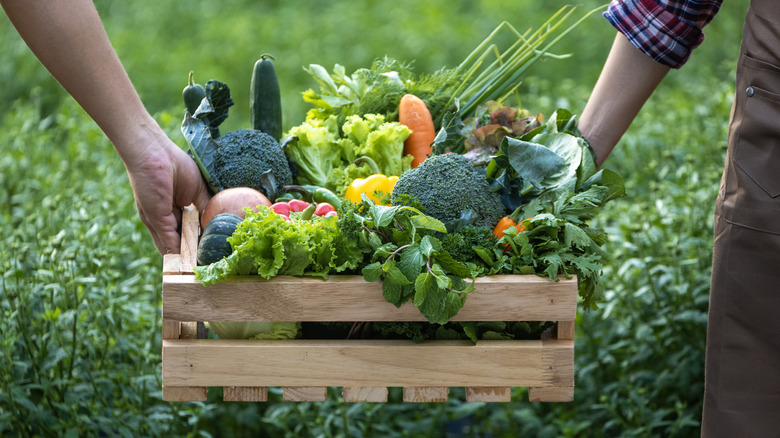
Zimmern is correct that farm-to-table practices are older than we might think. Indeed, in North America, settlers were shopping at farmers markets as far back as the 1600s, and that was only because they had brought this traditional market model with them from Europe, where it dates back even further — but nailing down the origins of the movement that these practices inspired is a little trickier.
In the 1900s, a joint initiative between the United States Postal Service and U.S. Department of Agriculture was launched allowing customers to order fresh food straight from the farm via parcel post. However, due to the growing speed and efficiency of transporting food via road and rail, along with the increasing popularity of packaged, processed food, these scheme would eventually fall out of favor.
The burgeoning momentum of the farm-to-table movement as we know it today is often rightly attributed to the chef, restauranteur, and writer Alice Waters, who in 1971 opened Chez Panisse, the United States' first farm-to-table restaurant that pioneered Californian cuisine, in an attempt to replicate the practices Waters had experienced in France. Chez Panisse, which continues to thrive, would go on to inspire many other eateries. Should you be in the Midwest instead of California, Zimmern shares that farm-to-table restaurants can now be found anywhere from Madison to Milwaukee, even telling GQ, "I had an incredible meal driving through Sioux Falls, South Dakota!"