

Here's What's Really Missing In Most Store-Bought Kimchi
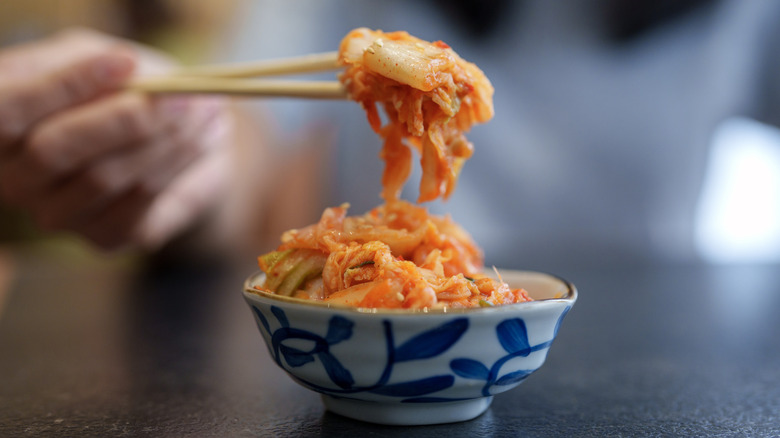
It's hard to describe homemade kimchi in a way that does it justice. Store-bought kimchi can be very good, but it often suffers the same fate that many products do when compared to homemade counterparts. It doesn't capture the tangy, savory, sometimes spicy and surprising flavor profile of homemade kimchi. However, making kimchi can be labor-intensive and intimidating for beginners, so premade brands offer a decent substitute. As good as they may be, these ready-made brands are often missing a key element of what kimchi really is: something called sohn-mat, or "hand taste."
Sohn-mat is a Korean culinary concept that exists in many cultures, even if they don't name it. It's the feeling that goes into a dish. It's like how your grandmother could make a batch of cookies without a recipe and just know how much sugar to add, how long to work the dough, and how long to bake them. It's something that can't be written down. It's just knowing. When it comes to the many types of kimchi, it's integral.
Tasting Table spoke to Chef Maricel Gentile, chef and owner of Maricel's Kitchen and author of "Maricel's Simply Asian Cookbook," and we asked if she agreed store bought kimchi was missing this personal element. "Sohn-mat is real, and it shows up in the flavors. It is the care, the instinct, the small decisions your hands make without measuring. That is very hard to package," she told us. "I learned to cook from my Lola (my grandmother), and she cooked with her hands. It has taken me many years to replicate her flavors and be able to put them into repeatable measurements."
You can't cheat kimchi
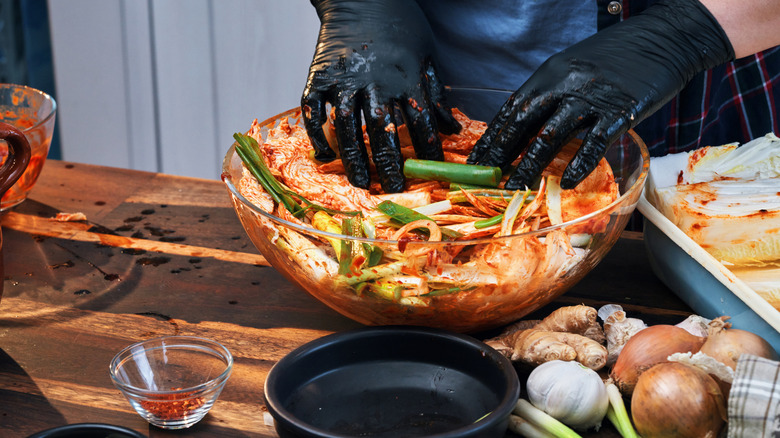
Gentile makes it clear that store-bought isn't necessarily bad, and there are many great kimchi brands. "Store-bought kimchi can be very good, especially from Korean markets or smaller producers who still make it with intention," she said. "Some come remarkably close in flavor and balance." The problem with store-bought is the consistency, which is usually a selling point for premade items. "Homemade is alive in a different way," Gentile said. "Store-bought is still a good place to start. It opens the door. Homemade is where you begin to truly understand the soul of the dish. That is where your own taste, your own sohn-mat, starts to develop."
The lack of a standardized approach and recipe is one of the best parts of real, homemade kimchi. The feeling of sohn-mat has to shine through. "Kimchi is tradition, but it is also deeply personal," Gentile explained. "Every family carries their own version. The level of spice, the fermentation time, even the vegetables can change from household to household. In many homes, making kimchi is a shared activity. It is passed down, not written down. You taste, you adjust, and you trust your hands."
For some professional chefs, this method of cooking is too unreliable or too rustic, but that's often viewed from a business perspective. Most home cooks learn in a kitchen, with family, going over trusted family recipes that evolve and change in a way that makes them personal. That's part of sohn-mat, and it's vital not just for kimchi, but for any true home recipe.