

The Ideal Room Temperature For Storing Spirits, Wine, And Liqueurs
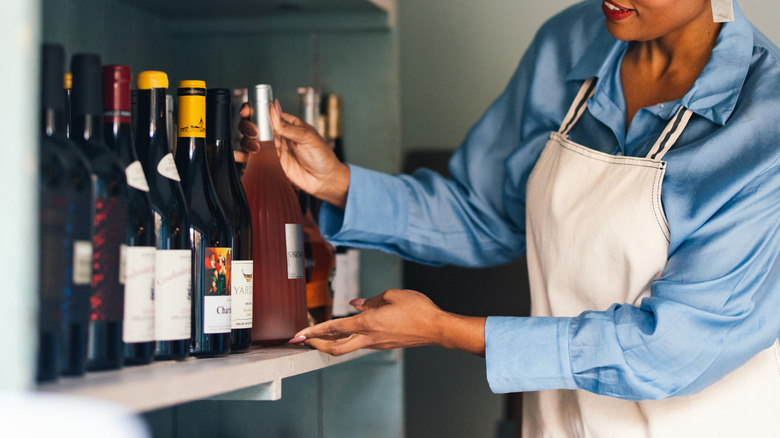
If you've ever wondered why your favorite drink tastes that much better at a bar than at home, it could be more than just the atmosphere or the friendly bartender; there's a chance you're not storing your booze at the best temperature. While it's common to expect "room temperature" to be an adequate description for safely storing spirits, wine, and liqueurs, the reality is that not all rooms are the same temperature. Indeed, these three types of booze require different storage temperatures. When storing liquor of any type, there are two main threats: microbes chomping on the consumable ingredients on our favorite bottles, and oxidization, which robs them of freshness or intensity. Both of these negative effects are slowed by keeping alcohol at cool enough temperatures. To help us navigate the temperature ranges best for booze, we've got some valuable insights from experts behind the bar.
First up, to ensure our spirits stored properly, Molly Horn, chief mixologist and spirits educator at Total Wine & More gives us some useful direction. "Ideally you have a spot to store spirits that is in the 55 to 65 degree Fahrenheit [range] — this will ensure there are no chemical reactions that would cause the spirit's flavor and character to diminish." With the higher alcohol volume and lack of sugar of pure distilled spirits, they're basically immune to microbial growth, but oxidation can take hold over extended periods if bottles (especially, opened ones) are kept too warm.
If you don't want wine to go, keep the temperature low
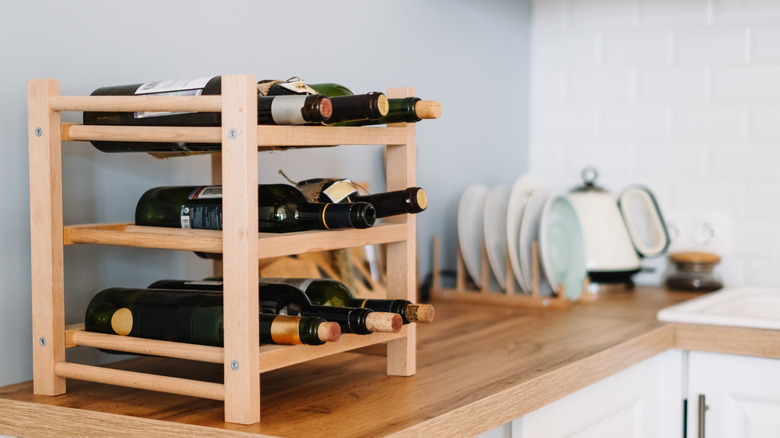
Wine has more consumable sugars, and less alcohol to boot, making it more vulnerable to microbial degradation — particularly after being opened. Oxidization can also accelerate in wines that are kept too warm. As Eléonore Latour, chief brand officer at Maison Louis Latour explains, "Temperature plays a key role, as it determines the rate at which wine evolves in the bottle. The higher the temperature, the faster the wine ages. Temperatures above 70 degrees Fahrenheit can accelerate aging beyond what is desirable, dulling aromas and flavors."
Latour recommends an ideal temperature of around 55 degrees Fahrenheit for both red and white wine, but some wiggle-room is allowed. Keeping bottles within a range between 45 and 65 degrees Fahrenheit is best. Temperature affects wine on a sliding scale, so for the safest approach, aim for that lower end if you can. Latour also explains that it's not just the minimum temperature of a room that matters, but the temperature over time. "More important than the exact temperature, however, is consistency. Rapid temperature fluctuations are harmful, while slow, moderate variations (ideally not exceeding [66 degrees Fahrenheit]) are less concerning."
Liqueurs aren't all as short-lived as you might think
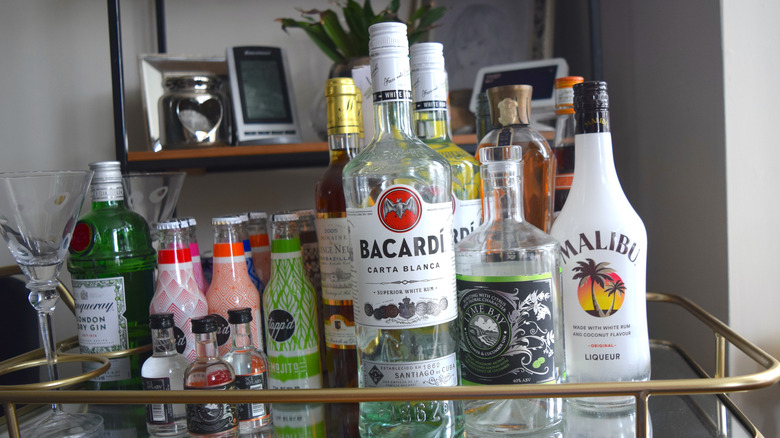
While spirits are more resilient and wine is more easily spoiled at higher temps, liqueurs can relate to both of these attributes. It's a common presumption that because liqueurs often contain microbe-consumable ingredients like dairy or sugar, they're particularly vulnerable to spoilage. Something doesn't seem right about having a milk-containing product sit in a room-temperature cabinet for years on end — yet everyone knows an auntie who will dig out the same bottle of Baileys once every few months. Baileys Irish Cream, however, officially claim that the product does not need to be refrigerated, recommending storage between 32 and 77 degrees Fahrenheit, and stating that it can be kept for up to two years from bottling, even opened. The secret to Baileys' longevity is its ABV of 17% and its sugar, which can have preservative qualities in high concentrations. Think: marmalades, jams, and other "preserves."
But there is no one-size-fits-all storage temperature for liqueurs. Aperol (only 11% ABV) recommends keeping bottles refrigerated and consumed within three months of opening, meanwhile Kahlua (20% ABV in the U.S.) claims a shelf-life of four years, and no refrigeration requirement. Since liqueurs are intrinsically varied, defined by their ingredients, this can either make them more resilient or vulnerable to degradation when kept at room temperature. For liqueur storage, the best expert advice is from the producers themselves. Seek recommendations from specific brands to make sure you don't lose your liqueurs to the ravages of oxidation or microbes.