

The Major Difference Between Spices And Herbs
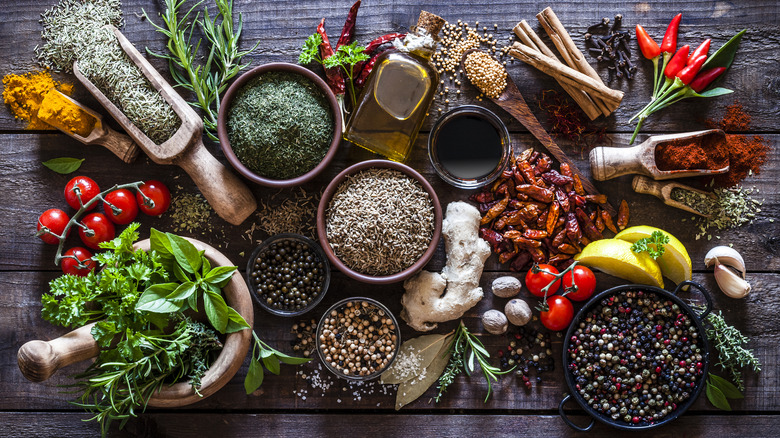
Within the realm of seasonings, there are two distinct groups that cover nearly everything that we use to add flavor to our food: spices and herbs. All of those little glass jars in the cabinet, all of those carefully curated mixes created to add piquancy to your plate, herbs and spices are the major players. But what is it that actually differentiates an herb from a spice? As it turns out, there is quite a simple rule to separate these two types of taste-enhancers. Herbs are defined, in the culinary sense, as any seasoning that comes from the leaves of a plant. Spices, on the other hand, are made from any of the other parts of the plant, such as seeds, bark, fruits, flowers, roots, and rhizomes.
The category of spices is obviously the broader of the two, covering a diverse collection of seasonings from many different sources. For example, cumin comes from the seeds of the Cuminum cyminum plant, whereas cinnamon is actually the dried inner bark of any of several trees in the genus Cinnamomum. Ginger comes from a root, which is fairly easy to see when you look at it, but other spices are not so straightforward. Black pepper seems like it might be a seed as well, but it is actually the fruit from a climbing vine native to the Malabar Coast of India. The world's most expensive spice, saffron, is the stigma — female reproductive organ — of a species of crocus. Each flower only produces a few of the thin red tendrils, and the combination of low yield and painstaking harvest is what makes this spice so expensive and so unusual.
Spices are broad, herbs are narrow
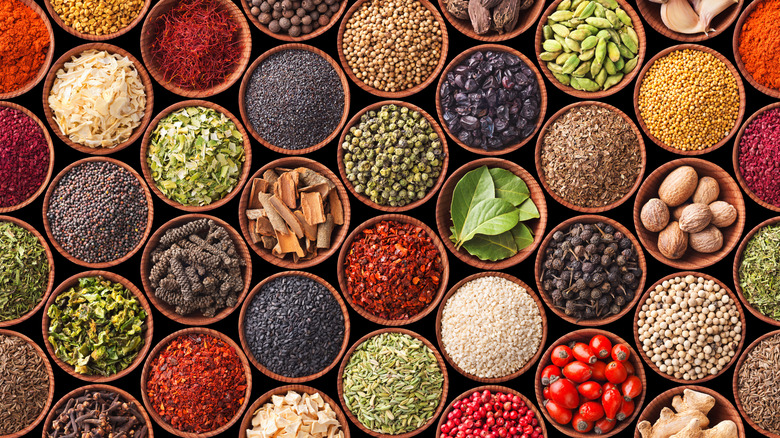
While the breadth of ingredients that fall under the moniker of "spices" is deeply complex, herbs are a bit simpler. Really, any plant leaves that we use for flavoring are considered an herb. Some sources will state that herbs must come from non-woody plants, but that definition is scientific rather than culinary. Botanically, plants without woody stems are considered herbaceous, but in the kitchen all that matters is that we're seasoning with the leaves. By way of explanation, you need look no further than common herbs like rosemary and bay. Both of these come from woody plants — rosemary is a shrub and bay laurel is a small tree — but both are also undeniably herbs. Of course, plenty of herbs also come from herbaceous plants. Parsley, for example, is a biennial herb in the carrot family that grows with tender stems and dies back in the winter.
There are also a few plants that give us both herbs and spices in a single package. You can look to the cilantro-versus-coriander question for an example. In the U.S., cilantro refers to the leaves and stems of the plant — the herb part — whereas coriander is the seeds. Elsewhere in the world, the name "coriander" is also used for the leaves. While that might seem a touch confusing, we do the same with fennel. The tender fronds are excellent with salmon, while the anise-like seeds are a key ingredient in Italian sausage.
The question of herbs-versus-spices is almost like the difference between fruits and vegetables, at least in the sense that it doesn't really affect your cooking. It may be helpful to be able to define the difference between these types of seasonings, but the more important piece is how you use them.