

Exactly How Old Are Grocery Store Eggs, Anyway?
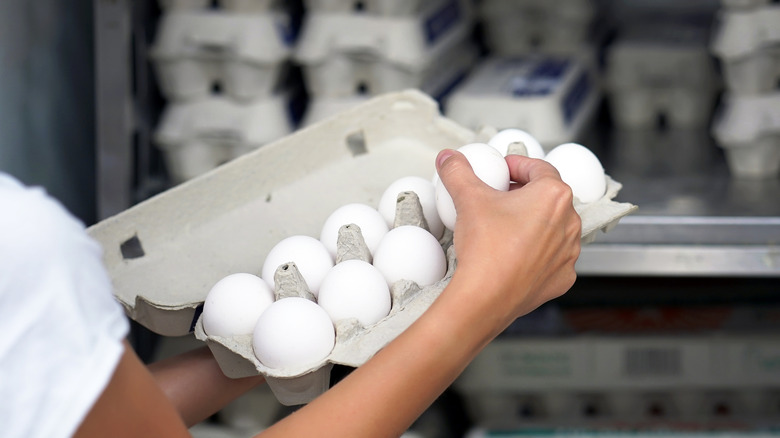
More than salad greens or milk, egg expiration dates are one of those grocery item details you can easily forget about for a week or two. That is, until it comes time to bake a cake, shake a Ramos Gin Fizz, or master the art of the perfect French omelet. Then it becomes pretty important. Luckily, the numbers on your carton tell you everything you need to know, provided you can "crack" the codes (pun intended).
So here goes: In the United States, eggs are usually packed within a week of being laid, but they can legally be sold for 30 days after that packing date. This is called the Julian date, and it's shown by three numbers that represent consecutive days of the year — starting with 001 for January 1. So if your eggs have a 063, that means they were placed in the carton on March 4. Then there's the "sell-by" or "expiration" date, which is often above or beneath the Julian date. The sell-by date can legally be up to four weeks from the packing date.
All that to say, your eggs may be two months old by the time you get them home. And that's perfectly okay! Storing your eggs in the coldest part of your refrigerator will help slow bacterial growth and keep them fresher, longer. So while there's nothing wrong with an older egg — in fact, you should actually use older eggs when making hard-boiled eggs — freshness is certainly important when it comes to certain recipes or techniques.
How to test your egg's age
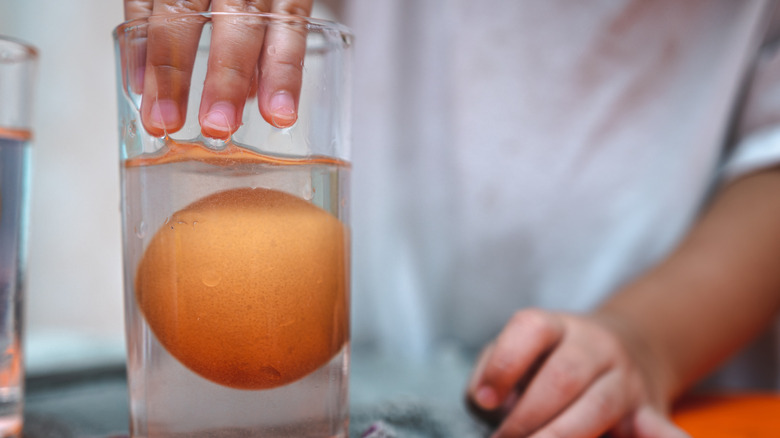
There's a few simple tests you can do to see if your eggs have expired. You might be familiar with the most famous test: the old-fashioned float. Place the egg in a bowl of water and watch what happens. If it's super-duper fresh, it'll sink and lie flat. Very old eggs float because they've started to decompose and give off gases. Though that sounds unappealing, it's far better than cracking open an old egg and getting hit with that unmistakable rotten smell. The smell test is obviously the most reliable, as fresh eggs have almost no smell at all.
If you're still not sure, go ahead and crack the egg open on a plate before using it. Freshness will show up in the texture: Extra-fresh eggs will have a yellow or orange yolk with slightly cloudy whites, while older eggs might have a less-firm yolk and runny whites. Both have their uses. Older egg whites are easier to whip because their protein bonds are already looser and easier to unravel. But when it comes to a lovely soft-boiled egg for breakfast, you'll want to use new eggs.
So while grocery store eggs may be older than you expect, proper refrigeration and handling keeps them safe for quite a while. But if you're an Egg Snob and truly love a brilliantly orange yolk from a chicken that's gotten to peck around in real grass, you might want to ditch the grocery store for the farmers market for the freshest eggs around.