

If Your Baking Pan Is Super-Dirty, This Cleaning Step Is Essential
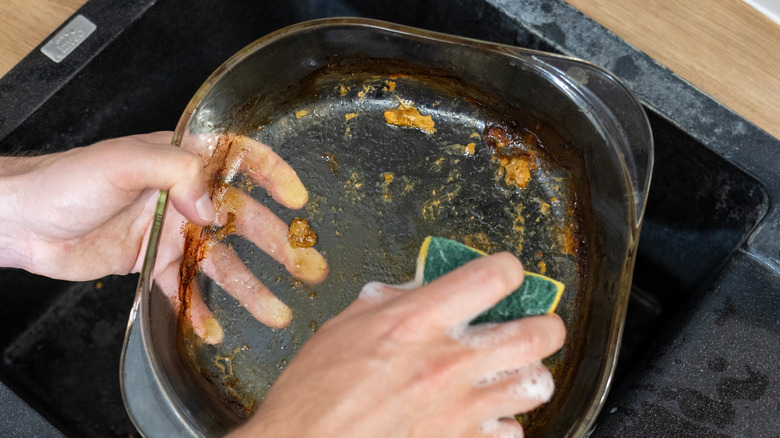
We've all been there. Whether you forgot to properly prepare your baking pan before cooking or simply burned your dish, a super-dirty pan can seem as doomed as your burnt baked goods. Before you throw in the towel and throw out the pan, keep reading. We reached out to a baking expert for tips on how to save a seriously soiled pan. Megan Garrelts is the proprietor and executive pastry chef of Rye Restaurants and the highly-anticipated Cornflower Baked Goods in Kansas City. Her sweet treats have delighted patrons for more than a decade, and she's a James Beard Semifinalist for Outstanding Pastry Chef.
According to Garrelts, the first step to cleaning a beyond-dirty baking pan is also the most essential: soaking. However, she warns us that duration matters. "To clean a heavily soiled baking pan without damaging it, start by soaking it in hot water with dish soap for 30-60 minutes," Garrelt advises. Now, for the procrastinators among us who wholeheartedly believe in "letting dishes soak," this may sound like a golden ticket. But Garrelt gives a brief time limit for soaking pans for good reason. Dirty dishes can only safely soak for so long before germs take over, so up to one hour is usually the sweet spot. But if you insist on a prolonged soak, Garrelt advises caution. "An overnight soak can help with stubborn grime, but avoid doing so with aluminum or nonstick pans and skip acidic solutions like vinegar for long soaks," she says.
Baking pan cleaning tips from an expert pastry chef
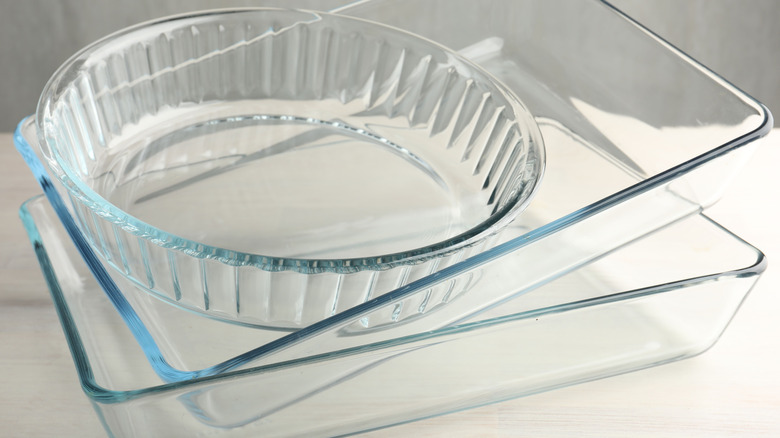
You might think professional bakers have secret tricks of the trade to keep their equipment spotless, but it turns out they, too, turn to good ol' pantry staples to make their dirty sheet pans look brand new. "For tougher messes, apply a baking soda paste or gently heat water with soap or baking soda in the pan to loosen buildup," Garrelt instructs. When it comes to stubborn, baked-on messes, few cleaners are as effective as baking soda at cutting through grease and neutralizing acids. She also advises against harsh tools. "...Use a non-abrasive sponge to remove residue," she says, adding, "always avoid steel wool or harsh cleaners."
With your baking pan back to its former glory, Garrelt says there are some essential steps you can take to prevent stuck-on stains before they happen, starting with pan protection. "To keep pans in good condition, use parchment paper or silicone mats," she suggests. Next, don't put off cleaning up. "Clean [pans] while slightly warm, and avoid letting residue sit and harden," Garrelt advises. Different pan materials will determine the best cleaning method, so Garrelt also suggests looking up the manufacturer's care recommendations for your particular pans. Her go-to? "I personally love the Williams Sonoma Goldtouch Pro Bake pans — they come in a variety of sizes and clean up easily, even after baked-on messes," Garrelt says.