

13 Bizarre Vintage Food Ads We Can't Believe Are Real
We may receive a commission on purchases made from links.
Advertisements evolve alongside their products, but consumers and their habits can change as quickly as the weather. Some marketing trends are blatantly of the era, like Van Camp's jack-in-the-box from the clown-obsessed 1940s and '50s, or Miracle Whip fruit salads from the post-war era. Others are tough for anyone to explain (looking at you, Quiznos Spongmonkeys), but the more obscure, the more memorable they often are. Sometimes going outside the box with marketing proves successful, while other times it's a swing and a miss.
Before constant phone ads there were commercials and print campaigns, when marketing teams were creative with trade cards and collectible bookmarks (like the one seen above). Regardless of their format, these vintage food ads dating as far back as 1880 are so bizarre that their existence almost feels like a fever dream.
Du Pont Cellophane (1954)
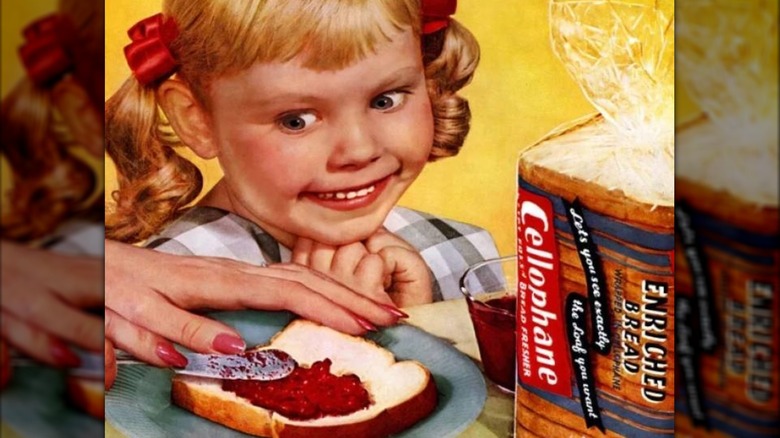
This 1950s Du Pont ad was during the brand's peak American popularity, and cellophane was marketed as a kitchen staple. "Cellophane keeps fresh bread fresher," the label read. One would assume the focus of the ad would be on the transparent bread bag, but it's hard to focus on anything other than the young girl leering over at her toast. Most startling is the hunger in her eyes. She appears to be smiling, but something in her expression feels cursed.
Campbell's (1950s)
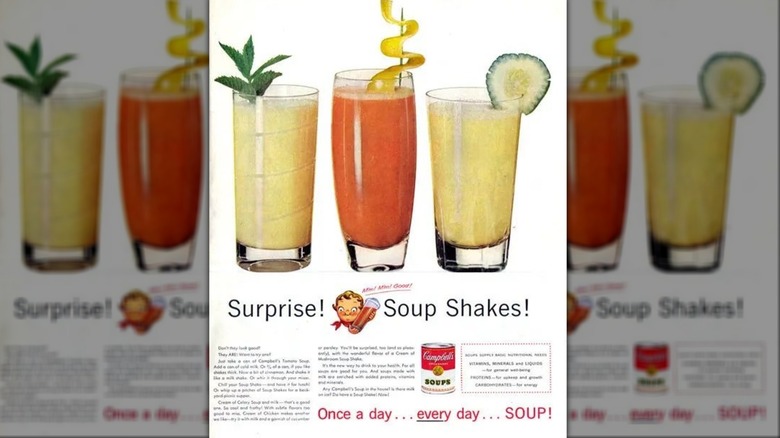
Even Campbell's knows this campaign sounds outrageous, with the slogan, "Surprise! Soup Shakes!" The ad recommends adding a can of cold milk to a can of soup, whether that be tomato, cream of celery, cream of chicken, or cream of mushroom soup. This wasn't the last time Campbell's suggested drinking its canned soups – a few decades later, the brand introduced a Campbell's soup on the rocks campaign.
Heinz (Late 1800s)
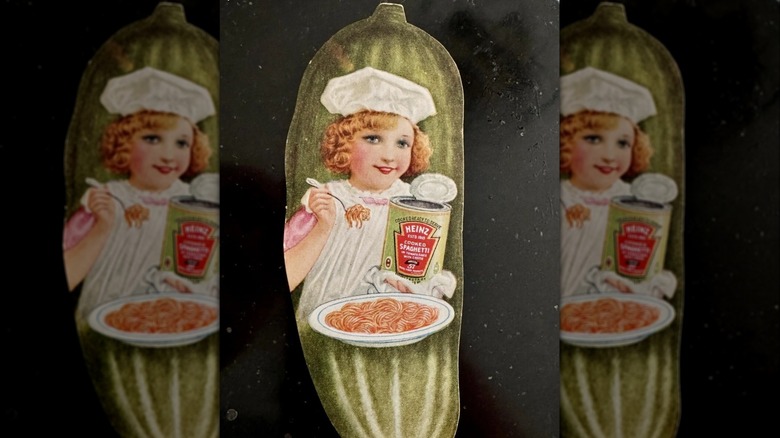
These days, Heinz is most closely associated with ketchup, but in the late 1800s, pickles were often the face of the brand. Tiny pickle watch charms were handed out as promotional material on more than one occasion, and these die-cut pickle bookmarks were collectibles well into the 1900s. Each unique cardstock bookmark featured a different Heinz can being appreciated, be it a spaghetti-swirling girl, a mustached chef, or a peach-loving toddler. Dozens of different illustrated characters circulated, each a little more bizarre than the last.
The St. Louis Beef Canning Co. (Late 1800s)
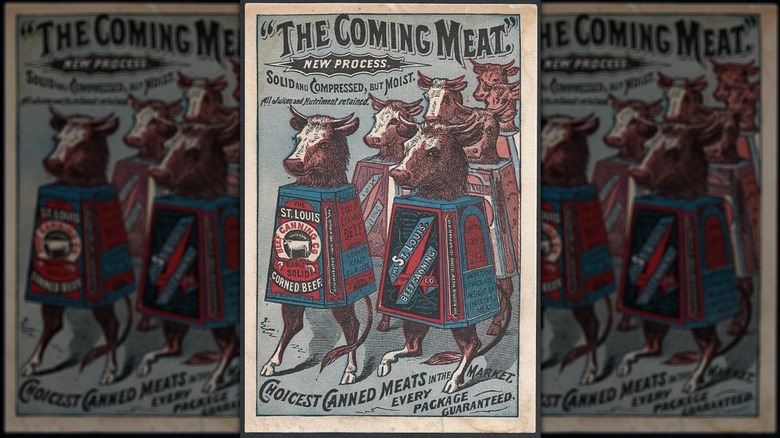
Heinz had its pickle bookmarks, but The St. Louis Beef Canning Co. had trading cards. The card announces its product as "The Coming Meat," following up with the new detailed process, "Solid and compressed, but moist. All juices and nutriment retained." It illustrates this promise with a parade of cattle wearing their own packaged tins as sandwich boards. It was either a bold act of surrealist marketing or a total lapse in judgment, but the Victorian era seemed unbothered regardless. The brand marketed with a variety of offbeat cards in the late 1800s, but few were as unsettling as these marching cows.
Dr Pepper (1968)
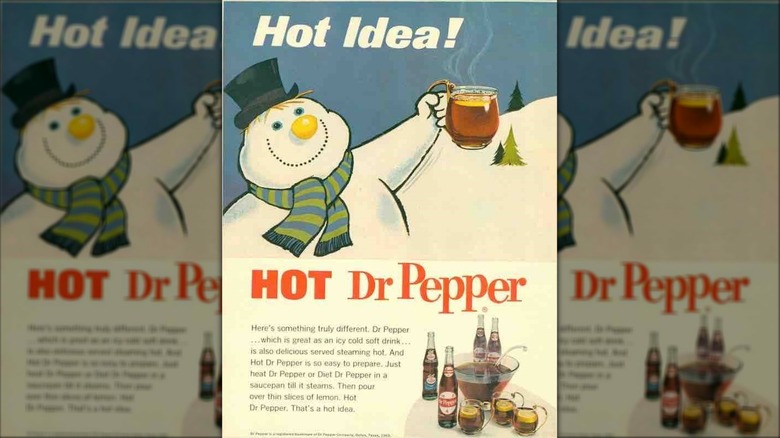
There's nothing like a cold, refreshing glass of Dr Pepper, or if you asked the company's president in 1958, a steaming hot mug of the soda. Apparently, Dr Pepper was promoted as a hot beverage throughout the 1960s, served with lemon similar to a tea. Aside from its 23 flavors, Dr Pepper's big selling point is the crisp, refreshing bubbles, but those start to disappear as the temperature rises. Still, the Dr Pepper team was determined to make the beverage a winter season tradition with the help of this cheerful snowman.
Jell-O (1982)
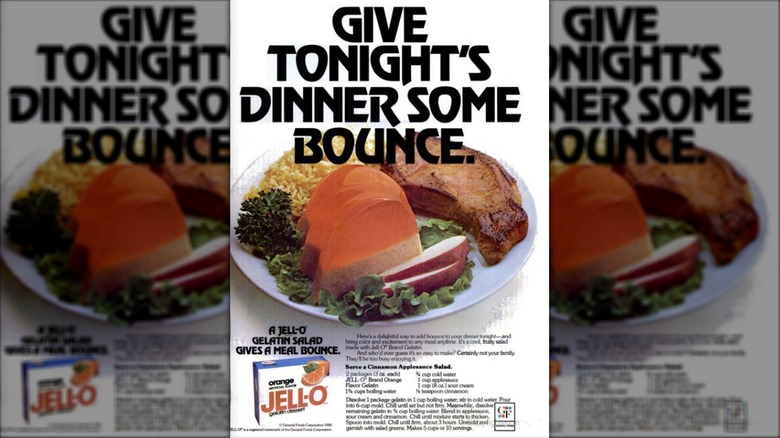
Most Jell-O advertisements of this millennium focus on jiggly desserts and pudding snacks, but jello used to be just as savory as it was sweet. This early '80s ad proudly demands viewers to "Give Tonight's Dinner Some Bounce," above an orange gelatinous looking blob and a pork chop. Despite there being zero visible fruits (or texture), it's apparently a cinnamon applesauce salad.
Fleischmann's Yeast (1915)
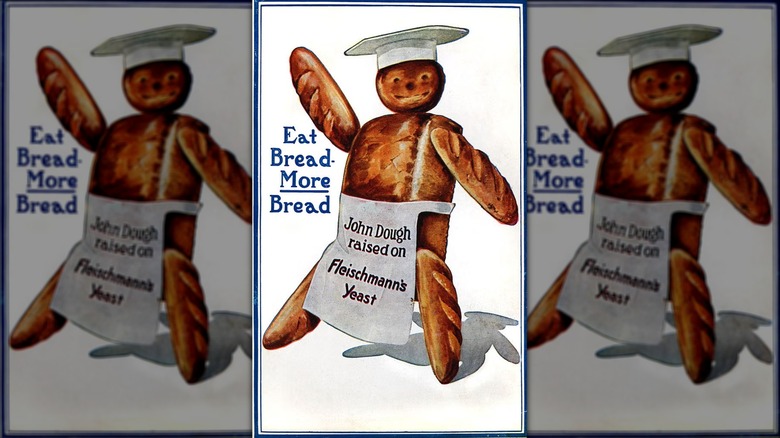
Long before the Pillsbury Dough Boy fandom, there was John Dough, the cleverly namedFleischmann's bread-man. The spooky mascot's core was a loaf of bread with baguettes for arms and legs, complete with an apron and chef's hat. The simple slogan, "Eat Bread — More Bread," is timeless but Mr. Dough, with his soulless eyes, is not. Fleischmann's Yeast dates back to 1868 and to this day it's the biggest yeast name in North America, but thankfully the mascot has retired.
Gail Borden Eagle Brand Condensed Milk (1887)
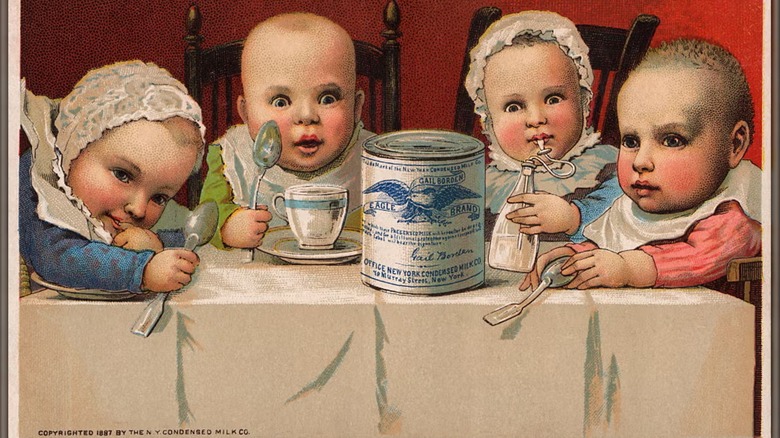
This Eagle Brand condensed milk trading card, dated 1887, is the makings of a nursery rhyme turned horror story. Given its long shelf life, the brand, developed by Gail Borden in 1856, was huge during the Civil War, but it was also popular for feeding babies, helping to significantly lower the infant mortality rate. The four big-headed babies take up the entire table as they each feign for more condensed milk, spoon in hand.
Miracle Whip (1956)
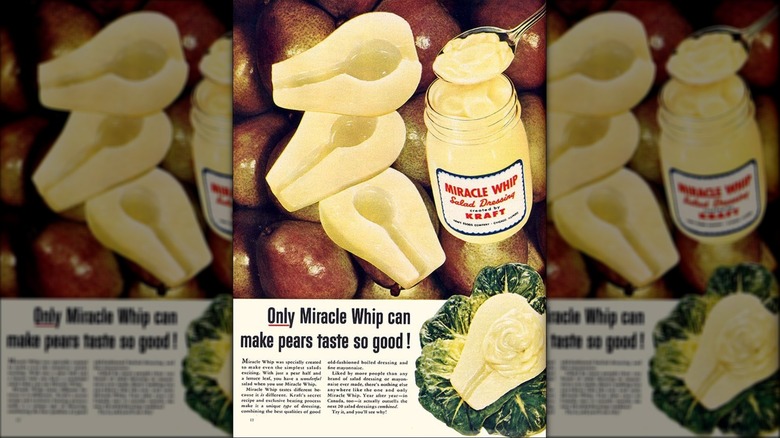
Miracle Whip is certainly a polarizing product with its haters just as passionate as its fans, but advertisements like these from the '50s make it hard to feel empathetic. Miracle Whip, which should absolutely not to be confused with mayonnaise, has always been labeled as a salad dressing rather than a condiment, and here, a dollop is served atop sliced pears. The ad says "There's nothing else anywhere like the one and only Miracle Whip," and with that sweet tang, it's hard to argue otherwise.
Chivers' Jellies (1912)
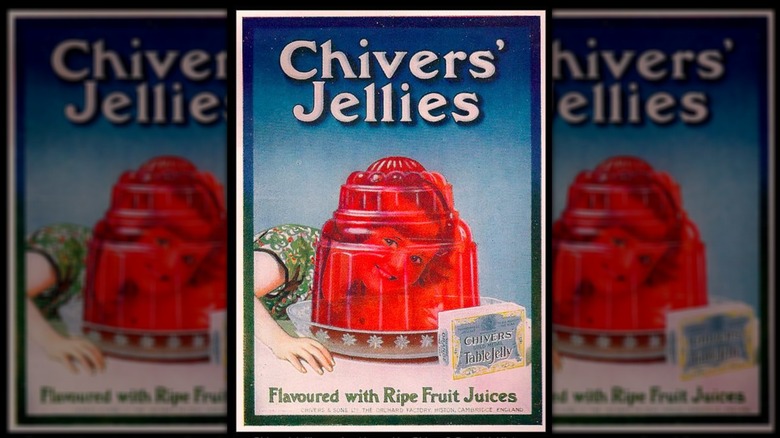
If you told us this was an alternate cover for Stephen King's "Carrie," we would believe you, but it's actually an advertisement for a fruity snack from six decades prior. Jell-O has been America's leading jiggly dessert since the early 1900s, but in the United Kingdom it was all about Chivers' Jellies. This ad for a red fruit jelly would be rather unmemorable if it wasn't for the young girl hiding behind the translucent mound of jello, flashing a disconcerting grin.
Van Camp's Pork and Beans (1947)
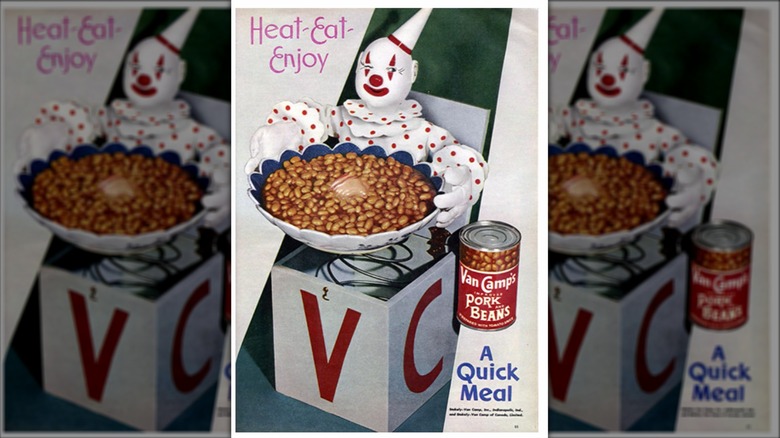
Speaking of Stephen King, the winking clown in this Van Camp print ad reminds us of someone ... The jack-in-the-box sporting a red and white polka dot fit is presenting a bowl of pork and beans with a big knob of butter in the center. "Heat-Eat-Enjoy" is written next to the clown's ominous wink. This uncanny ad was featured in a 1947 issue of Woman's Day, and thankfully, it doesn't look like the clown mascot stuck around.
The Green Giant (1953)
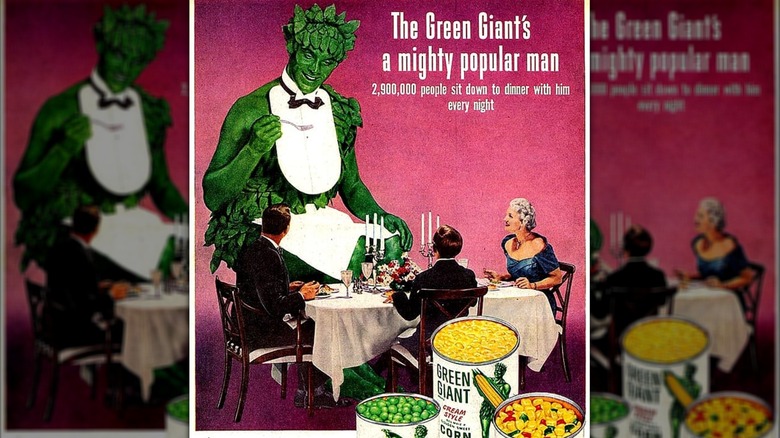
The Jolly Green Giant was merely a mascot for the Minnesota Valley Company before becoming the brand's name in 1950. But even before his name was on the label, the towering green man was front and center on every can of corn and printed advertisement. In this 1953 ad, he seems to be crashing an extremely formal, candle-lit dinner, sporting nothing more than a dickey and a bow tie. There have been a lot of new looks for the green giant, but this era is particularly unsettling.
Quizno's (Early 2000s)
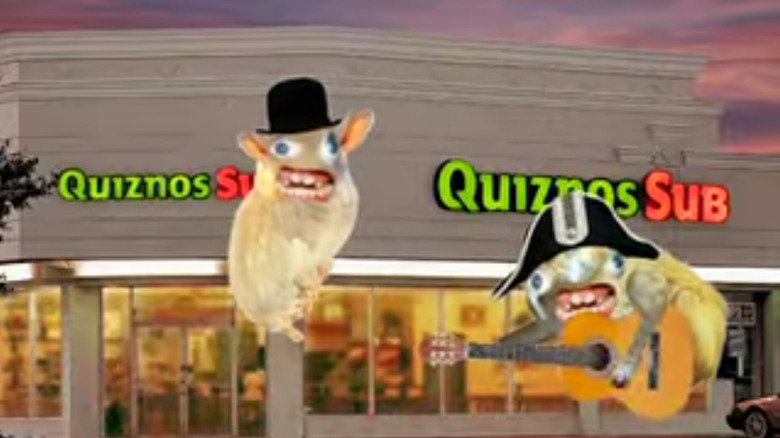
We still have trouble believing these Quiznos' commercials weren't just a fever dream. This marketing campaign was the epitome of the early internet. Adapted from a viral video by Joel Veitch, the commercials featured terrifying creatures known as "Spongmonkeys." They belt out their song about Quiznos, praising the pepper bar. With wide mouths full of jumbled teeth and huge blurry eyes, the nose-less blobs were haunting.