

This Century-Old Cocktail Is The First Of Its Kind (And It Has Just 4 Simple Ingredients)
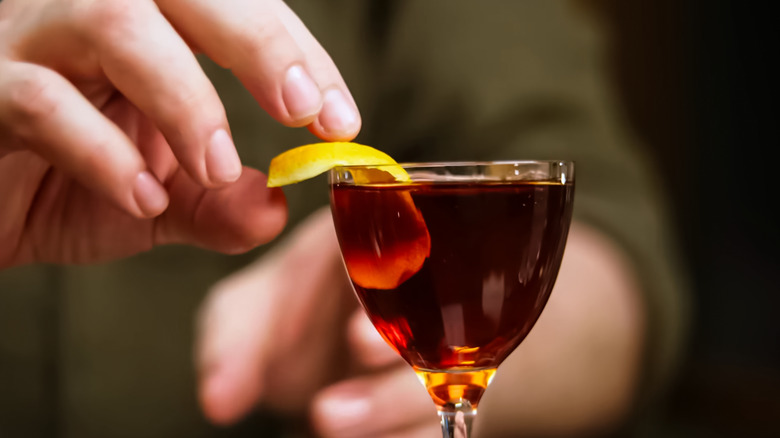
The "classic" cocktails are so-called because they created the prototype for generations of mixed libations to come, setting the foundation for drinks with balanced, congruent, and satisfying flavors. While we may be well-acquainted with old-school cocktails like the Manhattan, one lesser-known, trend-setting, pre-prohibition cousin is known as the Deshler. Fans of the Manhattan are sure to love the Deshler, with a few tweaks to the ingredients listed. The rye whiskey remains in place, but sweet vermouth is swapped out for Dubonnet, another French fortified wine with a zap of quinine and spice, and the bitters are specified as Peychaud's bitters, rather than Angostura bitters that feature in many Manhattan recipes. What really sets the Deshler apart is the inclusion of Cointreau orange liqueur/triple sec. In fact, the Deshler is likely the first cocktail to use Cointreau in New York, first published in 1917 in a cocktail recipe book by Hugo R. Ensslin called "Recipes for Mixed Drinks."
It's thought that the cocktail derives its name from the Columbus Ohio Hotel where Ensslin once worked, called — you guessed it — The Deshler Hotel. While the name might be from Ohio, there's also speculation that Ensslin was slinging drinks at the Wallick Hotel in New York when he invented it, a detail that's vital to the cocktail's identity as another classic New York City creation.
The best-kept triple-secret
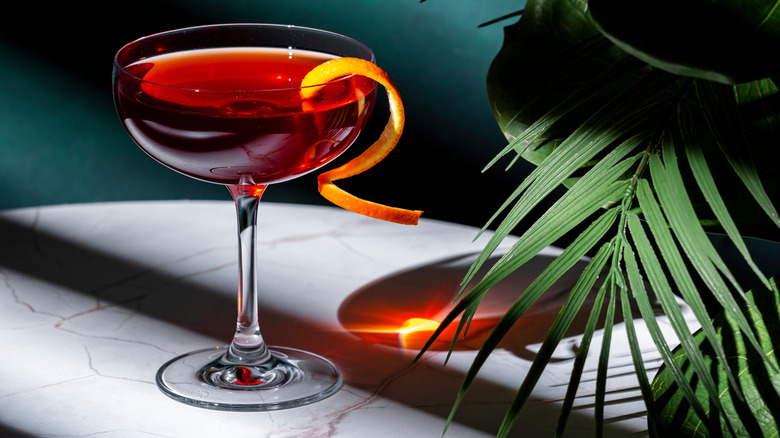
The Deshler's many re-cast characters offer similar qualities and flavor interactions. Dubonnet offers a more balanced bitter-sweetness, and Peychaud's bitters also contribute a tad more bitterness (and their red hue) with some candied fruit notes. These complement the spiciness of rye, and exemplify the hallmark of this family of classic cocktail; using sweetness and bitterness in harmony to balance the drink. Cointreau elevates the drink with additional orange aroma and flavor that folds harmoniously with the spice, richness, and complexity of the other ingredients.
Interestingly, Ensslin's recipe only included two dashes of Cointreau, giving the cocktail just a whiff of the triple sec's orange flavor and aroma. Modern interpretations are a tad more heavy handed, using closer to a quarter of an ounce , although this still counts as a "splash", using the triple sec as an enhancer rather than a dominant flavor-driver.
Making the drink is extremely easy. To follow Ensslin's original directions, shake equal parts rye whiskey and Dubonnet with two dashes each of Peychaud's bitters and Cointreau in a mixing glass with cracked ice. Many modern versions of the drink suggest stirring the ingredients with ice rather than shaking, which makes sense for preserving the boozy bite you want for this type of cocktail, and limiting dilution and excess flakes of ice. Ensslin's recipe garnishes the drink with one piece of lemon peel and two pieces of orange peel, but even one ribbon of twisted orange peel will top the drink off nicely.