

What 'Buy One, Get One' Grocery Deals Actually Mean (And When To Skip Them)
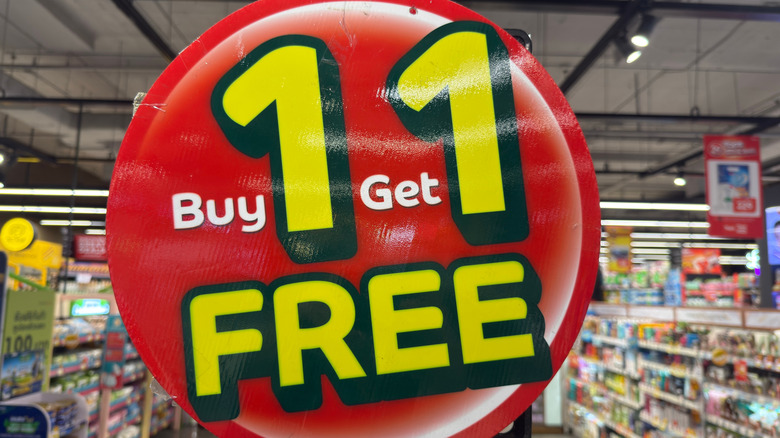
The word free is a powerful psychological trigger, which is why buy-one-get-one-free deals are so compelling. Studies have shown that labeling an item as free makes it highly desirable to consumers, even if they weren't interested before. Stores know this, which is why these sales are so common. But while these deals can be great, it's worth knowing a few things before committing as they may not be as good as they appear.
We spoke with Alli Powell, owner of Grocery Getting Girl, who explained how buy-one-get-one-free deals actually work — and whether they're really worth it. "If it's something you buy often, it's a good deal," she tells us. "Not all stores require you to buy two to get the deal, and you usually can buy one item for 50% off." Check the fine print, because some stores simply cut the price of each item in half, so you don't need to buy two if you don't need that many.
More than 50% of purchases are impulse buys, per the Journal of Retailing and Consumer Services, and buy-one-get-one-free deals prey on this compulsion. Shoppers feel a rush when confronted with a deal. This can temporarily override the rational part of the mind that says you don't need two of a product, even if one is free. BOGO deals can lead to excess waste if the "free" item is never used.
When BOGO is a no-go
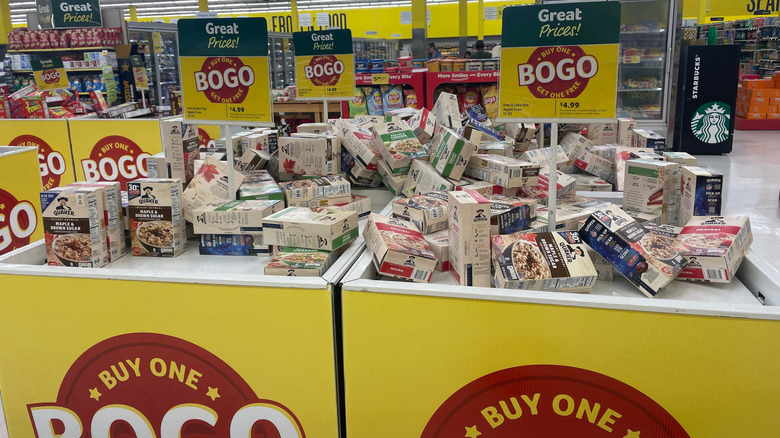
On the surface, it seems like you have nothing to lose with a buy-one-get-one deal. However, as Powell explains, there are some red flags to watch for. "Occasionally the price will be inflated a bit for the BOGO deal," she says. "Make sure you are familiar with the regular price so you aren't paying more than you should." In other words, that deal may not be a deal at all.
In 2023, Albertsons, the parent company of Safeway, was sued for allegedly raising prices on products for BOGO sales. That came on the heels of the company paying a $107 million settlement for doing the same thing years earlier. Other chains have faced similar accusations, which isn't a surprise when you consider that BOGO deals usually relate to products that are low-demand and low-value. The price is never a loss for the store; it's simply a reduction of the markup. A store can make more money on a BOGO deal than selling at full price simply because of higher turnover.
If a store has 100 frozen pizzas on sale at $10 for two ($5 each), that's $500. If it can only sell 30 pizzas at full price, that's $300. Since the BOGO price will be above the store's cost, which may only be $2 per pizza, it still makes a profit. While BOGO deals can be a great way to save money on things you like and will use, be sure the price hasn't been unfairly raised — and have a plan for using the extra items you're buying.