

7 Discontinued Liqueur You Probably Haven't Thought Of In Years
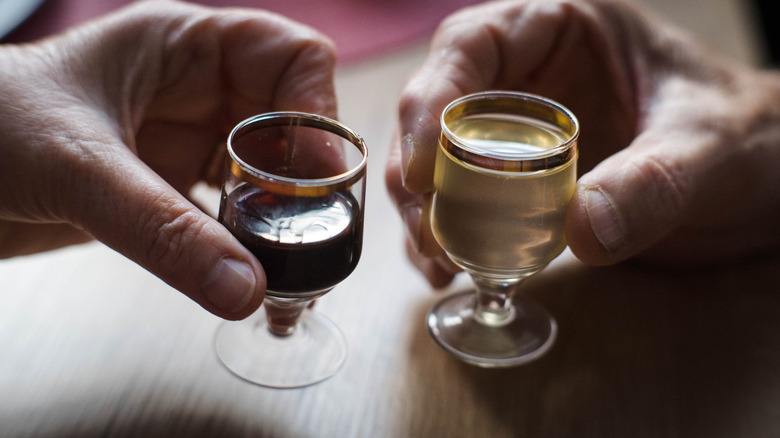
Back in 17th-century France, Francois Hannibal d'Estrées sent the recipe for an elixir to some monks just outside of Paris. According to the French Marshal and diplomat, the elixir, made with dozens of herbs and plants, could help you live a long and healthy life. We're not sure about the longevity part, but the recipe did give us Chartreuse. The door was opened to a huge market for similar, botanical-infused alcoholic drinks known as liqueurs.
Today, the liqueur market is huge. According to Maximize Market Research, the global industry reached nearly $142 billion in 2025. In other words, there is a heck of a lot of competition. So it's no surprise that, over the years, a few liqueurs have fallen by the wayside. Below, we've gathered a few discontinued liqueurs that you probably haven't thought about in years. Grab a glass, and let's head down memory lane.
Kina Lillet
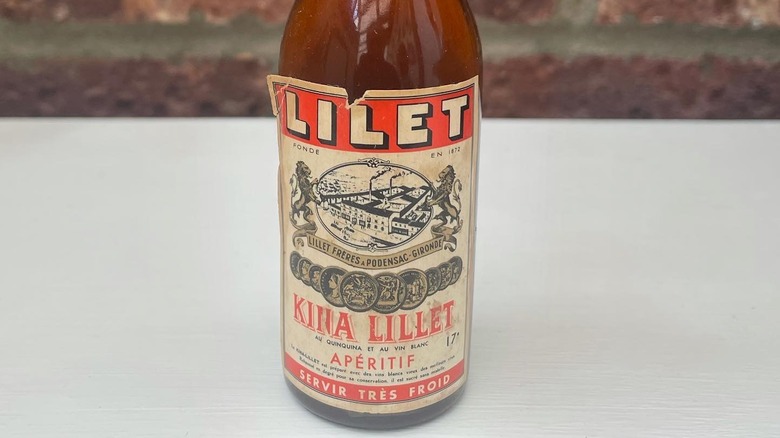
Even if you're not a fan of the movies, you probably know that James Bond was a big martini fan. He, of course, liked them "shaken, not stirred," and he also liked them with Gordon's gin, vodka, and Kina Lillet. Ian Fleming, the author of the books the Bond films are based on, invented the recipe for the Vesper Martini. But if you were hoping to try it for yourself, we have bad news: It's not possible, because Kina Lillet is no longer around.
Fleming published "Casino Royale" in 1953, and that's when Bond ordered the cocktail for the first time. Back then, Kina Lillet was still being made according to the original recipe that it launched with in the late 1800s — fruit liqueur, wine, and quinine. Fun fact: The latter is a muscle relaxant and a common treatment for malaria. So how did it find its way into an alcoholic drink? Well, one key reason was the taste; it brings a bitterness that helps balance out the sweetness of the fruit. Quinine is still added to tonic water, hence the bitter flavor.
In the 1980s, however, the Lillet Company (the producers of Kina Lillet) decided to alter the recipe of the drink to better suit evolving taste preferences. Now, you can buy Lillet Blanc, but it doesn't taste anything like the original due to the significantly lower content of quinine.
Baileys Irish Whiskey
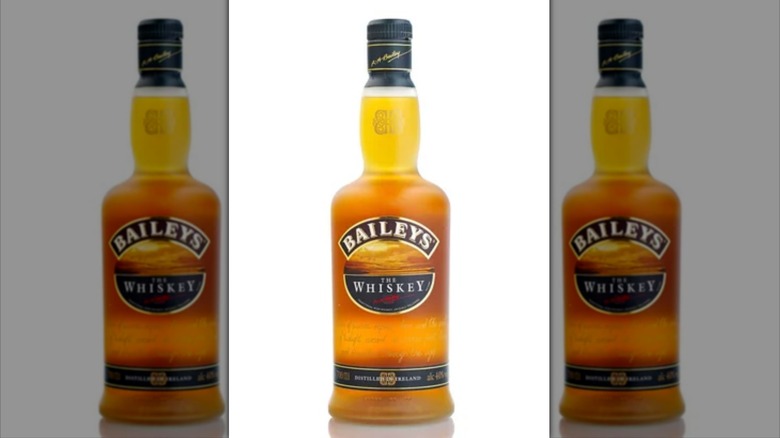
When most of us think of Baileys, we, of course, think of that famous, velvety mix of dairy cream, Irish whiskey, chocolate, and vanilla. Baileys Irish Cream is one of the most well-known Irish liqueurs on the market, beloved by millions all over the world. But there was a time when Baileys nearly became known for Irish whiskey, too.
In the early 2000s, Baileys launched a whiskey that had been seasoned with the flavors of its iconic Irish cream liqueur. It was a new kind of drink, completely different from anything else on the market. And it was easy to make, too. Bourbon casks were filled with Baileys liqueur flavoring and then topped up with Irish whiskey. The spirit was then bottled and sold, and those who got to try it adored the distinct flavor. It wasn't technically a liqueur, but we're including it on this list because it was liqueur-flavored, and we think that kind of counts.
Unfortunately, Baileys Irish Whiskey wasn't meant to be. Regulatory bodies weren't convinced by Bailey's unique production method, and the brand opted to pull the whiskey from the market. If you want a taste, or you've tried it before and are feeling nostalgic, there are still a few bottles available. But be warned, you'll need deep pockets. Dublin's iconic pub, The Temple Bar, is currently selling a bottle for $1,770.
Pimm's No.6
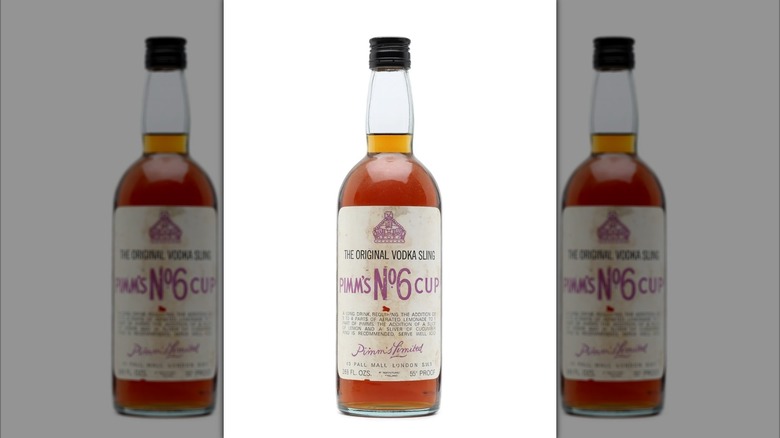
If you head to a British park or pub garden in the summer, it's likely you'll spot at least one bottle of Pimm's. Since it was founded in London in the 1840s, the fruity, bittersweet, herbaceous drink has been adored by Brits everywhere. It's also found a following in the U.S. (particularly in New Orleans), and you'll find it served everywhere from Hong Kong to Australia, too.
Today, Pimm's No. 1 Cup, which is gin-based, is the most common variety, but there have been many different types of Pimm's over the years. Pimm's No. 2 Cup, for example, was made with Scotch whisky, while No. 3 was made with brandy. But Pimm's No. 6 Cup is the blend that most people mourn. This particular blend, launched in the 1960s, was made with vodka. It tastes very similar to No. 1, but it's a little drier and lighter than the original version, hence why it had such a big fan base.
Unfortunately, though, Pimm's producer Diageo doesn't believe in the future of No. 6. It has discontinued the blend not once, but twice. As of right now, you won't find it on the shelves, but campaigners are dedicated to bringing it back, so who knows what the coming years will bring?
Baileys Glide
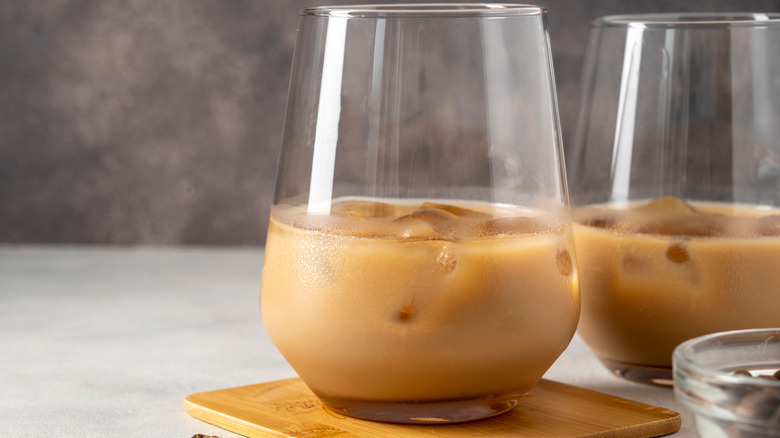
If the name Baileys Glide is ringing a very, very faint bell deep in the back of your brain, that's because it hasn't been around for more than 20 years. And even when it was around, it didn't last very long.
Glide was launched in the U.K. in 2003, before heading to Australia and New Zealand, and was marketed as a much lighter version of the classic Baileys Irish Cream, with added vanilla. Sold in 200 milliliter bottles, the idea was to encourage people to drink Baileys more regularly, rather than just breaking out a bottle for special occasions or during the holiday season.
But much like Baileys Irish Whiskey, Glide simply wasn't to be. Unlike the whiskey, which failed to get regulatory approval, Glide just wasn't a hit with the public and couldn't compete with the smaller drink options already on the market. In 2005, less than two years after its initial launch, Diageo decided to discontinue the range.
Forbidden Fruit
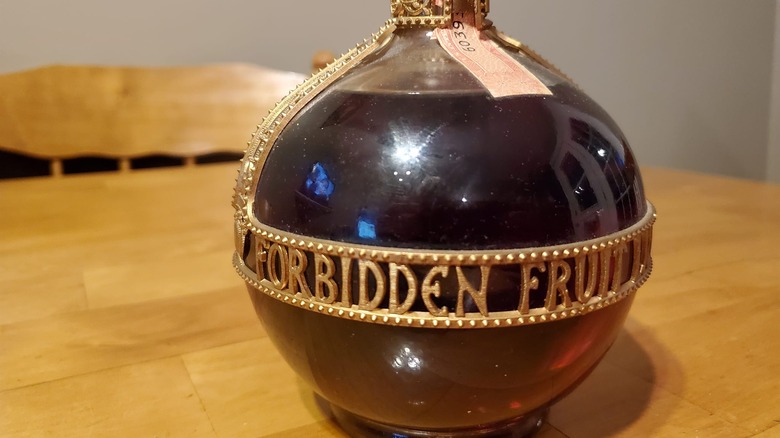
If you've seen a bottle of Forbidden Fruit gathering dust in the back of a drinks cabinet, perhaps at your parents' or grandparents' house, you're not alone. The liqueur was discontinued decades ago, but there are still a few bottles in existence (mostly half-drunk and forgotten about).
Forbidden Fruit first hit the market in the early 1900s, and it was pretty popular, thanks to its sweet, fruity pomelo flavor and its fun circular bottle. Both the drink and the bottle design were initially created by New York restaurateur Louis Bustanoby, but after Prohibition, Forbidden Fruit was acquired by the Philadelphia cordial producer Jacquin's.
It turns out the team at Jacquin's liked the bottle more than the actual Forbidden Fruit inside. The company discontinued the liqueur in the 1970s, and then used the bottle design for its new drink, Chambord, in the 1980s. If you're not one of the lucky few to have inherited an old bottle as a family heirloom, you can buy one of the original Forbidden Fruits, but again, it's not cheap. In 2017, a bottle was sold for more than $400 at auction.
Navan
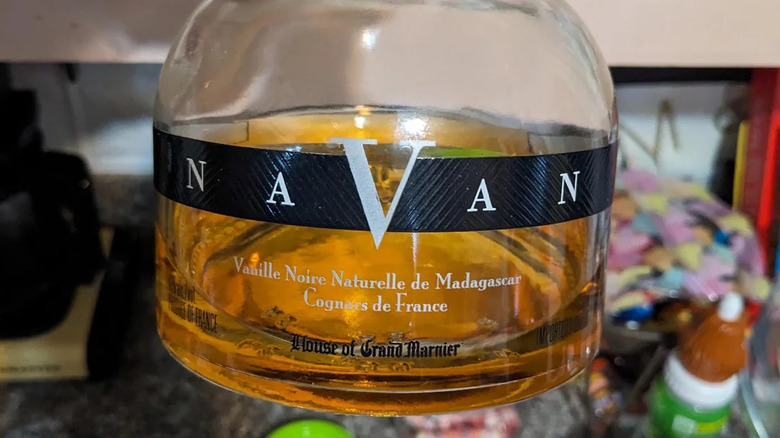
Grand Marnier is, of course, best known for Cordon Rouge, its iconic mix of French Cognac, sugar, and orange liquor. But it makes a variety of Cognacs, including the stronger Cuvée Louis-Alexandre. And once upon a time (back in the early 2000s), it also launched a vanilla Cognac liqueur called Navan.
If the memories are coming flooding back, we wouldn't be surprised. Navan, known for its thick consistency and sweet, dessert-like vanilla flavor, was around for quite a while. It first launched in 2004 at the MTV Video Music Awards, and it stuck around for a good seven years after that.
In 2011, Grand Marnier discontinued Navan due to poor sales. The brand had tried to play with the recipe to make it less sweet and more appealing, but it didn't work, and Navan left the market for good. Today, some people still crave its cloyingly sweet flavor, and if you're among them, there are still some bottles floating around. Right now, you can buy one from CraftShack for a cool $755.
Galliano Balsamico
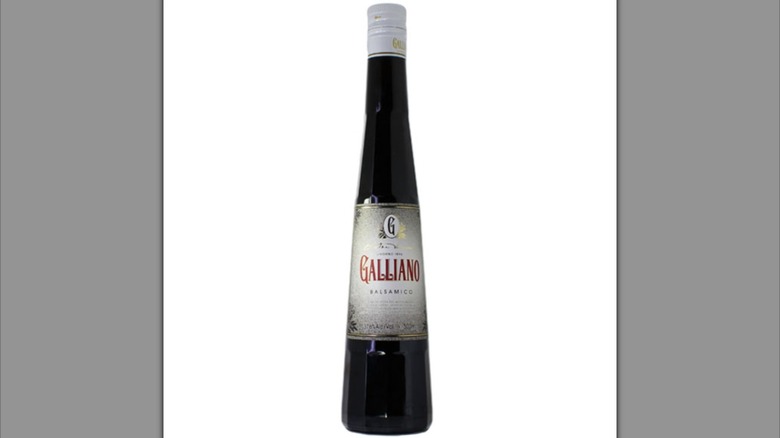
Italian brand Galliano was founded back in the late 19th century, and it's still going strong today. It's best known for its bright gold Galliano Autentico liqueur, which is sweet and herbaceous, making it the perfect ingredient for cocktails like the Harvey Wallbanger. But it also offers a few variations on the classic, including Galliano Espresso, Galliano Vanilla, and even Galliano Sambuca. But one of its arguably most interesting flavors is no longer being produced. Galliano Balsamico was developed to taste just like, you guessed it, balsamic vinegar.
The liqueur didn't contain any real vinegar, but it did give the distinct sweet-and-sour flavor profile of the condiment to drinks through its unique combination of ingredients like raisins, caramel, and acetic acid. It might sound odd, but balsamic actually does work in cocktails, and many people love the taste. Try adding a drop to a Paloma, for example, and prepare to be amazed at the depth of flavor.
Sadly, it's not as easy to play around with Galliano Balsamico. It's a shame for balsamic-lovers, because the smell and taste of balsamic vinegar doesn't last long in cocktails, but Galliano Balsamico was specially formulated for the job. Perhaps it will make a return — watch this space.