

Is That Restaurant Ketchup Bottle Actually Filled With Heinz? Here's How To Tell
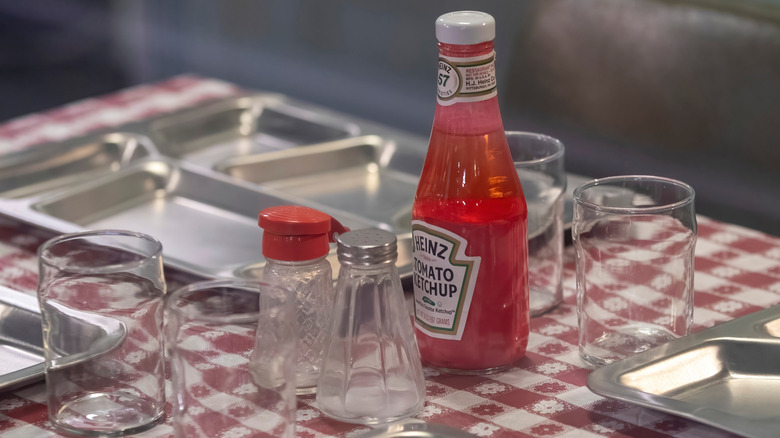
Nobody likes to be tricked, and for many, that's double when it comes to food. In 2023, Heinz addressed the scourge of the restaurant table known as "ketchup fraud", in which restaurants replace the ketchup in spent Heinz squeezy bottles with cheaper brands. While Heinz has featured bold, exciting colours on its label in the past, this time it highlighted one special colour, pantone 7626C, which is used to border the edges of the label. This red (which is basically the reddest red possible) is supposedly the exact same hue as Heinz ketchup, and acts as a colour test that is supposed to allow the customer to catch counterfeit ketchup.
The mission, according to VML, the marketing agency behind the campaign, is to stop restaurants from cutting corners by passing off cheaper ketchup as Heinz, supposedly for the sake of the customer. There's also an obvious incentive for Heinz to protect its own sales by maintaining table-top real estate and ensuring that the ketchup the customer thinks is Heinz, is actually Heinz. Whether Heinz is on the table by way of commercial agreement between the restaurant and the brand or its distributors, or because the restaurant simply wants it on display, maintaining Heinz ketchup in its own bottles is at the core of the label change. What makes this campaign so effective is putting the customer in the position of the detective.
Does the Label of Truth work?
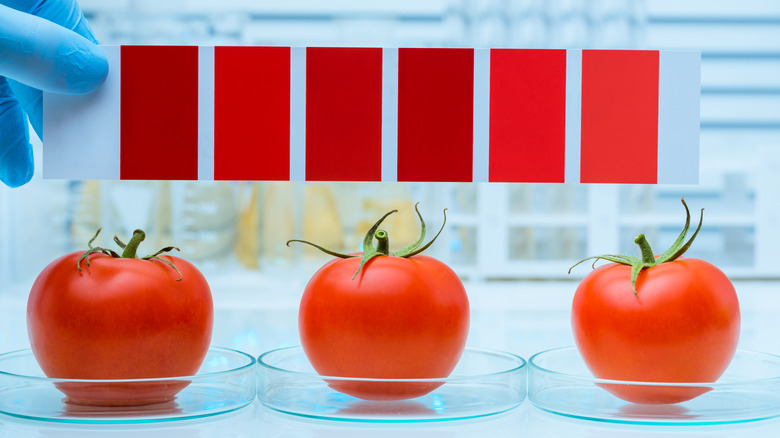
So does this Label of Truth work? It depends on how you look at it. There is some debate about whether the red border is actually effective. The simplicity of the idea can sometimes work against it, with some online commentary pointing out that color might not be the be-all and end-all measure of authenticity. The color of ketchup can supposedly vary among the types of ketchup (or even batches) offered by Heinz, printed colors can refract light differently in various lighting environments, and if it's only the redness of the sauce that shows its authenticity, then it might not be so hard for knockoff brands to copy that hue as a disguise. Commenters on LinkedIn even expressed that realizing how unnaturally red Heinz ketchup was is actually a turn-off. Similarly, while making the consumer the detective is effective, it also begs the question asked by one Facebook user: "And what am i supposed to do if it doesn't match? Call the police?"
Anybody who's ever worked in hospitality knows that topping up those ketchup bottles is an unending chore. Also consider that ketchup needs to be kept in the fridge (according to Heinz) to maintain the best condition. Over time, that ketchup naturally oxidizes and changes colour, losing that bright red tone naturally, all meaning that there are factors that potentially make a color-verifying label obsolete.
Why the Heinz Label of Truth works, even when it doesn't work
The true value of the Heinz campaign is genius not because it actually helps prevent ketchup fraud, but due to its intelligent brand positioning and visibility. This campaign positions Heinz as the unequivocally superior product, the ketchup all the other ketchups want to be. Other brands inside a Heinz bottle are just cheap imposters. By casting the consumer in the role of quality checker, it ensures they have skin in the game.
The Label of Truth campaign was listed as one of AdAge's "Top 5 Campaigns You Need to Know About Right Now" in 2023 according to VML, which speaks to the impact this small labeling change made. Now using the campaign as a case study, the agency boasted 100,000 organic shares, 800,000 lives on TikTok, and more than 2,000 tweets, and even launched a bespoke Instagram filter for ketchup fraud detection.
All of these talking points and customer interfaces reinforce the Heinz brand as the superior option. WPP, the mother company of VML claimed that all the promotions led to 97% of consumers being able to tell real Heinz ketchup from imitations. It also claims success in reducing ketchup fraud, citing a 73% decrease in non-Heinz ketchup refills and a 24% hike in Heinz ketchup usage in street food restaurants. So even though there's scrutiny around how effective the actual color of the Label of Truth is in detecting ketchup fraud, it still led to people putting more Heinz in Heinz bottles.