

Skipping Store-Bought Blueberries With A White Coating? Think Again
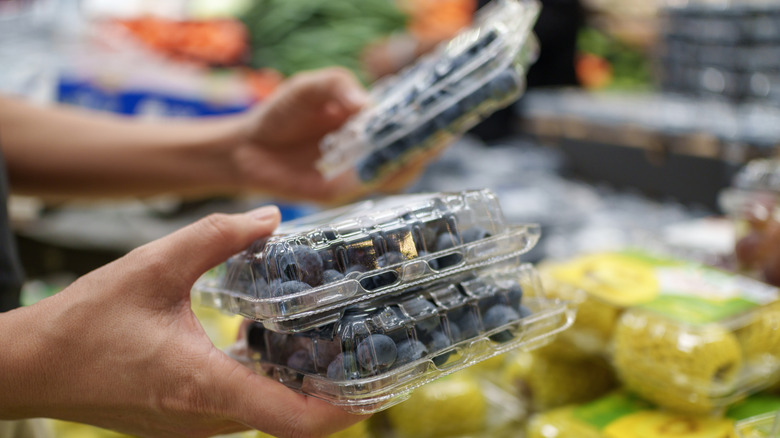
We have more good news about blueberries. You already know the superfood fruit is praised by nutritionists and medical experts for being full of nutrients and antioxidants. Here's another thing to know about one of the healthiest fruits out there — they often have a natural coating called a bloom. Even though it sounds a bit weird, bloom acts as a protective barrier and helps shield blueberries from moisture loss, bacteria, and environmental stress. It's basically the fruit's own little built-in defense system and sunscreen.
The next time you're shopping for berries, you don't need to be concerned about the fruit's dusky coating. Bloom is actually a good indicator that the berries are fresh and have been handled gently. When blueberries are harvested and transported, the bloom can easily rub off through washing and excessive handling. In fact, organically grown berries often have more bloom than conventional. So if you see berries with a visible, powdery coating, that's a good thing. In fact, bloom is one of the three features you should look for when buying blueberries.
Because it looks matte and slightly dusty, people sometimes mistake bloom for mold. But the two are very different. Mold on blueberries tends to look fuzzy, patchy, or wet, and is usually accompanied by soft or shriveled fruit. Bloom, on the other hand, is dry and evenly distributed across the surface of the berry.
Get the most out of your blueberries
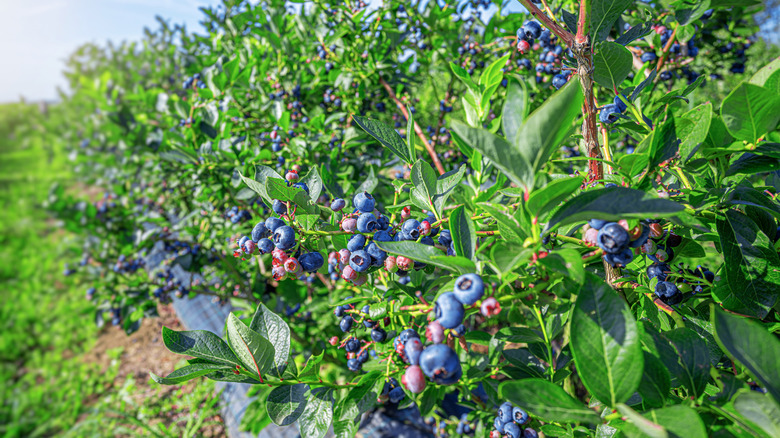
The bloom isn't just for blueberries. It also shows up as a white powder on grapes, as well as plums and apples. Just give them a quick rinse before eating, and the bloom should easily wash away. That being said, bloom or no bloom, you'll still want to inspect your berries for any kind of breakage before purchasing. Any sign of split skin is ripe (pun intended) for spoiling. Keeping them refrigerated and dry will also help preserve their freshness. Many experts recommend waiting to wash them until just before eating, since extra moisture can speed up spoilage.
The good news is, if you can't afford fresh (or they're simply not in season), frozen blueberries are actually more nutritious. Our bodies can access the antioxidants in the berries more easily because freezing concentrates all that good stuff. You won't have to worry about them spoiling quickly, either, as they'll last for up to a year in your freezer.
If you're lucky enough to be in an area where you can access wild blueberries, also known as "lowbush" blueberries, grab, eat, and freeze as much as you can. Unsurprisingly, wild blueberries are more nutritious than farmed berries, and they also just taste better. They tend to be sweeter but also slightly more tangy, giving them a deeper "blueberry" taste. Just remember to look for the bloom next time you're at the farmers' market or in the blueberry patch.