

8 Ways To Upgrade A Cup Of Herbal Tea
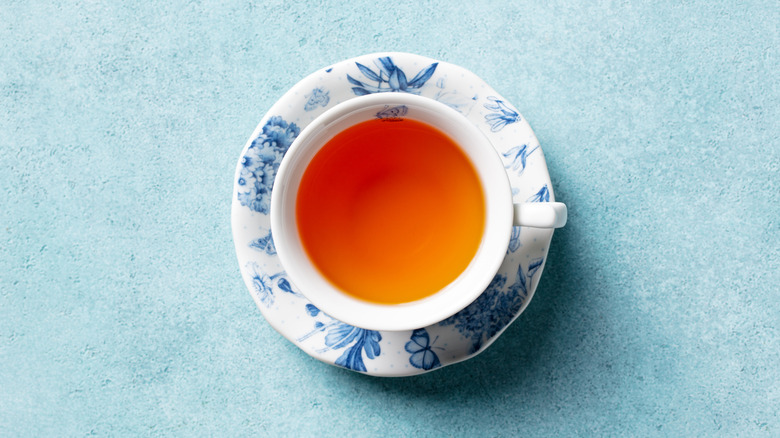
Herbal tea rarely gets as much attention as coffee. However, a freshly brewed mug of herbal tea can burst with subtle flavors and aromas that rival even the priciest cup of specialty coffee. In fact, you could argue that tea is much more varied and exciting than its heavily caffeinated counterpart because there are so many types. From the cooling punch of peppermint and the soothing subtlety of chamomile to the tartness of hibiscus and the earthy sweetness of rooibos, there is something for everyone.
For those who enjoy embellishing their drinks, though, tea is also full of potential. Unlike coffee, herbal tea doesn't have a powerful enough flavor to compete with copious amounts of frothy milk or flavored syrups, but it does invite more delicate additions that will engage all your senses. To get some ideas from a true authority in the field, we spoke to Elizabeth Escobedo, the herbs and infusions expert with the UK Tea Academy and founder of Elizabella Tea & Co. In addition to her specific suggestions, she stressed that restraint is always key. Adding too many ingredients can make the beverage taste muddled. Even worse, you could mask the flavor of the tea itself. So, with that as a guiding principle, here are some of the best ways to enhance a cup of herbal tea without losing the central flavor that makes it special.
1. Date syrup
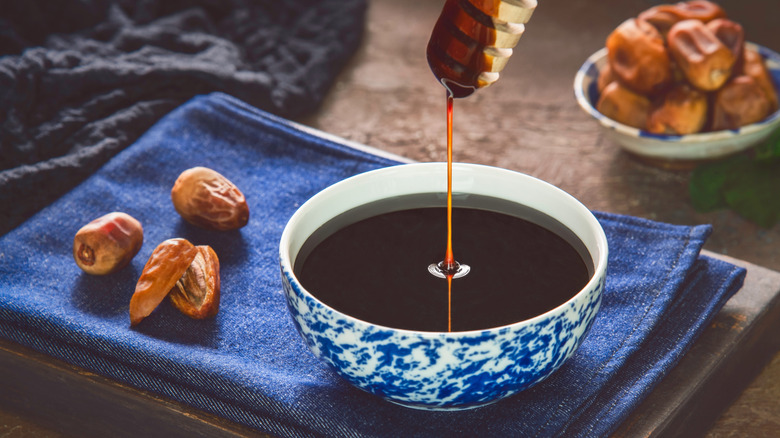
Most of us automatically reach for the sugar or honey when we want to sweeten a hot beverage, but once you free yourself from this habit, you'll discover that the alternative options are practically endless. Elizabeth Escobedo told us that her favorite sweetener for herbal tea is date syrup, especially in teas that already have warm, fruity, or honeyed notes. "It adds sweetness and a subtle caramelized depth that feels natural and soothing," she said, explaining that she likes to make a morning beverage of simmered hibiscus flowers, cinnamon sticks, and fresh ginger sweetened with a squeeze of date syrup. "The date syrup cuts the tartness of the hibiscus and gives it a more rounded and fruit-forward flavor," she said.
There are many reasons why date syrup should be your go-to alternative sweetener beyond its seamless integration into herbal teas. Dates are full of antioxidants, and the syrup has a relatively low glycemic index compared to sugar. Even if you weren't interested in its nutritional advantages, though, date syrup should be your top choice for tea simply because its flavors complement many tea varieties and add more complexity than regular sugar.
2. Flower jelly
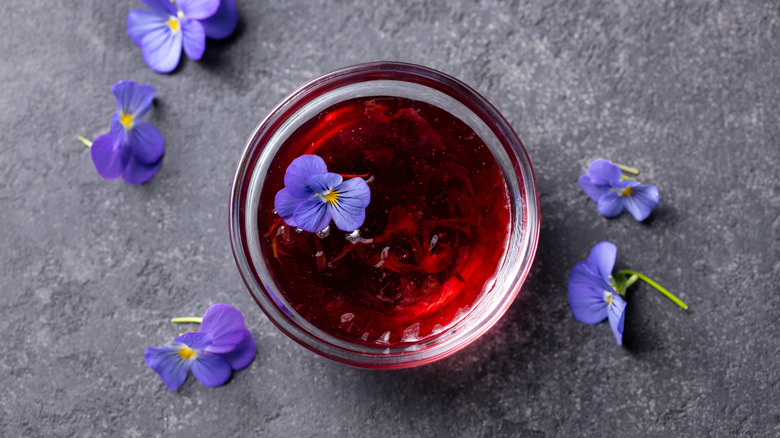
Flower jelly is harder to find at the store than date syrup, but it's worth looking for and purchasing whenever you are fortunate enough to spot it. You can also make it from scratch if you have access to edible flowers. As its name suggests, flower jelly is just jelly made with flowers instead of fruit. Since you won't get much sweetness from the flowers, sugar is an essential ingredient, but the floral taste from the petals will take your flavors to the next level.
Elizabeth Escobedo told us that flower jellies are particularly well-suited to herbal teas because they create layers of flavor. As an example, she revealed that she has a jasmine flower jelly that she recently added to an infusion of chamomile, lavender, and rose tea. "It tasted like a garden party," she said. "So light and balanced."
If you are making your own flower jelly, make sure that the flowers you're using are, in fact, edible and unsprayed with herbicides. If you're foraging them, bear in mind that some areas, such as roadsides, are often full of potential contaminants that you don't want to ingest. It's also worth noting that some types of edible flowers can aggravate allergies, so you may want to start by making only a small batch of jelly first.
3. Try cold brewing
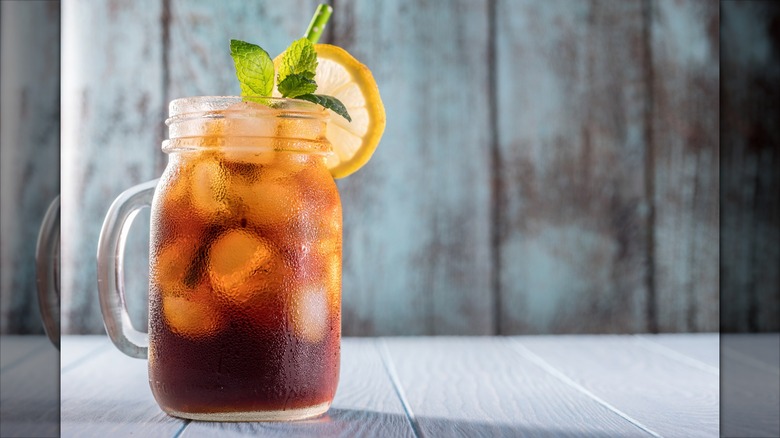
Cold brew coffee has been all the rage for years now, but did you know that you can also cold brew tea? Sure, when someone mentions herbal tea, your mind probably automatically conjures an image of a steaming hot beverage in a mug, but herbal tea can be just as delicious cold as it is when it's hot. This is particularly true for teas that have a bitter flavor. Cold water leads to fewer tannins, which are the compound that gives some varieties of tea a bitter edge. It's easy to make, provided you have time to wait. All you have to do is mix the tea leaves into a jar of cold water and let it sit in your refrigerator for four to six hours.
There is one difference to cold brewing coffee to be mindful of, though. "Some herbs may need a little help in the cold brew process," Elizabeth Escobedo told us. "Some herbal blends contain hard plant material, such as cinnamon, that may benefit from a method that I like to call, 'Quick-start cold brew.'" To do it, she explained, you simply steep the blend in hot water first for a few minutes before moving on to the standard brewing period of four to six hours in the fridge.
4. Add a pinch of salt to bitter brews
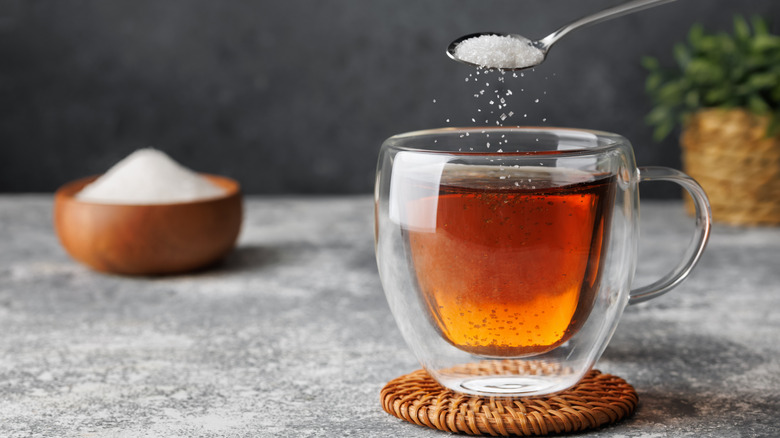
Cold brewing can help take the bitter edge off certain teas, but there is another option that requires significantly less patience. Although it might seem like heresy or a recipe for the gag reflex, a dash of salt can work wonders. Black tea is particularly well-suited to this sort of counterintuitive intervention because it has such a pronounced bitterness. While some people might opt to combat this with sugar, there is a scientific basis for opting for salt instead.
American chemistry professor and author Michelle Francl caused a stir when she revealed that a pinch of salt can help block the receptors that experience that bitter flavor. It may have scandalized many in the U.K., but she found this ubiquitous seasoning was mentioned as a tea ingredient in 8th-century Chinese manuscripts, suggesting that it's not a very revolutionary idea after all.
The key, of course, is the amount that you use, and you'll be relieved to learn that such a small pinch is required that you won't even be able to taste it. Removing the edge from bitter tea blends may also help enhance the complexity of the beverage simply by removing the harsh flavor that usually dominates it. It's a win-win.
5. Adjust the timing and temperature
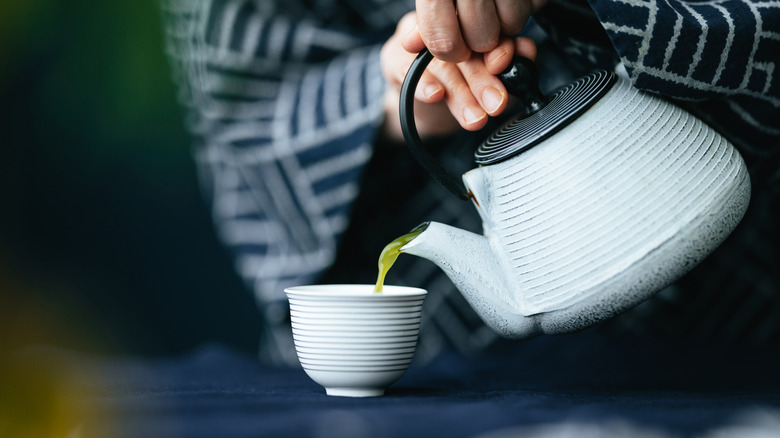
If you want to change your tea without actually altering a single ingredient, focus on the temperature of the water and how long you steep it. A lot of tea products will tell you exactly how long you should brew them, but according to Elizabeth Escobedo, playing around with timing can be a game-changer. This is especially true if you're using ingredients that aren't pre-made tea blends, such as fresh flowers or herbs.
For example, Escobedo said that she enjoys brewing teas made from roses that she grows in her garden. "I find that since roses have different fragrances, brewing them at different temperatures draws out the best fragrance and flavors in my brews," she said. You can start by following these expert tips to brew the best cup of tea and then experiment from there with each ingredient and find what works best for you. Although the flavor of herbal tea is subtle, the more you try different brewing methods, timings, and temperatures, the more nuances you'll discover and the more you'll appreciate them.
6. Add edible flowers
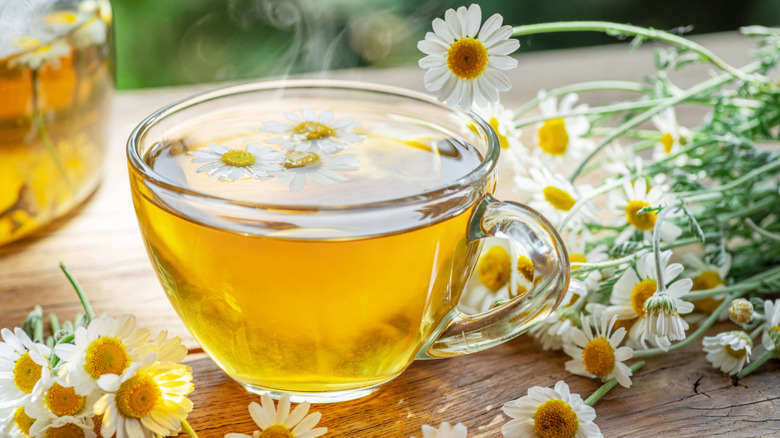
One of the best ways to add flavor and visual flair to a cup of herbal tea is with edible flowers. This is a much simpler route than making flower jelly, but it provides some of the same benefits. Elizabeth Escobedo told us that she especially likes to use flowers that complement the particular tea blend, such as roses in a tea blend that contains rose petals.
Other options are more unusual. Chocolate daisies, for example, are a flower she adds to chocolate mint tea. "The chocolate daisies add aroma and subtle flavor while allowing the freshness of mint to remain bright," she explained. But you don't have to stop with those examples. There are numerous types of edible flowers that you can incorporate into your herbal tea blends. In fact, you may discover that edible flowers are such a delightful addition that you'll be inspired to start your own garden just so you have a never-ending supply of embellishments for your hot beverages.
7. Combine different teas
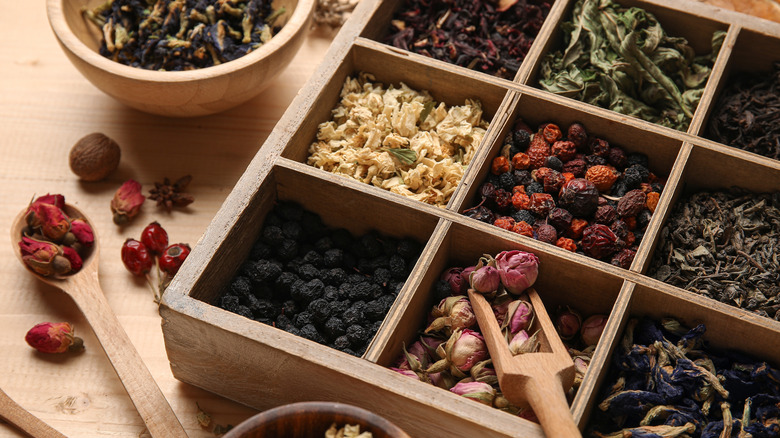
It might seem obvious, but combining multiple ingredients is just as acceptable with tea as it is with any other food or beverage. "I feel like we limit ourselves with the herbal teas that we drink because our palates become accustomed to certain flavors, mainly sweet and floral," Elizabeth Escobedo said. To illustrate the benefits of combining varieties, she noted that some people dislike chamomile because it has flavor notes of hay. However, she explained, other types of tea, such as spearmint or apple mint, can bring out the sweeter notes in the herb. That sweeter blend might even appeal to people who typically dislike chamomile.
There are classic pairings, such as lemon and ginger and rose and lavender, but there is also plenty of room for experimentation. Loose-leaf teas make it especially simple to combine flavors since you can choose the ratios without having to cut open tea bags. There are numerous types of herbal teas and an infinite number of ways to combine them. Just remember Escobedo's rule of thumb to avoid muddled flavors. Two or three types is a great place to start. Throwing all the options into a mug, on the other hand, will yield a beverage that lacks nuance.
8. Use a clear glass instead of a mug
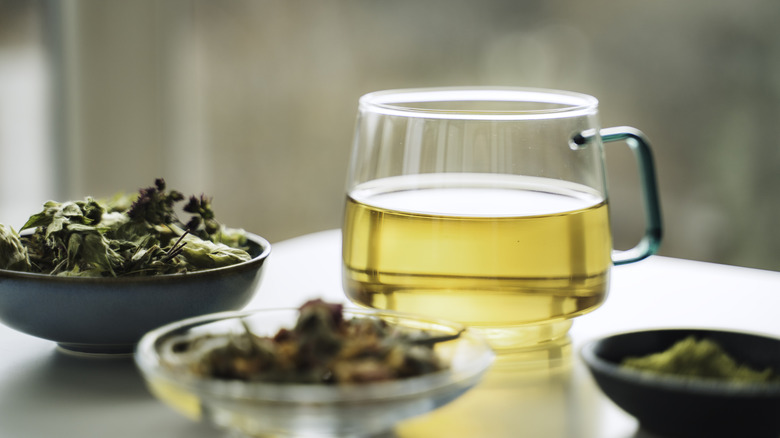
Sight is often underestimated when it comes to the enjoyment of food, but there's a reason why expensive restaurants make their dishes look like pieces of art. Presentation is important, especially when you consider that your first impression of a food or beverage is often how it looks rather than how it smells or tastes. You might not think that there are many ways to present tea other than in a mug of some sort, but Elizabeth Escobedo gave us a brilliant option.
"Simply using clear glass to brew herbal teas elevates the experience by engaging the senses," she said. "Watching the pretty leaves and flowers unfurl and color the liquor is quite artistic and calming." To heighten your appreciation of the beverage, simply allowing yourself to see it brewing can make a big difference. Think of it like a tiny aquarium. You might be so captivated by it that you won't want to drink it.