

Is The 'Outside-In' Dining Rule Real When It Comes To Using Your Utensils?
When heading to a fancy dinner party or a more formal restaurant, it's common to have questions about manners. It can be tough to interpret different standards in different places, and to know which dining etiquette rules are totally passé versus which you ought to follow. A past custom like men ordering for women seems silly now, yet waiting for others to get their food before digging in feels inclusive and polite. But there's one etiquette rule in particular you may be wondering about: Should we still be doing the "outside-in" approach with utensils?
We spoke with Nikesha Tannehill Tyson, an etiquette expert who founded the Swann School of Protocol in Shreveport, Louisiana, and the author of "Going Public," to understand the importance of the outside-in rule. "Using utensils from the 'outside in' (outside and toward the plate) as each course is served is the proper way to navigate formal place settings," Tyson explains. So, yes, the outside-in rule still stands.
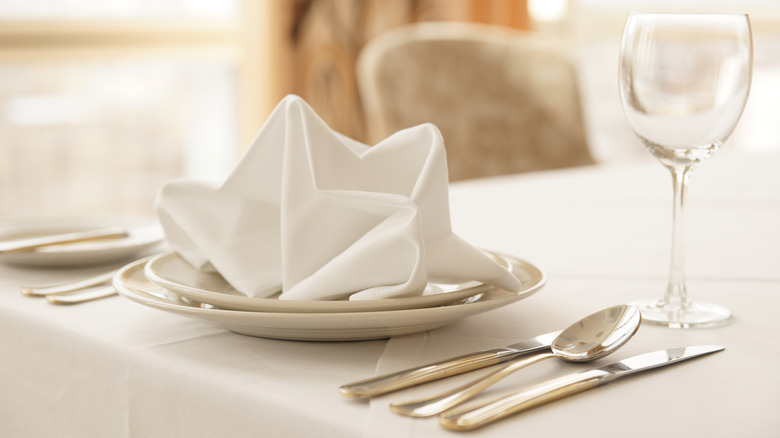
As for what the rule looks like, Tyson elaborated. "Forks are always placed on the left side of the plate," she explains. "Knives on the right side, next to the plate (sharp edge turned inward); the soup spoon goes to the far right of the knife." As they come last, dessert utensils aren't placed at the sides of the dish but above your plate.
Key utensil etiquette to remember
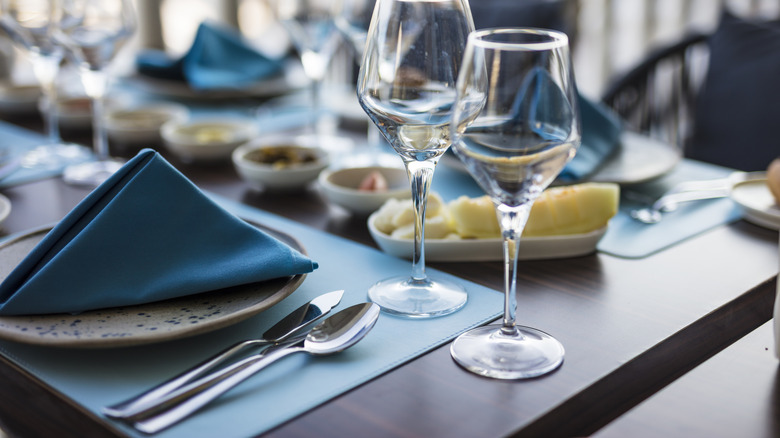
Mixing up your utensils is one of the most important dining etiquette mistakes to avoid. Not only do you want to feel comfortable and on the same page as everyone else at the table, but there's a functional reason for this, too. Different types of forks serve different purposes; the same goes for knives and spoons. Salad forks, for example, are designed to spear greens and retain dressing, so you want to ensure you indeed use them at your salad course.
Tyson points out a couple of other good utensil-related manners to remember, as well. "When a utensil is used, it should remain on the plate," she says. "A used utensil should not be returned to the table." No one wants to see a dirty fork or knife when it can stay with the food it's being used. "If you happen to drop a utensil," Tyson adds, "it is best to leave it where it falls and politely ask the server for a replacement." In short: You don't want the dirtied spoon back on the table.
If this seems like a lot to keep in mind, breathe. These rules aren't life or death, just good to practice. You'll never have more than two or three options at either side of your plate, and the rule of "outside-in" makes the order a snap to remember. When in doubt, Tyson recommends, "Observe your host and follow their cues."