

The Subtle Difference Between Salt Beef And Corned Beef
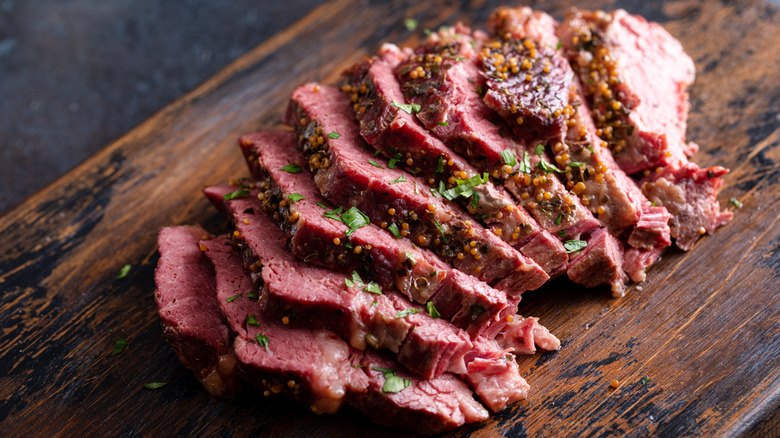
As William Shakespeare once wrote in "Romeo & Juliet": "What's in a name? That which we call a rose by any other name would smell as sweet." While he probably wasn't referring to corned beef, exactly, the idea still fits. Corned beef, salt beef, pickled beef, cured beef, and hash meat — are these all the same? Technically, no. While several of these names have been colloquially mashed together and now refer to the same food, salt beef and corned beef do have a minute difference.
Corned beef, which gets its name from the larger kernels of salt called "corn" (which were once used to make the dish), is made by leaving meat to brine for about a week in a vat of salt and complex spices. These include everything from bay leaves and peppercorn to garlic, mustard seed, and more — all of which go into making corned beef from scratch. Salt beef, on the other hand, focuses more simply on brining the meat in straight salt or saltpeter.
Some also say that the biggest difference between the two comes down to slicing, as corned beef is sliced thin enough for sandwiches (here's how you should be slicing corned beef by the way), while salt beef is not. It truly depends on where you live. In America, salt beef and corned beef have become synonymous with the same thing, but in Britain, "corned beef" refers to the version that comes out of a tin, while "salt beef" is what they'd call the meat that comes fresh from the deli counter.
The intertwined history of salt beef and corned beef
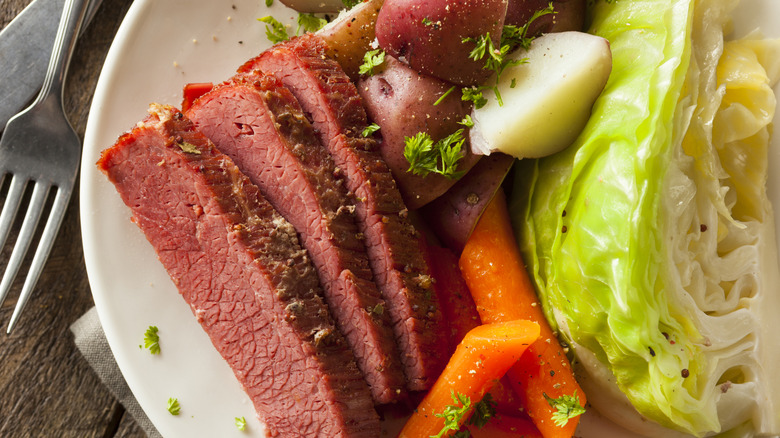
Corned beef and salt beef are typically made from beef brisket, though back in the day, any cut of beef could be used. The high quantity of salt originally used was no mere accident or experimentation but was instead used to prevent bacteria and cure the meat. Similarly, both salt beef and corned beef are known for their distinctly pink hue, which comes from a nitrate blend that's added to the brine. Back in the 1800s, it was common to use saltpeter (potassium-nitrate) for this purpose, but seeing as the original composition of saltpeter was also used in gunpowder, corned beef-makers these days stick with sodium-nitrates.
We commonly associate corned beef and salt beef with St. Patrick's Day, but the tradition can be more precisely credited to Irish American immigrants who turned the holiday into a celebration of their homeland. Back in Ireland, the Irish people were rarely actually eating corned beef, although it did make a lucrative business thanks to the inexpensive salt prices and surplus of cows. When Irish immigrants came to Ellis Island, corned beef was suddenly less expensive and in high supply given that the Jewish population in New York also favored the dish.
Although a rose "by any other name would smell as sweet," you can't necessarily expect corned beef when asking for salt beef. Still, it may help to consider these essential corned beef tips for St. Patrick's Day before you begin your own at-home preparations.