

Butter Vs Olive Oil: Which Is Best For Steak?
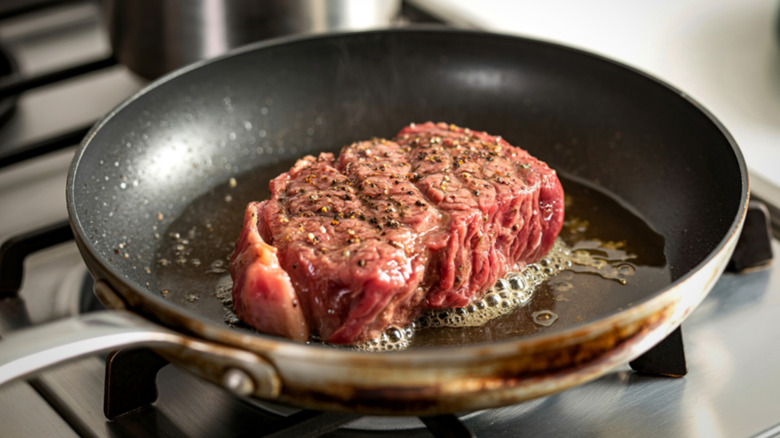
For a recipe that's so simple on paper — just take a good cut of beef and sear it for a few minutes on the heat — so many different cuts of steak have sparked endless arguments. Rare versus medium-rare. Thick-cut or thin. And perhaps most contentious of all: Is butter or olive oil the better fat to cook in?
Practically speaking, olive oil wins. Regular olive oil has a much higher smoke point between 390 to 470 degrees Fahrenheit — beyond that point, the oil breaks down and turns charred and bitter. That high heat is exactly what you need for a proper sear. Butter, though? It starts smoking at just 300 degrees Fahrenheit. The milk solids burn fast and give you an acrid, burnt crust instead of the golden-brown sear you're after. Still, plenty of chefs — even pros like Bobby Flay who cooks some steaks with butter under a broiler – swear by butter for one reason: flavor. Nothing else can give a cut of steak the rich, fatty note and the nutty, caramelized flavor once it's been properly cooked into the steak — and yes, there are ways to keep the butter from burning in a hot pan (more on that later).
Basically, the best fat to choose for steaks comes down to whether you'd prefer ease of cooking or maximum flavor. But what if we told you there's a way to get the best of both worlds?
No need to pick – use oil and butter for great steaks
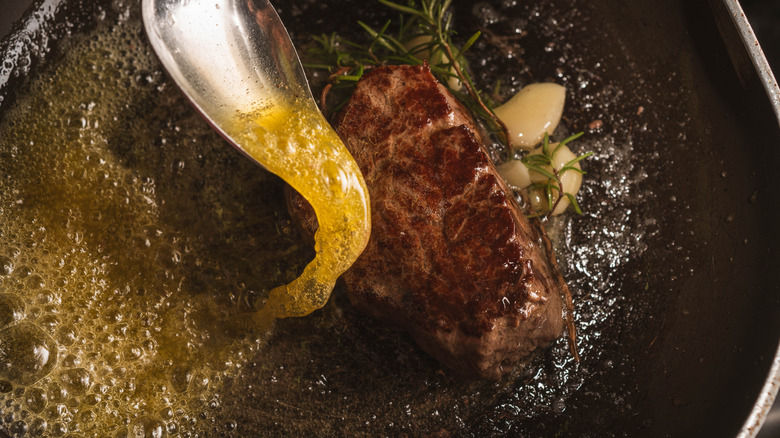
Instead of going one or the other, you can use both — this is a handy trick that Gordon Ramsay advocates. Leverage the high smoke point of oil at the beginning to bring your steak up to the right level of doneness and give it a good sear. You'll want to use regular, refined (not extra-virgin) olive oil for the job as the former has a much higher smoke point (390 to 470 degrees versus EVOO's 350 to 410 degrees). Using extra-virgin, even though it's more flavorful, won't give you a good sear and the meat is practically guaranteed to char.
Once the steak has been cooked through to your preferred finish on a high heat, turn down the dial to medium-low or low, then throw in the butter. As it melts, tilt the pan and use a spoon to baste the steak over and over with the liquid gold butter. The motion does two things: It lets the meat soak up the rich, buttery flavor and keeps the butter from burning by not staying in one place on the pan for too long.
Smashed garlic or a sprig of thyme takes this final flavor-boost even further, but honestly, you don't need them. The steak's already going to blow away anything you've cooked with oil or butter by itself.