

How To Decode The Types Of Wheat Flour Listed On Store-Bought Bread Labels
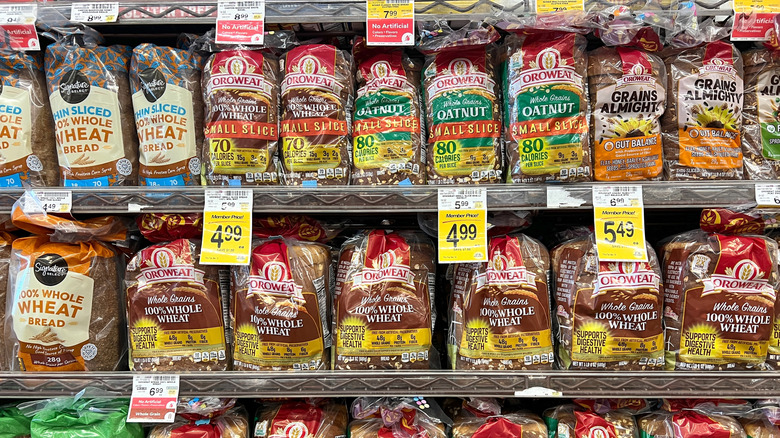
The labels on the front of bread packaging can feel like a cryptic puzzle sometimes, not to mention what's on the back. Separating terms like whole wheat versus whole grain, all-purpose, or enriched might feel like decoding a secret language intended to bamboozle even the most experienced loaf-lover. With no absence of smoke and mirrors around wheat breads, the guidance of a seasoned professional can help to unpack the types of wheat flour you might find on store-bought bread labels. Walleska Cianfanelli, executive pastry chef at Wilton Sweet Studio, is our guide and translator through the funhouse that is bread labelling.
Cianfanelli's first hot tip is to not read a bread by the cover. "Ignore the marketing on the front of the package and go straight to the ingredient list. The first ingredient is what the bread is mostly made from." Once you find the ingredient list, it's best to investigate it for a few key indicators, such as fiber content or whether there are added sugars.
Understanding what type of flour is first off the rank on the ingredients list is not exactly straightforward when it comes to wheat. "If you're looking for whole grain bread, you want to see 'whole wheat flour' or 'whole grain wheat flour' listed first. If it just says 'wheat flour,' that usually means refined flour."
Don't be bamboozled by bread labels
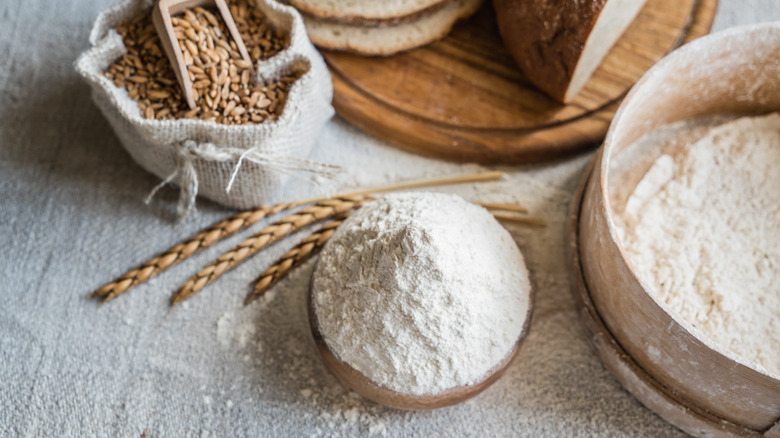
Cianfanelli explains that other bready buzzwords and phrases can also be misleading, such as "multigrain" or "made with whole grains," which might sound healthy but don't really certify that the bread comprises mostly whole grain wheat. Note, this doesn't necessarily mean one type of flour is better or worse than another, "it just depends on what you're looking for," according to our expert.
Whole wheat flour naturally has more fiber and nutrients, but refined flour tends to give you a lighter, softer bread which is why a lot of commercial breads and even bakery breads still use refined flour. Other terms that can be confusing on bread labels are "wheat flour," "whole wheat," and flours deemed "enriched" or "all-purpose." What separates whole wheat flour from the rest is that it uses the entire wheat kernel, meaning it offers higher fiber and a richer, more nutty flavor. Plain old "wheat flour" means it's refined, and the bran and germ have been removed from the grain. Cianfanelli explains that this is what gives refined flour breads their softer and fluffier texture.
If the flour in the ingredient list is described as enriched, that indicates that vitamins and minerals have been added back into refined flour after it's been milled. In other words, you get back some of the nutritional value, but not the fiber. Another refined flour is all-purpose, which is milled to be optimized for versatility "from cookies and cakes to some breads."