

This Sweet Liquor Gets A Taste Of Cinnamon And Clove From Wood
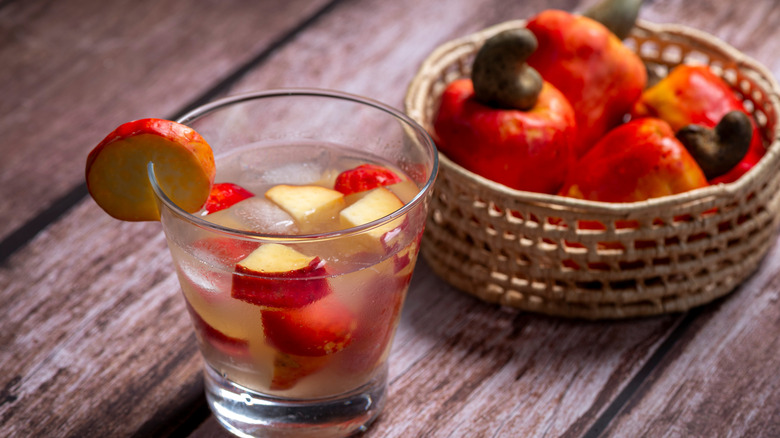
If you're a liquor connoisseur and you've never tried cachaça, there's no time like the present to discover what master mixologist Justin Lavenue — — owner and operator of the Eleanor, and co-owner of the Roosevelt Room as well as the Roadhaus Mobile Cocktails catering company — described to Tasting Table as "one of the most fascinating sugarcane spirits in the world." Once you have, you may understand why the national drink of Brazil is so beloved.
When comparing rum vs cachaça, Lavenue explained that cachaça "is typically made from molasses" and "distilled directly from fresh-pressed sugarcane juice, which gives it a much brighter, more vegetal, and aromatic flavor profile." In order to be sold as cachaça, Brazilian law requires strict regulations. Even so, there is an astonishing diversity of cachaça available because producers use regional varieties of sugar cane, along with unique local woods, for the aging process
As a result, Lavenue emphasized that the spirit can range "from vibrant and grassy when unaged to deeply complex when aged in wood." When aged, cachaça interacts with the wood of the barrel — a process Lavenue compared to that of aged whiskies — to release "compounds like vanillin, tannins, and natural sugars" and introduce notes of "cinnamon, clove, caramel, and toasted wood, while rounding out the more assertive grassy qualities of fresh cachaça."
The history of cachaça reflects the history of Brazil
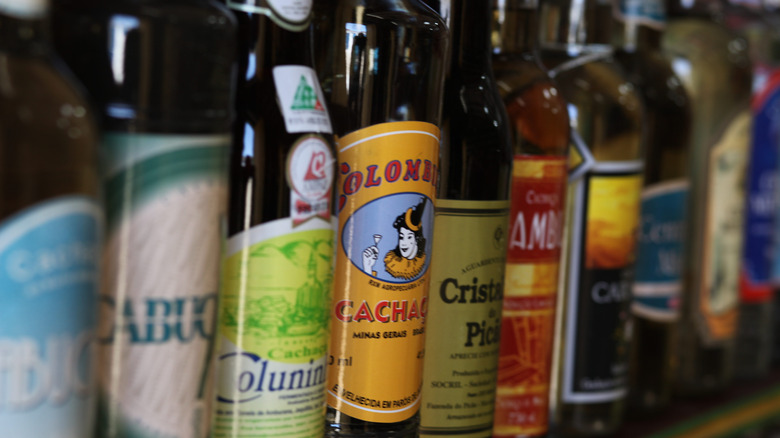
It is no surprise that cachaça became Brazil's national drink, as its origins are deeply entwined with the country's own historical struggles with colonialism and slavery. Sugar cane has been grown in Brazil since 1532, when the country first came under the control of Portugal. Originally, the drink was used by Brazilian slaves working in sugar cane mills to ease the ravages of their labors.
Despite growing in popularity among the Brazilian upper class, Portugal banned cachaça-drinking on June 12, 1744. However, this only served to turn the spirit into a symbol of anti-colonial resistance, and June 12 is now celebrated as International Cachaça Day. Though, as proof of how much Brazilians love it, they also celebrate National Cachaça Day on September 13.
As of 2022 — the bicentennial anniversary of Brazilian independence — cachaça was the third most popular spirit in the world. If you're new to the spirit, Lavenue recommended Brazil's national drink, the caipirinha, as your introduction. He described it as "a beautifully simple cocktail made with cachaça, fresh lime, and sugar, and it perfectly showcases the spirit's vibrant character while remaining refreshing and approachable."