

Duck Confit Started As Peasant Food Until This King Couldn't Get Enough
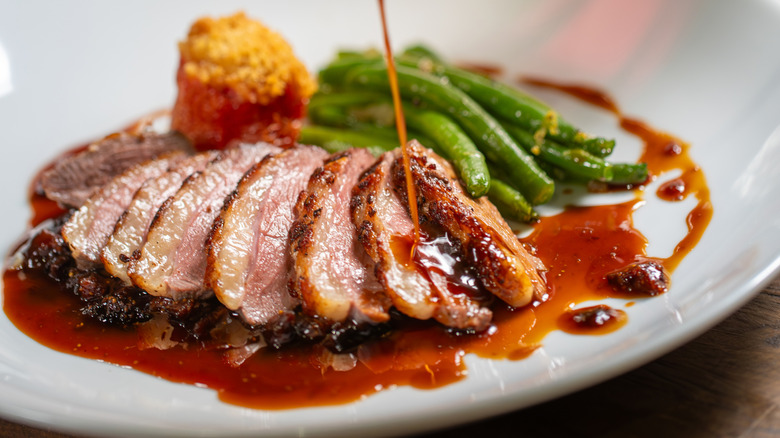
Duck confit is the crown jewel of many French bistro menus, a refined classic with a reputation for being a bit fancy, but it actually started out as a practical method of preserving meat in the rural southwest of France. Elaborate, formal recipes were known to have a place on aristocratic banquet tables of the time, but confit came from country kitchens, a peasant meal served in farming communities in southwestern France. But that began to change in the late 16th century, thanks to King Henry IV, whose tastes were shaped by the countryside where he had grown up.
The word 'confit' comes from the French verb 'confire,' meaning 'to preserve,' and the technique developed in regions like Gascony. This was way before refrigeration, and cooks needed a way to keep meat edible for long stretches of time. The methodology of confit involves salting meat, then slowly cooking it in its own fat, then storing it in earthenware crocks, called topettes, where it was submerged in the same fat, which sealed it away from air and bacteria. Prepared this way, the meat could last for weeks, or even months. When it was time to eat the confit, a portion could be removed and reheated, crisped to perfection in a pan or oven. The main objective may have been preservation, but it produces a remarkable dish, richly savory and distinctive in texture and flavor.
In the farming communities of southwestern France, the process was part of a broader culinary tradition of using the entire bird. While the legs were prized for confit, and the rendered fat was the cooking medium, other cuts of the bird were turned into sausage and pâté. Even the feathers could be used to stuff pillows and mattresses.
From cottage to castle
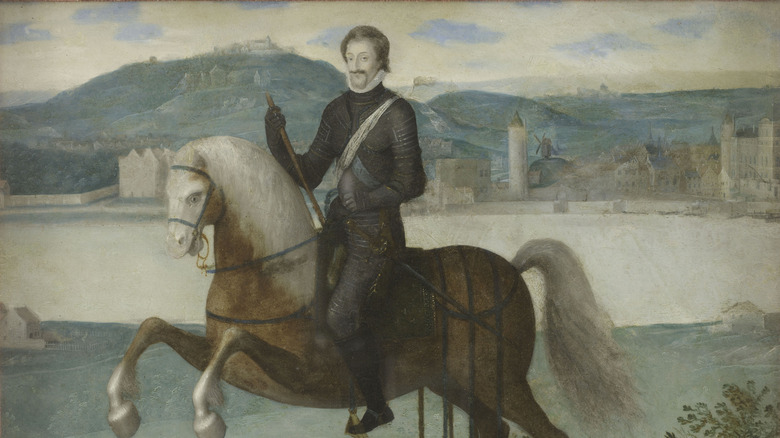
Henry IV came to the throne in 1598, but he spent his youth in Béarn, a region at the edge of Gascony, where culinary waterfowl like geese and Moulard ducks were raised widely, and rural cooking practices defined everyday meals. Henry IV is often remembered in the annals of French history for promoting simple, hearty foods, which was quite the subtle, and very French, political statement for the time. His reign was known for a period of peace and prosperity, and he's famously attributed with saying that he wished every laborer in his realm could have "a fowl in the pot on Sundays," reflecting his reputation as a king who was sympathetic to everyday people, and a desire for abundance and safety after the country had been ravaged by hundreds of years of famine and scarcity from plague, economic disparity, and religious wars.
As French cuisine developed in the following centuries, rustic dishes like cassoulet and confit became ensconced in the country's culinary identity. Even as French cooking became more codified, with the development of haute cuisine, and restaurant culture expanding into the 18th and 19th centuries, the preparation has endured, beloved as a defining specialty of Gascony, proudly representing its humble, agricultural roots.
To make duck confit at home, rub the duck legs generously with salt, and leave them to cure overnight. The next day, cover them with duck fat (you can also sub olive oil, for a more affordable solution) and cook them low and slow, until tender. Once cooled, the legs can be kept and reheated whenever you're ready for them; just finish them in a hot pan till they're crisp. Remember, even if it sounds intimidatingly fancy, it's just peasant food from over four hundred years ago.