

This Simple Move Eliminates The Straining Step Out Of Rice Cooking
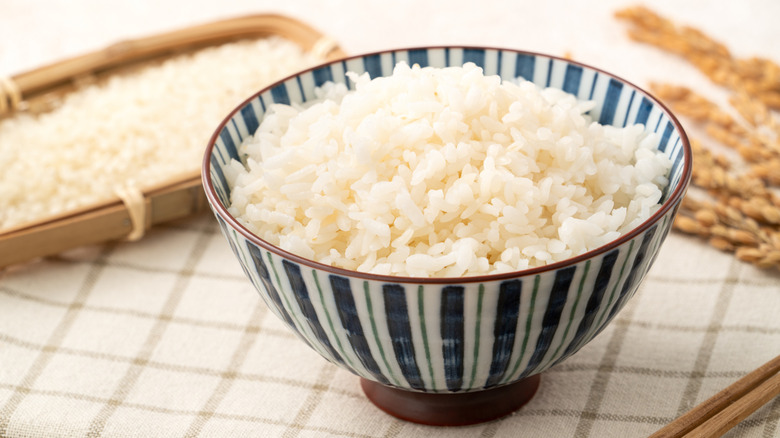
In theory, cooking rice should be pretty easy. All you really do is boil it in water, but there are a few tricks people do to ensure a pot full of tender, fluffy grains. There is the endless rinse debate, of course, and the case for a rice cooker or special pot. But sometimes you just want to keep things simple and if you're looking to cut corners, then we have a new hack for you: boil the rice inside of a sieve.
You can skip the entire cumbersome step of straining your rice by placing a fine mesh sieve or strainer on top of your pot and pouring the rice directly into it, rather than into the water. Leave the sieve in the pot for the whole cooking process with a cover placed on top. The steam rising from the water will cook the rice, giving you a perfectly separated, airy result. All you need to do when the rice is done is remove the sieve, fluff up with a paddle, and serve.
Steam long grain rice in a sieve
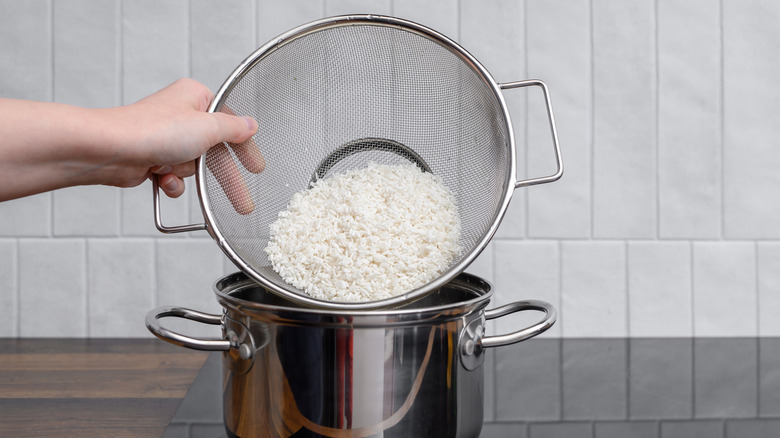
This method works best for looser types of rice, like long grain basmati and jasmine. And while you don't really need to measure the ratios, a good aim is about one cup of rice so you don't overload the strainer. A medium heat level is also optimal to prevent the water boiling too much. This hack should also allow you to skip resting your rice after cooking, as it will already have steamed inside the pot.
If you're not ready for the strainer just yet, then you can also combine the method with boiling. Just simmer the grains in the hot water for five minutes before draining in the sieve, then place the sieve over a new pot of water and steam for ten more minutes.
If you're looking to make sushi rice or any type of short grain sticky rice, then this method might not be for you. Instead, rinse the rice, soak it if you have time, and follow a ratio of about 1:1.2 rice to water (use about 20 percent more water than rice). You're not looking to have any water leftover in for this type of rice. As for other tricks, the 1-2-3 rice rule is always helpful, and cooking in stock adds more flavor. But for the easiest route, the strainer method might be for you.