

Why You Might Be Forced To Settle For Cacao-Free Chocolate In 2026 (Sorry, Chocolate Lovers)
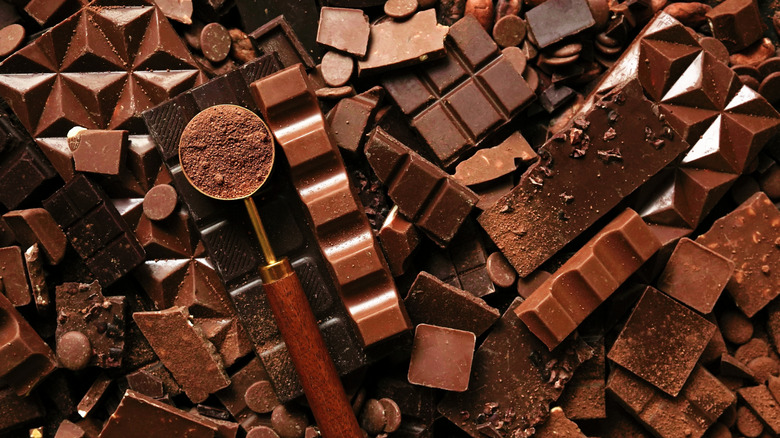
Here's a question that keeps chocolate lovers and candy executives up at night: What happens when the ingredient that makes chocolate actually chocolate runs out? Cacao — the magic dust that gives chocolate its whole identity — only grows in a handful of places around the world. West Africa dominates, producing up to 70% of the global cocoa supply. But with the region under siege by extreme weather, the yield has been getting worse and worse (via ReliefWeb). That's why, today, you might have to settle at times for chocolate that's completely cacao-free.
Most of the world's cocoa comes from Ghana and the Ivory Coast, but they've been hit hard by brutal heat waves. Cocoa trees wilt when temperatures climb past 90 degrees Fahrenheit — it'd never been a problem before, but the trees could hardly cope with the prolonged periods of 95-plus degrees Fahrenheit that the country got all throughout 2024. Combined with black pod disease ripping through whatever trees that managed to survive the heat, cocoa price went from $2,000 to $3,000 a ton to over $10,000 by late 2024.
Cocoa prices have eased back down since then and are now at around $3,000 a ton, according to Trading Economics. You'd think chocolate makers would be relieved. Except massive stockpiles of unsold cocoa are still sitting in Ivory Coast and Ghana since buyers aren't willing to pay the asking prices. Despite that, chocolate companies still need to figure out how to keep their product flowing. The solution? Use less actual cacao and swap in something else that tastes sorta the same. If you've been noticing your favorite candy bar tasting a little different lately ... that's not your taste buds tricking you.
It's time to get used to cacao-less chocolate
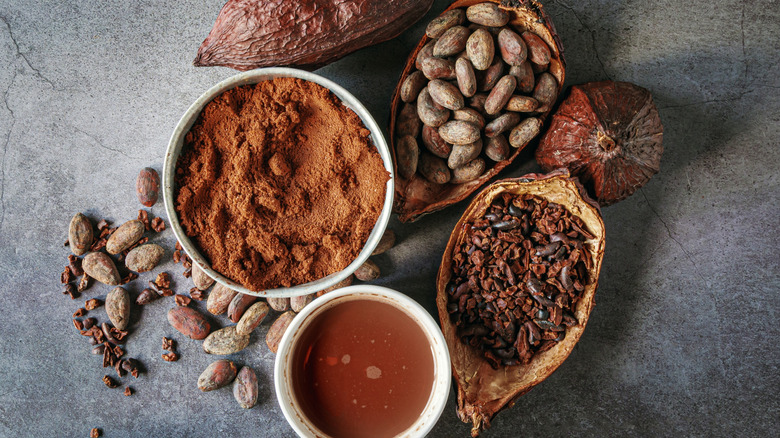
Chocolate is way too good (and too profitable) a commodity for companies to abandon it entirely, so they've been getting creative with substitutes. Some swap in vegetable-based fats — shea butter, palm oil, and others — that replicate cocoa butter's texture and mouthfeel without the cost. These get mixed with cheaper oils and artificial flavorings to approximate chocolate's taste profile.
On the weirder side, a lot of companies are looking at using something called carob — which comes from the pods of a tree called Ceratonia siliqua. Like cacao, carob is sweet but noticeably less bitter and isn't as rich, though with a few tweaks, you could turn it into something quite close. Companies are also experimenting with malt extract and even using AI to engineer the cheapest formula that still tastes chocolate-like.
So what does this look like on store shelves right now? Pick up a bar of Nestle's Toffee Crisp or Penguin and flip it over. You might notice the ingredient list has shifted — where it once said "milk chocolate," it now says "chocolate flavor" or "chocolatey coating." So take a peek at the label of your favorite bar the next time you're out shopping — the changes there might surprise you. And if you want to taste genuine chocolate as a weekend treat? Try these chocolate brands, instead, and not candies.