

How To Safely Decrystallize Honey In A Plastic Bottle
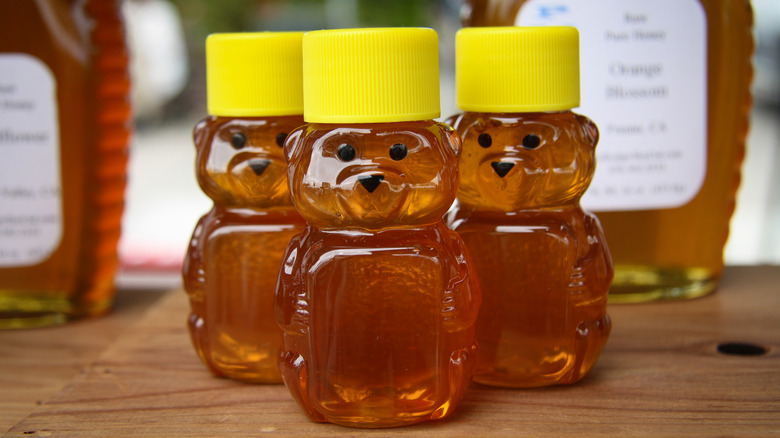
Over time, honey may thicken, crystallize, and become darker in appearance. You can still safely consume the honey; you just need to decrystallize it first. You can use warm water to dissolve the crystals in the honey so that it is a uniform, pourable liquid once again. However, before heating honey, be aware that temperatures over 104 degrees Fahrenheit can destroy the enzymes responsible for its amazing health benefits. Also, if your honey is in a plastic bottle, you should take care not to expose it to extreme heat that could melt it or cause plastic to leach into the honey.
The easiest way to reverse crystallized honey is to use hot water from your tap. This water won't be boiling, so it's unlikely to damage the plastic container, but it should be warm enough to decrystallize the honey. Find a bowl or pot large enough for the bottle of honey to stand upright, and then fill it with hot tap water. If the water from your tap isn't hot enough, heat a ceramic mug of water in your microwave for one to three minutes. Place the container of honey in, propping it up if needed, for about 10 minutes. If the honey still isn't completely liquid, pour out the water and add more.
If you live in a warm climate, you can put your bottle of honey outside, assuming the outdoor temp isn't hotter than 104 degrees Fahrenheit. Just place the bottle on a table or even on the seat of your car for 30 minutes to an hour, or until the honey is runny and decrystallized. After decrystallizing your honey, consider storing it differently to prevent it from happening again.
How to store honey to prevent crystallization
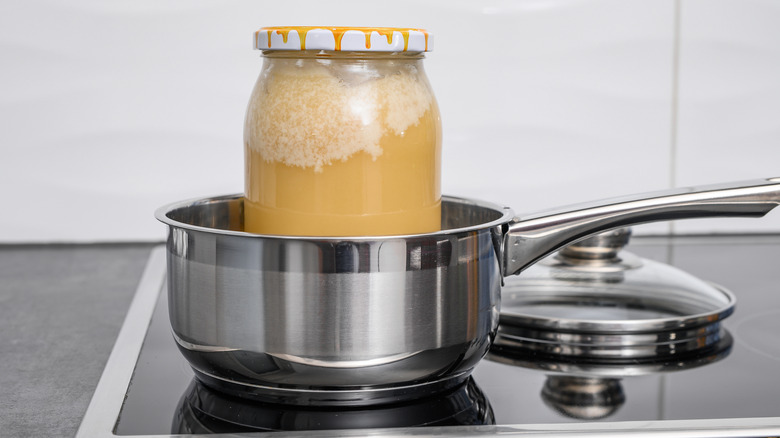
Although honey doesn't really ever expire, if it isn't stored properly, its taste, color, and quality can decline, and it may even get contaminated by bacteria. When honey is stored properly, it can last indefinitely. The best environment is one that somewhat mimics that of a beehive: Dry, dark, and warm. The ideal temperature range is between 65 and 75 degrees Fahrenheit. Cooler environments may cause the honey to crystallize faster, which is why it's really not necessary to store your honey in the refrigerator.
Honey is also susceptible to contamination and odor absorption, which can affect its taste and shelf life. Don't store it near anything with an incredibly strong odor, like garlic, onions, or scented or perfumed products like deodorizers and cleaning sprays. It's best to keep it in an airtight container so that its exposure to air and moisture is minimal.
The best way to keep honey fresh is to store it in a glass container, as glass is both nonporous and impermeable. The thin plastic bottles that most commercial honey is sold in are permeable to moisture, water vapor, gases, and small molecules. If you buy honey in a cheap plastic container, you're better off transferring it to a tightly sealed glass container.
You should also be aware of the warning signs your honey has gone bad. Toss it out if you notice a strange, sour odor or taste, foam, or a slimy pink coating, or visible mold growth. If your honey is in a glass jar, check the lid before using it to make sure it isn't bulging or popping up. That could indicate a buildup of gases due to fermentation or bacteria.