

Skip The Microwave And Reheat Leftovers This Way For Even Heating
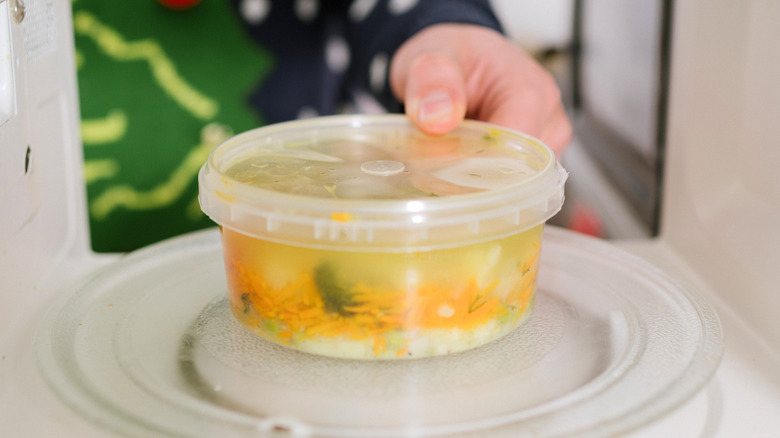
When it comes to heating the remnants of last night's dinner, home cooks have been turning to their microwave ovens since they first started becoming a standard kitchen appliance in the 1970s. They are certainly quick; there is no denying that, but there are some foods that just don't microwave well. Beyond that, the quick zap can leave the outside of just about any food steaming hot and soggy while the center is still ice cold. In fact, relying exclusively on the microwave is one of the biggest mistakes people make when reheating food. For leftovers that are warm all the way through and as crisp on the outside as they were when they were fresh, consider using a convection oven instead.
Convection ovens work similarly to a standard oven in that they both have a large cooking chamber where dry heat is applied to foods placed within. The big difference with convection ovens is that they are equipped with fans to continuously circulate the hot air around the cooking food. The beauty of this innovation is that by keeping a constant flow of hot air running over the food, it cooks about 25% faster on average. While that still may not be quite as quick as the microwave, it is a significant savings in both time and energy when compared to a conventional radiant heat oven. Plus, the constantly-moving air ensures even heating, preventing your leftovers from arriving at the dinner table with that dreaded cold center or soggy bottom.
Convection ovens are more common than you might think
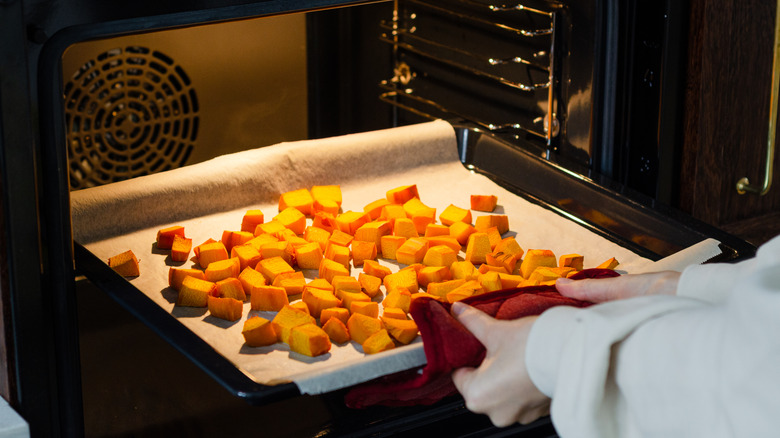
Now, you might be saying to yourself, "This is all well and good, if only I had a convection oven in my kitchen." But the truth is that you very well might, though you probably bought it under a different name. Air fryers have been growing in popularity for years, taking over more and more counter space across the country, promoting themselves as a quick and efficient way to cook foods with dry heat. In reality, there is very little difference between a convection oven and an air fryer. Air fryers are also dry heat cooking devices that rely on the circulation of hot air to speed up the cooking process. There are some slight differences in how they heat the air, as well as the size of the cooking chamber, but they are essentially the same device in different packages.
Whether you are using a countertop convection oven, a convection setting on your full-size oven, or an air fryer, all of them are some of the best ways to reheat foods to perfection. Obviously, air fryers, with their smaller cooking chambers, are better suited to one or two portions at a time, but the method is the same. The exact settings and timing will vary based on what foods you are reheating, but for anything that you want coming out crisp and warm — things like soup and pasta are probably better reheated on the stovetop — a convection oven is your ticket to an evenly-heated, delicious second serving.