

The Country With The Absolute Lowest Chicken Prices
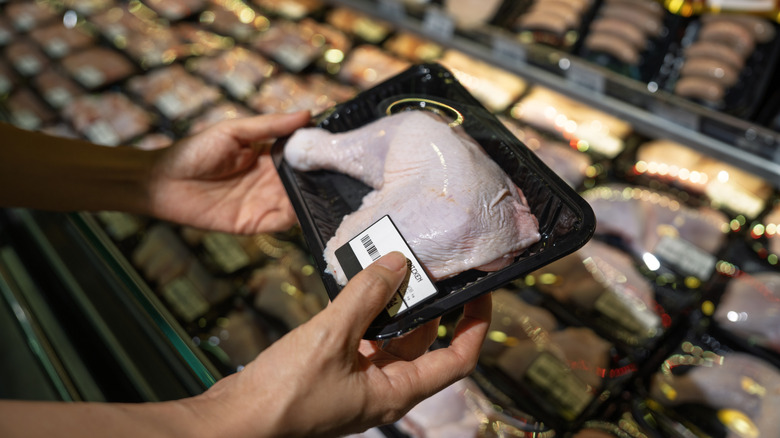
At your local grocery store, you've probably noticed that chicken breast prices have gotten pretty steep. The $3.99-per-pound price point that felt normal years ago is basically a fantasy now. If you're buying a whole bird for the family dinner, you're likely looking at a bill that makes you wince. Interestingly, down south and beyond the border, there's a country where you can buy a whole chicken for the equivalent of a coffee and a pastry in the U.S. Head to Brazil, and a whole chicken runs you just a few dollars.
Global Product Prices puts Brazilian chicken at $1.67 per kilo — roughly 76 cents per pound. Compare that to data from the Federal Reserve Bank of St. Louis that currently shows pricing of about $4 per pound in the U.S., and you're looking at quite the difference. But if you look into the economical factors between countries, this shouldn't have been the case.
According to the USDA, the U.S. is the largest producer of chicken meat anywhere in the world at 21.34 million metric tons in the 2024 period. Meanwhile, Brazil sits at number three. The sheer abundance of our domestic production means we should be getting much cheaper chicken, right? Well ... not quite. While Brazil can't beat the U.S. in production volume, the country has the United States beat when it comes to production cost. In fact, Brazil can produce chicken meat for less than anywhere else in the world.
How Brazil built an industry that pumps out chickens at rock-bottom costs
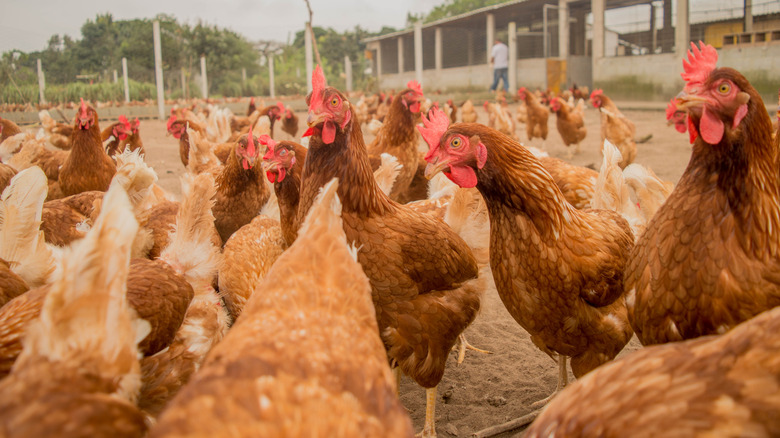
Brazil has a couple of advantages that lend themselves perfectly to poultry production. The southern Brazilian states, particularly Paraná, have perfect geography to become a chicken meat factory as they're surrounded by massive corn and soybean farms. That means cheap feed, and because Brazil grows these goods locally, they don't have to bother with import tariffs or middleman markups. This isn't unique to Brazil, though, the U.S. has these advantages, too — we're actually massive chicken feed producers. But Brazil still undercuts the U.S. because of one crucial difference: labor cost and currency valuation.
Brazilian poultry workers earn significantly less than their American counterparts, being only paid 17 Brazilian real ($3.30 USD) per hour, as outlined by Economic Research Institute. Meanwhile in America, the hourly rate is $18 on average, according to ZipRecruiter. This massive labor cost advantage flows directly into the final price consumers pay. In Brazil, The Poultry Site reports that producers only need to pay about 80 to 90 U.S. cents to to yield a kilo of chicken meat. That's a figure that would be impossible for American producers operating under U.S. wage standards and regulatory frameworks.
Currency also plays a quiet, but significant role. The Brazilian real's valuation makes exporting attractive for producers, which keeps domestic supply plentiful and prices stable. Add abundant raw materials, massive production scale, modern infrastructure, and favorable economics together, and you get a situation that's nearly impossible for other nations to replicate, plus a perfect storm of cheap chicken meat.