

The Country Where Beef Is Most Expensive (It's Not The US)
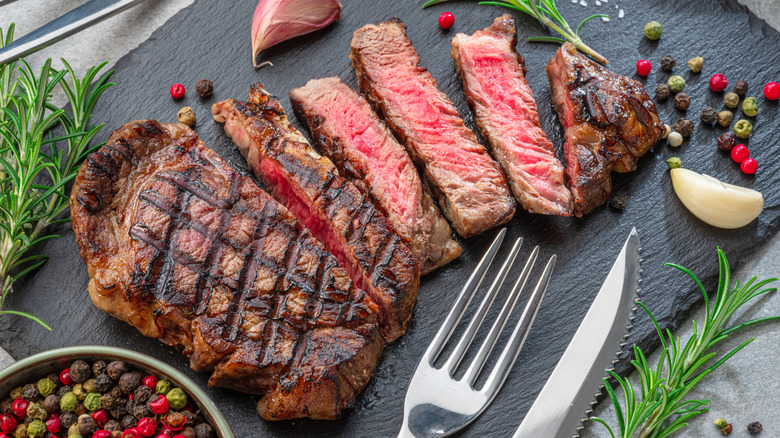
Despite high beef prices being a hot topic on the news at the moment here at home, surprisingly, we're having it relatively easy compared to some other countries. According to Global Product Prices, as of December 2025 data, we weren't even in the top 10 of countries with pricey beef at $20.90 a kilogram (about $9.5 a pound). The top spot belongs to a teeny country in Europe famed for its wines, iconic Swiss cheese wedges, chocolates, and beautiful alpine slopes — Switzerland, at a mind-boggling $69.88 per kilo of beef (or $31.6 a pound).
Everything that's made from beef in Switzerland is expensive — even something as mundane for us as a McDonald's cheeseburger. A really basic, no-frills cheeseburger costs 6 CHF, which is about $8. As for a steak? It's not unusual for a single serving of premium entrecôte (European ribeye) to break the Swiss Franc-equivalent of $50.
So what makes Swiss beef so expensive when, just across the border in France, it only sells for $20.73 a kilo, or three times less? Well, as with most things, it comes down to domestic policies. The price of Swiss beef is hugely inflated due to the country's strict animal welfare laws.
Switzerland has among the strictest animal welfare laws in the world
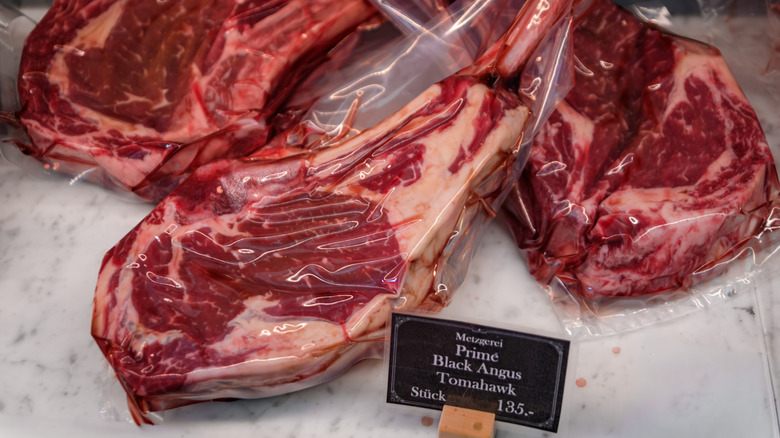
In Switzerland, farmers have to follow strict rules on how they treat their animals. Cattle need more space to move, pigs can't be castrated without anesthesia, and laying hens haven't been kept in battery cages since 1992. All these drive up production costs across the board — more staff to manage larger facilities, higher veterinary costs, and better housing systems. Simply put, when animals get better treatment, raising them costs more money, and all those extras are passed down to the Swiss consumers.
But there's another crucial piece of the puzzle: Switzerland protects its farmers by closing itself off from the global market. The country isn't part of the EU's internal market, so imported meat faces enormous tariffs of roughly $10 per pound. Without this barrier, Swiss farmers simply can't compete with cheap foreign alternatives, and since they're the only player on the market, Swiss producers can charge however they like. Together, they've created a market where ethical farming and high prices go hand in hand — whether that's a good thing or not, we'll let you figure it out for yourself. So, for takeaways, here are two: First, definitely don't host a BBQ in Switzerland, and secondly, if you want Swiss steaks that don't break the bank, consider enjoying it somewhere beyond Swiss borders.