

The 'Safest' Artificial Sweetener Depends On You, According To A Dietitian

Low calorie sweeteners have become a major part of Americans' diets, and that means figuring out which artificial sweetener is safest for you. On any given day almost 25% of adults in the U.S. are consuming some form of artificial sweetener, and the options available in food and at the grocery store seem to be expanding by the day. But despite the advantages of dropping your sugar consumption, some skepticism always remains around artificial ingredients. So we decided to reach out to an expert, Kathleen Benson, a certified registered dietitian at VNutrition, to ask what the "safest," artificial sweeteners are.
Benson let us know that when it comes to sweeteners, "safest," is a relative term, and not always helpful. She said, "I'm usually hesitant to label one as the "safest," because most FDA-approved artificial sweeteners have established acceptable daily intake levels based on extensive safety reviews." Benson tells us that for aspartame, up to 40 milligrams per kilogram of body weight is considered safe, which would be at least nine cans of most diet sodas, far more than most people drink. As she explains, "in practice, safety tends to come down to dose and individual context rather than one sweetener being categorically better than another."
And in general the Food & Drug Administration (FDA) agrees. Other zero calorie sweeteners like sucralose (Splenda) and saccharin (Sweet and Low) have lower recommended daily dosages than aspartame, however they are also considerably sweeter than aspartame, so much less is required to sweeten products. Major artificial sweeteners have been tested repeatedly and deemed safe for human consumption, and in general there is little scientific evidence that consuming popular sweeteners has serious health consequences.
Most artificial sweeteners are safe for consumption unless you have specific underlying conditions
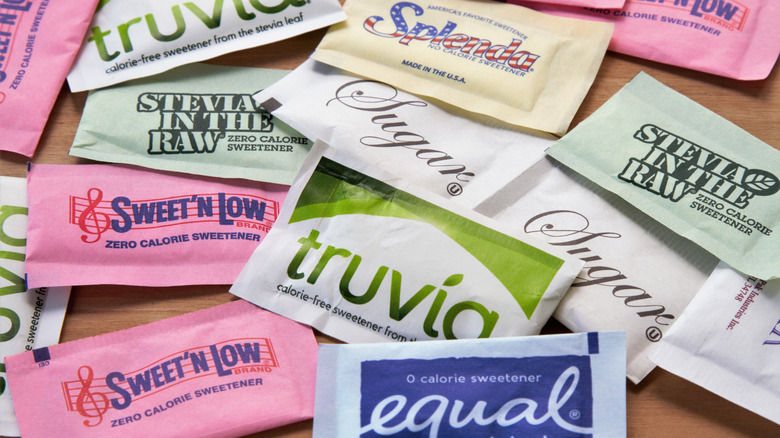
While artificial sweeteners are generally similarly safe, there are some instances where you should be more careful, and a few more minor side effects that are known. The first Benson gives us is people with phenylketonuria, a genetic condition that prevents some bodies from properly metabolizing phenylalanine. She says, "because aspartame contains phenylalanine, those individuals need to avoid it specifically."
Benson also tells us, "There's also emerging research looking at possible negative effects on the gut microbiome, but findings are mixed and not definitive." There is some evidence that some sugar substitutes like stevia cause bloating and gas, however stevia is not actually considered an artificial sweetener because it is naturally extracted from stevia leaves.
Then there is the ongoing concern over artificial sweeteners and cancer. Benson tells us, "Aspartame was classified as "possibly carcinogenic" based on limited evidence. That classification reflects that there isn't strong, conclusive data, not that typical intake has been shown to cause cancer." Other limited evidence from decades ago showing sugar substitutes caused cancer in lab rats were also proven to not be applicable to humans over time.
Importantly Benson reminds us, "amount really does matter here. These safety thresholds include large margins of safety, and risk is tied to sustained high intake, not occasional use." Your overall eating habits are much more important than your artificial sweetener intake, and having the occasional diet soda isn't going to hurt you no matter what sweetener it is made with.