

Are Sugar Alcohols Worse For You Than Sugar?
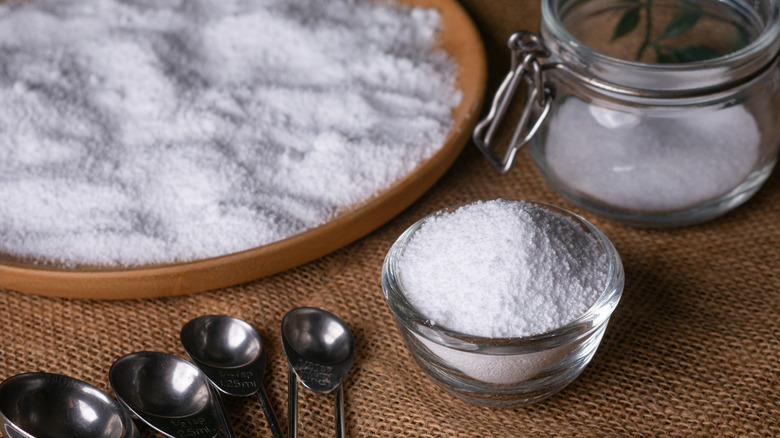
There are many different types of sugar, and all of them are addictively delicious for those of us with a sweet tooth. Unfortunately, sugar doesn't have the best reputation in the health industry. Consequently, the creation of sugar alcohols have made it possible for people to consume sweet treats without significantly increasing caloric intake or blood sugar. But are sugar alcohols worse for you than sugar? We consulted Kathleen Benson, a certified registered dietitian at VNutrition, for her expert opinion on the matter.
"Sugar alcohols aren't inherently worse than regular sugar, they're just metabolized differently," says Benson. "Regular sugar is fully digested and predictably raises blood sugar levels. Sugar alcohols like erythritol are only partially absorbed, so they typically provide fewer calories and have a smaller impact on blood sugar, although some types can still raise it modestly." Examples of zero or low calorie-sweeteners that use sugar alcohol include stevia and Truvia.
Many sugar-free candies, gums, proteins, energy bars, and diabetic-friendly or sugar-free cookies use sugar alcohol. Interestingly, sugar alcohols don't have as bad a reputation as artificial sweeteners, which, according to Benson, "are much sweeter than sugar and used in tiny amounts." Artificial sweeteners tend to be zero calories, while "sugar alcohols provide some calories and add bulk to foods." Since sugar alcohol isn't fully absorbed or digested, Benson adds that "larger amounts can cause digestive discomfort."
How to safely consume sugar alcohols
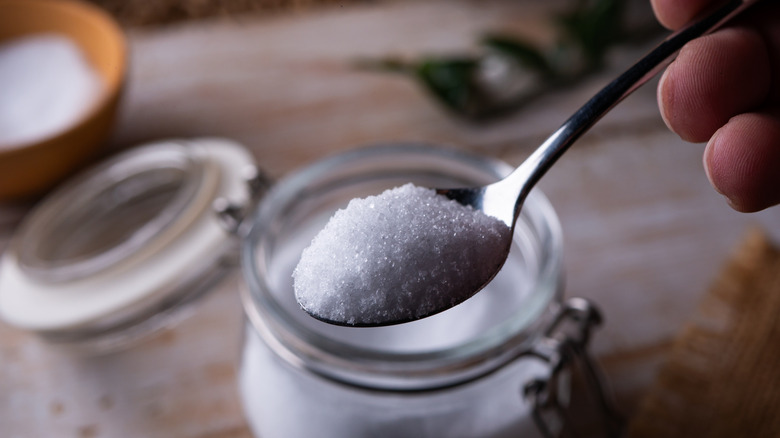
Benson notes a few possible concerns with sugar alcohol consumption, stating that "the main consideration is tolerance." There are numerous sugar alcohols, each of which can affect a person differently. The most common negative reactions, according to the expert, are "bloating, gas, or loose stools, especially in larger amounts." If you're new to sugar alcohols, start consuming them in moderation to see how you react. "As with most ingredients," Benson notes, "the overall dietary pattern and total intake matter more than occasional use."
Sugar alcohols are a healthier alternative to artificial sweeteners like aspartame, and they're especially useful for diabetics "because they generally have a lower glycemic impact than regular sugar." However, a recent study from the University of Colorado mentioned in Science Alert has found some concerning threats posed by sugar alcohol. The study reveals that sugar alcohol erythritol floods our bodies' cells with free radicals and reduces antioxidant defenses, increasing our risk of stroke and cardiac events.
If you're looking for even safer low or no-calorie sugar substitutes, we recommend stevia and monk fruit. Not only do these sweeteners possess no downsides, but they also supply even more health benefits. For example, stevia is rising to the top of U.S. sugar substitutes due to its antioxidant and anti-inflammatory properties. Likewise, a reassuring thing to know about monk fruit sweetener is that it contains antioxidants. So, you can fend off free radicals found in sugar alcohols with monk fruit and stevia while indulging your sweet tooth.