

Why Capocollo Di Martina Franca Tastes Unlike Any Other Italian Coppa
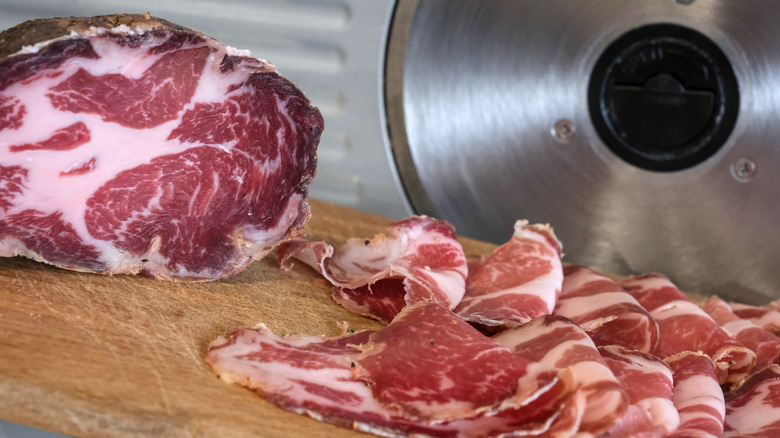
Italy's many regions play a huge role in the country's culinary landscape, with dozens of Italian meats and cheeses holding protected designation of origin (PDO) status. Different variations of coppa can be found across the boot, like Coppa Piacentina of Emilia-Romagna and Coppa Piacentina, but there's nothing quite like Puglia's Capocollo di Martina Franca.
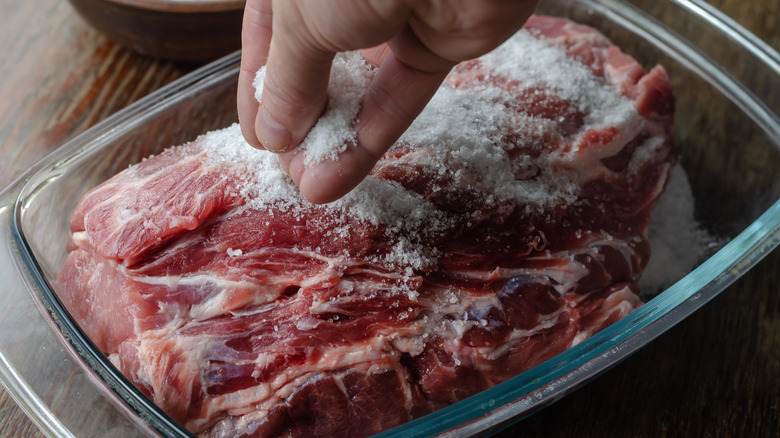
Italy has its fair selection of cured meats, with prosciutto and a variety of salamis filling butcher shop display cases, but coppa is underappreciated. Also known as capicola and capocollo, the Italian meat is made from pork shoulder or neck, hence the Italian translation with "capo" meaning head and "collo" meaning neck. Before being cured for months, the meat is heavily salted and then seasoned with a variety of spices like fennel seeds, allspice, and juniper berries. The distinctive marbling is impossible to miss in the market's Italian deli meats section, but the deep, slightly sweet flavor is the most memorable aspect of coppa. Coppa is typically dry-cured, but they do things a bit differently in Puglia. It comes down to geography, a rare lineage of pigs, and some secret Puglia-exclusive ingredients.
A labor of love, all from Southern Italian land
It all begins with Mediterranean pigs. Most packaged coppa you'll find imported from Italy is made from common pig breeds like Large White and Landrace, whereas Capocollo di Martina Franca is made from Black Apulian pigs. This rare breed thrives in this nook of Southeast Italy, feasting on acorns and wild herbs. The flavors of Puglia's woodlands carry into every bite. The pig itself is just one of many aspects that impact the flavor of Capocollo di Martina Franca, with the vino cotto bath and smoky finish anchoring the taste.
Most variations of Italian coppa are dry-cured, but the charcutiers of Martina Franca introduce a small pour with big impact. Vino cotto, or "cooked wine" in Italian, is a thick syrup made from grape must, which is the same base used to make a variety of fortified wines. The salted pork is marinated in the fruity, acidic liquid, which helps balance the fatty notes. The pulverized grapes infuse notes of dried figs, plums, and raisins.
Once the pork is nice and marinated after about a day, it's lightly smoked for up to 24 hours. This step is common with coppa, but Capocollo di Martina Franca continues to be exclusive by using Itria Valley-grown trees — Fragno oak. These oak trees, native to the Balkans, only grow in a select few regions of the world, and Fragno is one of them. The wood produces an almost floral air that's much more delicate than the standard smoky flavors we experience in Northern Europe.