

The Simple Trick For Substituting Coriander With Cumin

One of the most exciting things about cooking is learning how to adapt. Changing recipes or making substitutions can be nerve-racking for a new cook. However, it can also be very inspiring once you get the hang of how ingredients work together. While substituting butter for margarine or raspberry for strawberry isn't too difficult, swapping something like coriander with cumin can be harder to figure out. Luckily, we walk in the footsteps of many other chefs who have shared their insights.
Tasting Table asked Chef Tatiana Mora of Mita, a Washington, D.C. restaurant specializing in vegetable-forward cuisine, how to successfully use cumin in place of coriander in a recipe. Chef Mora started with a word of caution. "Coriander and cumin aren't direct substitutes," she says. "Cumin is more pungent and earthy, so if used in place of coriander, I recommend using about half the amount and adding a touch of citrus zest or fennel seed to restore brightness."
It's important to remember that coriander is what we call the seeds of the cilantro plant. Like Chef Mora says, the flavor profile isn't an exact match, so this won't work in every recipe as a perfect swap. It's best to use it in warming, hearty dishes that benefit from cumin's nutty and spicy undertones.
We have suggested some substitutes for coriander in the past, and cumin made our list, and Chef Mora shared some similar suggestions. "A better substitute than cumin would be fennel or caraway, as they share coriander's lighter, more aromatic profile," she says.
Take a gander past coriander
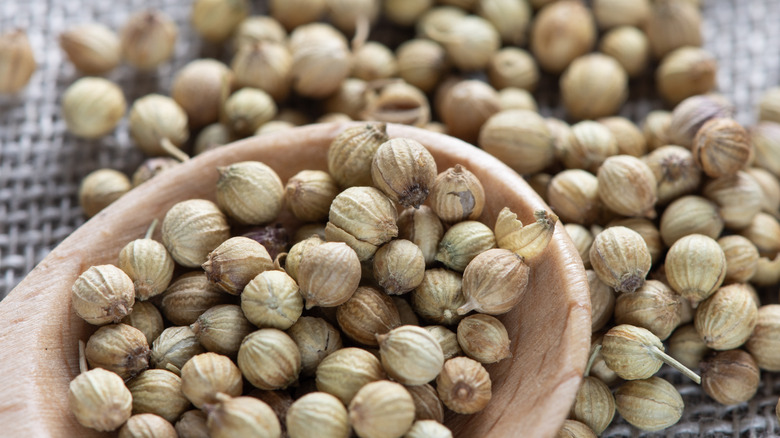
Cumin and coriander come from different plants, but they are in the same family. They complement each other well, and you can find them side by side in recipes for garam masala and other blends. So while they do have some similarities, they are also distinct. Cumin has a much earthier and bitter quality, while coriander is brighter, even sweet, and a little citrusy.
If you want to swap for coriander but don't have cumin, or want a slightly different flavor profile, there are other options. Chef Mora nailed two of the best ones with fennel and caraway, but it doesn't end there. Your best bet is to consider the kind of dish you're trying to make to decide on what to use.
Curry powder can be used in place of coriander, as it usually contains coriander already. Curry is not a spice, but a blend, and will likely also have turmeric, cumin, fenugreek, and more. In a stew or sauce, this could be a good replacement, but it will bring in many new, warm flavors.
Lemongrass is another fun coriander substitute if you want to accent the citrusy, floral, herbaceous notes. Just remember it hits the citrus a little harder and has more fragrant, almost minty notes.
Cardamom can also be used as a coriander substitute as it has the same bright, citrusy notes. Another less common option is za'atar. This Middle Eastern spice blend may already have coriander and cumin along with other herbs, but it gets a nice, bright kick from sumac that makes it a zesty substitution.