

This Chain's Large Coffee Has More Caffeine Than Is Recommended In A Day
Millions of Americans rely on a quick chain coffee for their daily caffeine hit, and a lot of them may be getting more than they bargained for. Of course there is nothing wrong with getting a little caffeine in the morning to wake you up, but regularly consuming too much can lead to side effects including high blood pressure, insomnia, anxiety, and nausea. That's why the maximum amount of caffeine you should consume each day is less than 400 milligrams, which is usually about two to three cups of brewed coffee, depending on the brand. But some coffees you grab on your way to work will blow past that level in one go, and the worst offender is a large dark roast from Peet's.
This info comes from Consumer Reports, which recently tested caffeine levels both in-store and in the ground coffee of many major brands. It found that just one large (20 ounce) cup of Major Dickason's Blend Dark Roast purchased from Peet's retail locations contained a whopping 468 milligrams of caffeine. That is 15% more than the daily recommended maximum by itself. Peet's wasn't the only offender in this case, a grande Starbucks Pike Place coffee also narrowly surpassed 400 milligrams by itself, but Peet's dark roast had 50% more caffeine than other fast food coffee chains like Dunkin' and McDonald's. It's understandable if you need an extra boost some mornings, but for coffee you might be drinking regularly, that's a massive dose.
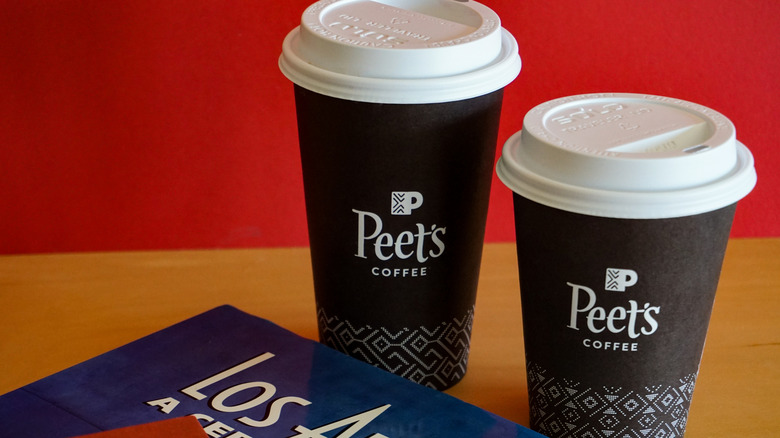
Peet's large takeout version of Major Dickason's Blend Dark Roast has over 400 milligrams of caffeine
What's really interesting is that caffeine levels vary not just from brand to brand, but even between takeout versions and store-bought coffee beans and grounds. That makes it really hard to track your caffeine intake. Peet's and Starbucks store-bought coffee actually have much more reasonable caffeine levels than what you would get from a shop, even when it was the same roast. Both the Pike Place and Major Dickason's roasts had around 30% less caffeine when made at home.
But don't think brewing coffee at home is a guaranteed way to reduce caffeine levels either. The Dunkin' coffee beans brewed at home actually had more caffeine than the in-store takeout version, and a 20-ounce brew nearly topped that 400 milligram limit. Some brands like Green Mountain and Café Bustelo (which is espresso style) topped 400 milligrams when made at home. Others like Folgers and Nescafe were lower than 200 milligrams.
All this adds up to a real mess if you are trying to watch your caffeine intake. While some brands may list caffeine content on their menus, most bags of beans don't, and none of these companies are required to by law. Combine that with the seemingly random swings between roasts, brands, and where you get your coffee, and it's almost impossible to keep track of accurately. The best you can do is try and find this information where it's available, listen to your body, and maybe reconsider that third cup in the morning.