

The Rachael Ray-Approved Trick That Makes Stuffing Cabbage Nice And Easy

Stuffed cabbage is delicious, hearty, and stores well, so it's a great mid-winter meal prep option. Making the recipe can feel intimidating, mostly because of the first step, which is processing the cabbage leaves in boiling water. Rachael Ray avoids the stress by skipping the step entirely. "You never have to boil a giant pot of water, ever again," she says in a video posted on Facebook, promising that her alternate method can work for any stuffed cabbage project.
Because you need the cabbage leaves to get soft enough to fold into little packages, traditionally, making stuffed cabbage has required blanching the peeled leaves of the vegetable — a delicate and somewhat dangerous cooking technique that demands close attention. Using tongs to dunk the leaves in boiling water inevitably leads to dripping and splashing. Some people even try boiling the cabbage whole, which is both ambitious and awkward, because the cabbage will absorb some of the water and become heavier, making it fairly unwieldy to remove.
Instead, Ray puts the whole head of cabbage in the freezer for at least a day. Once it's frozen through, she pulls it out to defrost, which will take another couple of hours; we recommend putting it on a plate or baking sheet in the fridge over night, like with meat, although she defrosted her ice-block cabbage on the counter. Once it's thawed, the leaves will pull off with a gentle tug. After drying and trimming, they're ready to be "tucked and rolled."
That's a wrap
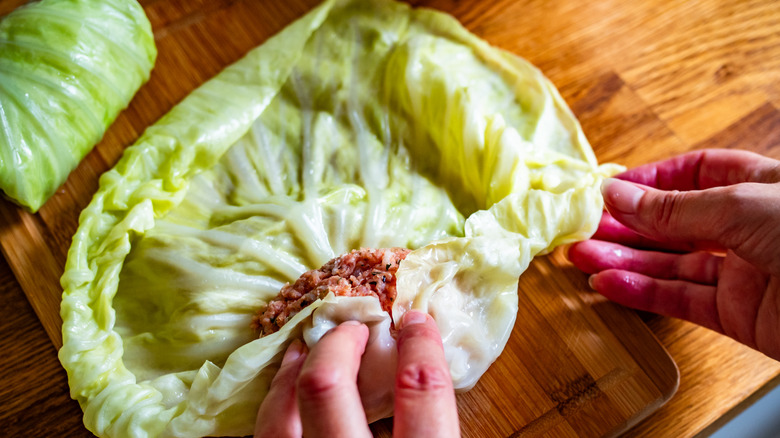
The reason Ray's cabbage-freezing method works is because it accomplishes the same chemical reaction and subsequent structural breakdown that blanching would. Boiling, steaming or blanching all partially cook the vegetable, whereas freezing softens the cabbage without exposing it to heat. As the vegetable solidifies in the freezer, ice crystals form inside the cabbage. The crystals disrupt the cell structure of the leaves, causing them to expand and burst, compromising the turgid integrity of the brassica so the leaves are flaccid and easy to fold once thawed; a previously-frozen leaf can bend and will stay put when wrapped up. The freezer brings the leaves to a workable pliancy, but they're basically still raw until everything goes into the oven. That distinction can subtly change the result, giving you a more a more cabbage-forward roll, since no flavor is boiled away. And it definitely won't perfume the house with sulphur, like only boiled cabbage can!
This freezer shortcut can work for a variety of stuffed cabbage variations, anything that necessitates flexible, intact leaves. Traditional Eastern European-style rolls, like Ukraine's Holubtsi, or vegetarian versions packed with lentils and mushrooms, or even smaller, appetizer-sized cabbage parcels all require leaves that bend without breaking or tearing. Because the leaves are tender but not waterlogged, they can also be used in layered cabbage casseroles or deconstructed bakes, where you need structural integrity but also a little bit of give.
Freezing the cabbage instead of boiling doesn't save any time because it takes time to freeze all the way through, but it shifts the labor from active to passive. The main advantage of the technique is how it eliminates the most cumbersome prep step, making what can feel like a tedious, special occasion recipe accessible.