

9 Old School Soda Fountain Drinks That Deserve A Comeback
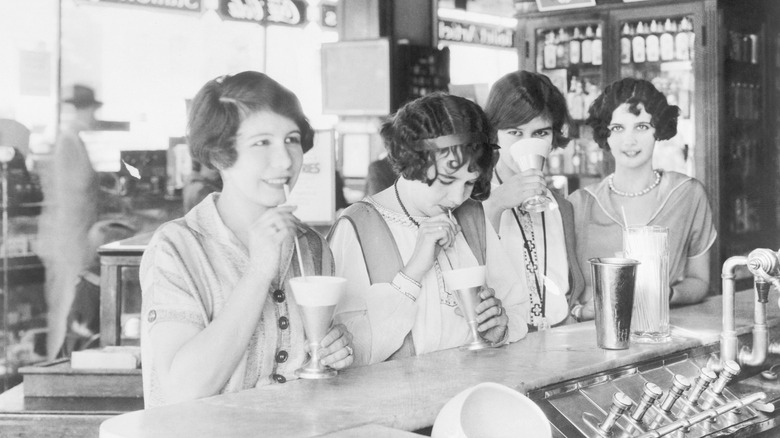
When you think of soda, you probably don't think "medicine." But actually, this beloved fizzy drink has its roots in the pharmaceutical industry. Yep, it's true: Soda fountains were once a common fixture in pharmacies, and people truly thought that fizzy drinks could really cure their ailments.
In the early 20th century, though, soda fountains took on their own identity. Throughout Prohibition, bars serving alcoholic cocktails and beers were no longer an option, so soda fountains, still often located in drugstores, stepped in as fun places to drink and socialize. But even after this period, they remained a go-to destination. Children, teens, and parents alike would gather at their local soda fountain, ordering different flavors and concoctions from the soda jerk (basically a soda fountain bartender).
Many people who grew up in the early to mid-20th century feel nostalgic for this period in their lives, because, for the most part, the soda fountain era is over in the U.S. (although some retro-themed establishments still exist). Below, we take a deep dive into some of the old-school soda fountain drinks that deserve a comeback, from nectar to phosphate to egg creams.
Nectar soda
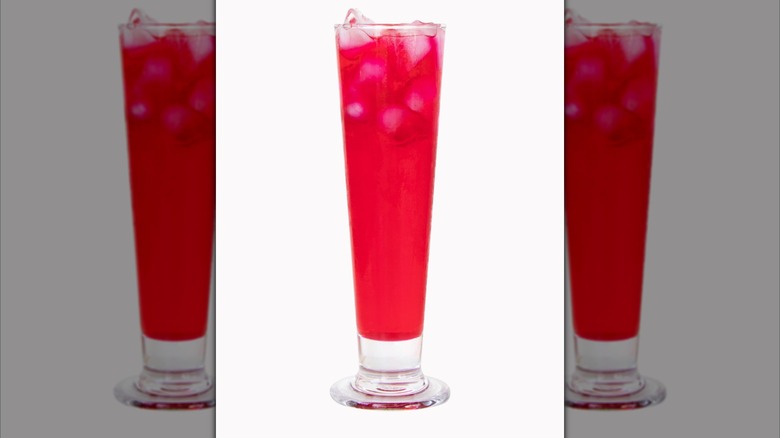
If you were looking for a drugstore in New Orleans in the mid to late 20th century, there's a good chance you'd find yourself at K&B. There, you could pick up painkillers and other medications, but you could also get your soda fountain fix. The drugstore chain had a wide range of sodas on offer, but many who remember frequenting K&B (before it was purchased by Rite Aid in the 1990s) feel nostalgic over one option in particular: nectar.
Strangely, nectar sodas, which were made with a combination of vanilla and bitter almond, were only really popular in New Orleans and Cincinnati, Ohio. In fact, the flavor was probably more popular in Cincinnati, where it was served from soda fountains as early as the 1870s. It might seem odd that nectar sodas only really took off in New Orleans and Cincinnati, especially given that there is more than 800 miles between them, but researchers have their theories.
It might be because bitter almond and vanilla were both favorites of French Acadians, who settled in New Orleans and Quebec, Canada. Hang on a second — Quebec? Yep, stay with us. From Quebec, the flavor might have traveled to Cincinnati with an American confectioner, called John Mullane. You can still find nectar soda in the U.S., but it's not as popular as it used to be. Still, people who used to order it all the time have fond memories, describing it as a poundcake flavor in liquid form.
Green River
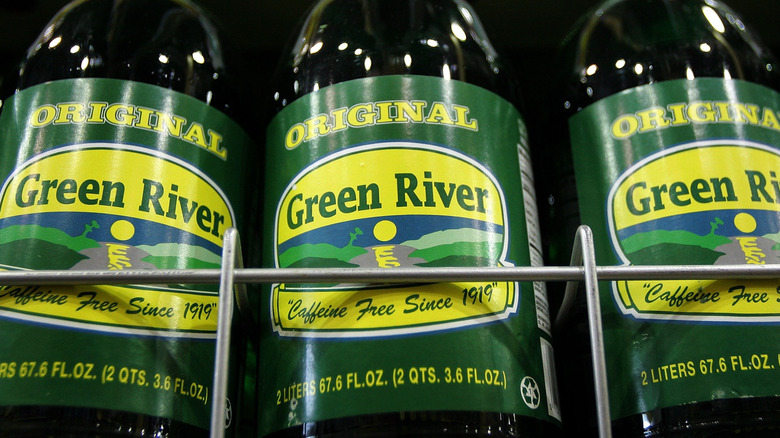
Nectar soda belongs to Cincinnati and New Orleans, and Green River belongs to Chicago. The fizzy lime-flavored green soda was such a hit in the city during Prohibition that it basically managed to single-handedly prop up an entire brewery — the Schoenhofen Edelweiss Brewing Company. It remained popular for decades after (it even spread to the West Coast), and was sold both in bottles and in syrup form from soda fountains.
Many people who grew up drinking Green River say the soda fountain version was the best. Some remember getting served Green River in a paper cone from their local soda fountain, which had to be placed on a metal stand so they could enjoy it while they sat and drank with their friends. Green River was so loved that it even inspired Creedence Clearwater Revival's hit, "Green River." Like many people who grew up in the mid-1900s, CCR's John Fogerty also remembers drinking the fizzy, tangy concoction out of a wet snow cone.
Green River was particularly popular in Chicago, but it didn't originate there. Actually, Green River got its start at a soda fountain in Iowa, where it was created by store owner Richard C. Jones. But he knew he was on to a good thing: Jones sold the recipe to Schoenhofen Edelweiss Brewing Company in 1919 for around $120,000.
Egg cream
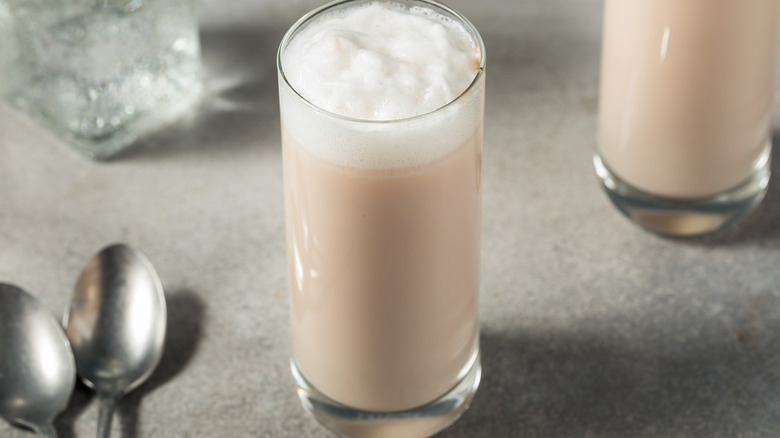
If you grew up in Brooklyn, New York City, in the early to mid-20th century, chances are you've tasted an egg cream from a soda fountain. In fact, there's a good chance it was one of your favorite drinks to order at the time. Many people remember strolling through Brooklyn after school and stopping off to order an egg cream with their friends or partners. In fact, for plenty, it was a daily ritual, often accompanied by corn muffins or pretzels, too.
An egg cream might sound like a slightly strange soda choice. After all, who really wants fizzy eggs and cream in a drink? Actually, the drink is nothing like the name. There are no eggs at all in the recipe (although some theories suggest they may have been at one point). In fact, an egg cream is actually more like a bubbly chocolate milkshake, made with chocolate syrup (usually Fox's U-Bet), seltzer, and milk.
No one really knows for sure who invented the first egg cream, but it was, without a doubt, a Brooklyn favorite. It was a popular order for decades, right up until soda fountains started to disappear. Good news, though: If you've got a craving for an egg cream now, you can still find them served in the odd diner in New York.
Lime Rickey
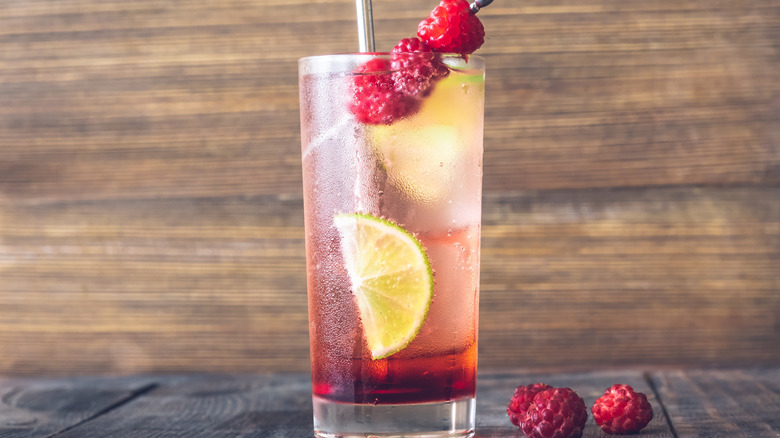
During Prohibition, people were looking for drinks that would fill the liquor void. Luckily, for many, a sugary, tangy soda did the trick. It was during this time that the Lime Rickey started to really rise in popularity, because the tartness of the lime danced on the tongue and gave you a boost, a little bit like alcohol. It wasn't the same, but basically, Lime Rickeys made people feel something, and that was good enough.
Lime Rickeys weren't always a dry drink; they were actually invented at a Washington, D.C. bar in the 1880s. Back then, they were named after a customer, called Colonel Joe Rickey, who liked his morning seltzer with fresh lime, ice, and a splash of bourbon. The drink soon spread across the region, and in the decades that followed, during Prohibition and beyond, soda fountains developed their own (alcohol-free) twists on the classic. After Prohibition ended, bars served up the boozy cocktail version again (and many still do).
The type of Lime Rickey you got depended on which soda fountain you visited. Some remember sipping cherry Lime Rickeys in the Bronx in New York, for example, while others in Massachusetts have fond memories of drinking raspberry Lime Rickeys at the mall.
Chocolate Coke
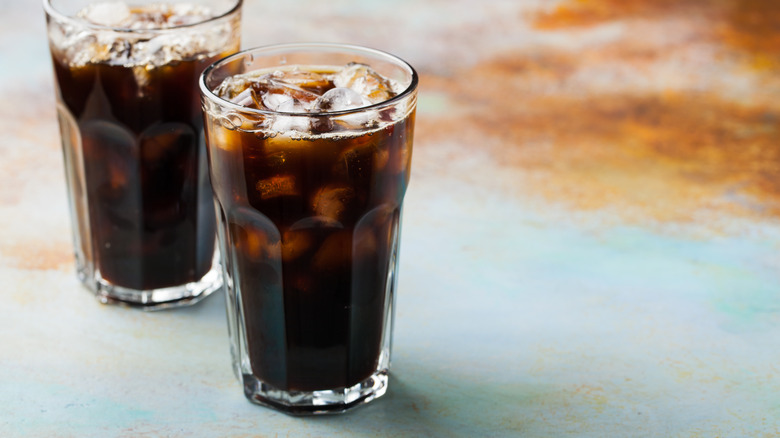
Today, you can order a classic Coca-Cola anywhere you go. Often, it will come in a can or a bottle, but it's also a popular choice at fast-food drink dispensers (which are sort of like modern-day soda fountains). But chocolate Coke? That's not a choice you see very often these days. Back in the mid-20th century, though, this flavor was a soda fountain go-to for many people. And yep, it really is as simple as it sounds: It's Coca-Cola and chocolate syrup. For some, it might be overly sweet, but many loved the combination and would even add in some cherry for a little fruitiness, too.
Unlike many of the other sodas on this list, chocolate Coke doesn't seem to have one single inventor. It was probably just the result of people getting experimental at soda fountains, and word of mouth made it a hit with some customers. Some people remember soda jerks getting requests to mix various syrups with Coke, including lemon and vanilla. For some, Hershey's chocolate syrup was the go-to for chocolate Cokes, and others would even mix a few peanuts into the drink, too.
Marshmallow Coke
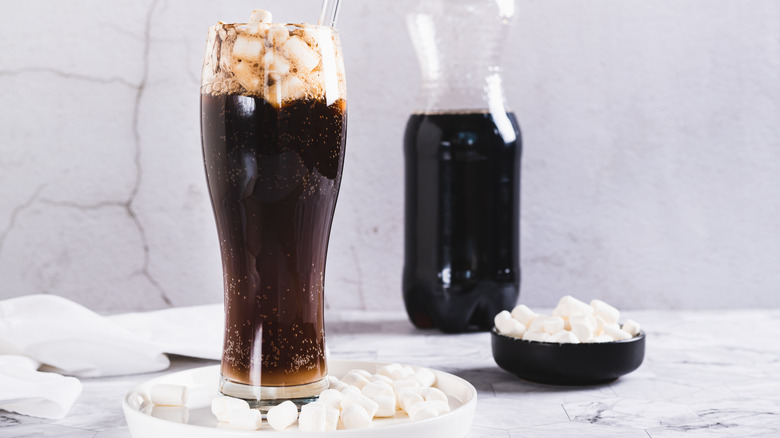
Another Coke drink people have fond memories of requesting at the soda fountain is marshmallow Coke. And again, it's exactly what it sounds like: Coke with marshmallow fluff. It was a particularly fun drink for customers because as soon as the marshmallow hit the fizzy soda, the whole thing would start to bubble and overflow. That said, it wasn't as fun for the soda jerks, who would have to clean up all the mess afterward.
Soda fountain marshmallow Coke isn't really a thing anymore, but people still experiment with making their own versions at home. In fact, "fluffy Coke" has even turned into a modern TikTok trend. It's very similar to the old-school soda fountain classic, made with a scoop of marshmallow fluff with Coca-Cola poured over the top. Those who love it have compared it to an ice cream soda, praising its fun, creamy, and bubbly texture.
Phosphate
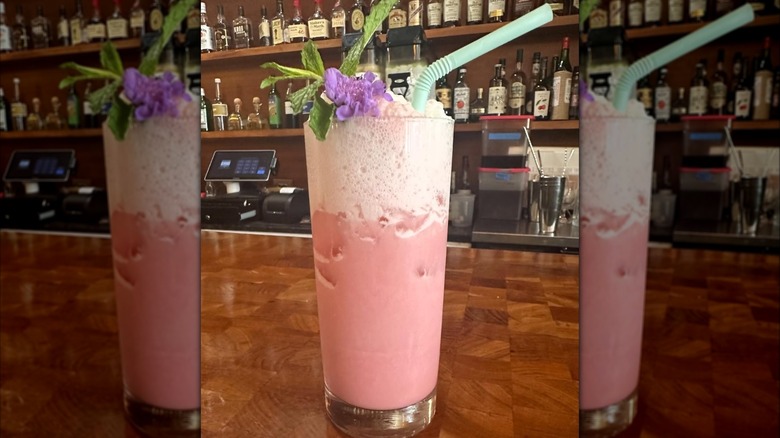
Many people have fond memories of heading to the soda fountain after class and ordering a phosphate. Some would opt for cherry vanilla phosphate, while others were firmly in the lime phosphate club. Many were all about chocolate phosphate, and others loved lemon. But whatever flavor you opted for, they all had one thing in common: They had a unique sour element, kind of like an artificial citrus fruit. This sourness cut through overly sweet flavors, creating a perfectly balanced and slightly tingly soda fountain drink.
That sparkling sourness came from acid phosphate, which sounds like something you shouldn't drink. But don't worry, acid phosphate is actually just a neutralised solution of calcium, magnesium salts, and potassium. It was a staple in soda fountains in the 20th century, but it wasn't actually created for fun, fizzy drinks. Acid phosphate was first developed in the 1860s by the American scientist Professor Eben Norton Horsford, and was initially prescribed to settle the stomach from anxiety or seasickness. It makes sense that it made its way into soda fountains, given their pharmaceutical roots.
It's not as easy to find phosphate drinks today as it was back in the mid-20th century, but it's not totally impossible. A few old-school diners and soda fountains across the country still sell them for diners who want a nostalgic taste of the past.
Root beer float
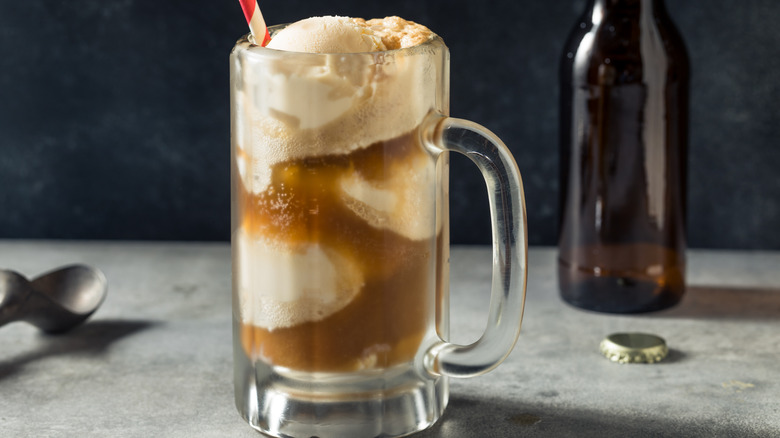
Root beer has been around for generations. It was first brewed by 18th-century farmers in the U.S., but they didn't come up with the idea on their own — they were inspired by Native American recipes for a herbaceous, low-alcohol drink called "small beer." Root beer took off with teetotalers, so unsurprisingly, it became a Prohibition-era staple. But many soda fountain customers didn't just want simple root beer; they wanted something far more exciting: a root beer float.
The drink is basically a mix of root beer, cherries, ice cream, and cream, all of which work together to give it a creamy, bubbly texture and an overly sweet taste. It was particularly popular in Chicago during Prohibition and the years that followed, but it was also a nationwide hit (in part, thanks to A&W Restaurants). The exact origins of the drink are uncertain; some say it was first served in Chicago, while others trace it back to a 19th-century brewer in Colorado.
Wherever it came from, the root beer float is beloved by many former soda fountain-goers. Some call it a black cow or a brown cow (if it were made with chocolate ice cream). Classic soda fountain root beer floats are hard to come by, but if you've got a craving, you can still find the drink served in various restaurants across America. And of course, there's still the option of heading to your local A&W.
Malts
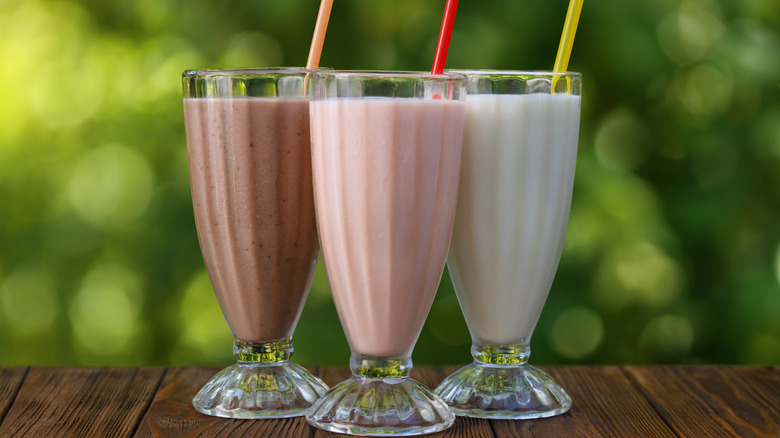
For some, a malt was the only right choice at the soda fountain. Again, the specific flavors varied — some loved drinking chocolate malts out of a long, tall glass, while others loved drinking vanilla or pineapple malts through a big straw.
You might think that malts are the same as modern milkshakes, and while they're very similar, many who grew up drinking soda fountain malts say they're not the same. Science agrees. While milkshakes are usually made with fresh milk and ice cream, malts (short for malted milks or malted milkshakes) were made with a type of powder made from malt syrup (a concentrated syrup made with barley grain), powdered milk, and lots and lots of sugar. Fun fact: The first person to make malted milk powder was William Horlick. Yep, unsurprisingly, that's the same man behind the malted drink brand, Horlicks.
The powder started as a way to consume milk without worrying about getting sick (back then, it was often unpasteurized). But it soon became a soda fountain staple, popularized, once again, by teetotalers, but loved for its distinctly sweet and nutty flavor. Some have even described the taste as more umami-rich than a regular milkshake.