

This Classic Cocktail Is The Perfect Match For Plymouth Gin
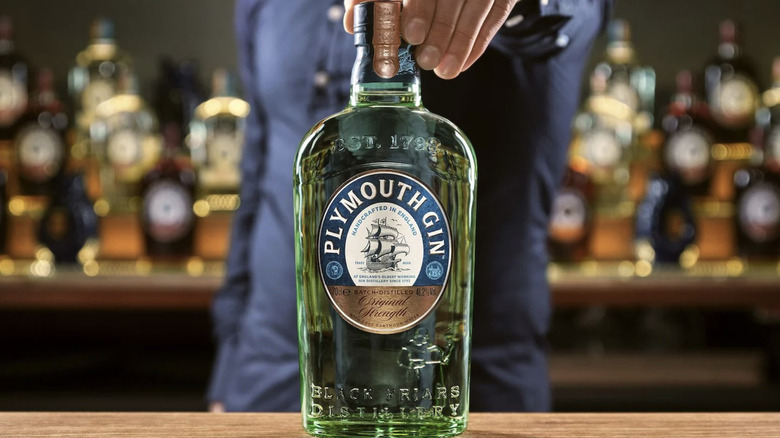
Gin, the crisp spirit made with juniper berries and other botanicals, is known for adding brightness, floral hints, and notes of pine and spice to a variety of creative cocktails. While there are several styles of gin, including London Dry and contemporary gin types, Plymouth Gin from the southwest coast of England is loved for its fine and smooth balance of seven fragrant botanicals. Exclusively produced by the Plymouth Gin Distillery since 1793, Plymouth is excellent in a plethora of gin drinks — from gin and tonics to negronis. But it's an especially perfect match for one particular classic cocktail: the martini.
A classy beverage choice, martinis combine a few key ingredients, namely gin, vermouth, and a twist of lemon peel. Sometimes bitters are added to the mix too. Since the drink delivers a concentrated spirit flavor that's usually not diluted with other liquids (with the exception of styles like dirty martinis), the quality of the liquor is of utmost importance. Plymouth gin uses a blend of botanicals which the brand refers to as its "seven wonders of our world." This includes pleasant, spiced notes from cardamom and coriander, juniper berries, along with hints of citrus from lemon and orange. Orris root gives the spirit a floral touch. Finally, angelica root adds a unique slightly sweet earthy taste and accentuates the liquor's a dry finish, which works perfectly in dry, not-too-sweet martinis.
How to make your own Plymouth Gin martini
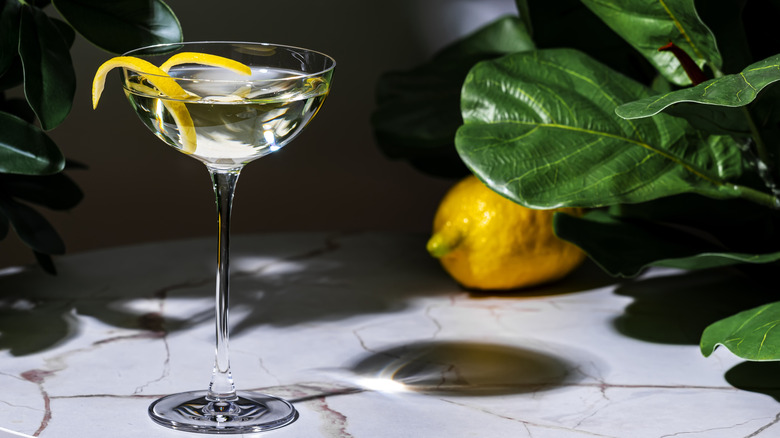
Plymouth Gin typically has a less pronounced juniper flavor compared to London Dry gin, which gives a martini well-rounded flavor perfect for pairing with herbal flavors and slight bitterness of vermouth without the drink becoming too bitter or pungent. The citrus hints from the orange and lemon in Plymouth gin also adds brightness to the drink and complements the lemon peel commonly added as a martini garnish.
When making a martini at home, it's especially important to select a quality, fragrant gin like Plymouth for the job since gin makes up much of the liquor in the cocktail. While there are many martini variations out there, three parts gin to one part dry vermouth is a classic ratio. Other bartenders prefer to use more of the botanical booze — up to eight parts. Using a greater ratio of the English gin will highlight its nuanced and complex combination of botanicals in the drink.
Whatever your spirit ratio, once you have your spirits in the glass, it's time to stir the mixture with a cocktail spoon. A classic martini should just be stirred a few times, not shaken with ice, since melted ice can dilute the flavor of the gin and vermouth in the drink. To impart a chill to the cocktail, stir it with ice, then strain the drink into your martini glass and enjoy.