

Use Silicone Baking Cups For The Easiest Poached Eggs Ever
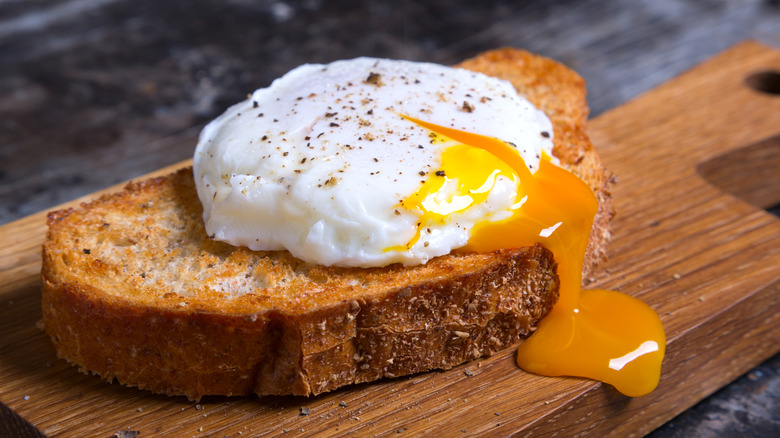
There is something very aesthetically pleasing about a poached egg, especially when it's sitting atop an eggs Benedict or a slice of avocado toast. It's a finishing touch that makes you, as a chef, look like you know what you're doing — even when the process of getting that poached egg on the plate was less than glamorous. Poached eggs are notoriously difficult to make, as the fragile whites can easily split in the water vortex, causing the yolk to bleed out — effectively ruining the entire cinematic experience of cracking the cooked white and having it ooze down onto your toast.
But there's no need to fear, as one simple baking tool can help you get perfect poached eggs every time: silicone cupcake liners. These liners can fit a single egg each and will allow it to gently simmer in the water without actually touching it. Once your eggs are loaded into the liners, place them in a water bath and cover with a lid. Within minutes, the whites will set, meaning you can carefully remove the liners from the water with tongs. A gentle squeeze is all you need to release the eggs from the silicone and onto your toast — no slotted spoon, cracked whites, or spinning water vortex involved.
The secret tool for fool-proof poached eggs
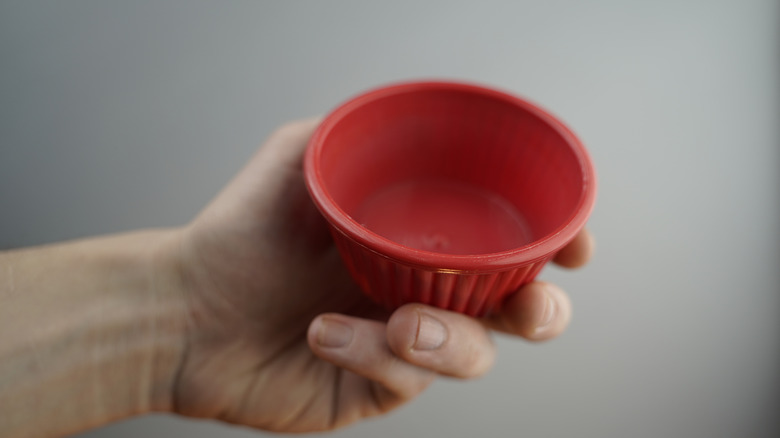
Although this hack may seem simple, there are some important tips you'll want to keep in mind to ensure your poached eggs come out ... egg-cellent. The first is to brush the inside of your cups with oil or melted butter so that the egg doesn't stick to them. You can crack the eggs into the molds directly or into a separate bowl; the latter may be a better choice if you usually have pesky eggshells. This will also allow you to ensure that the yolk is whole and intact before you transfer it to the silicone mold. When doing so, you'll want to be careful and avoid splashing any water into the molds, as this can interfere with cooking.
The exact time to cook your eggs will depend on the texture you want from your yolks. The longer you cook it, the harder the yolk will be. Between four and five minutes will give you soft, cascading yolks, while a couple more minutes will give you more of a jammy, soft-boiled consistency.