

The Old-School Butter Alternative That's Still Semi-Banned In Wisconsin
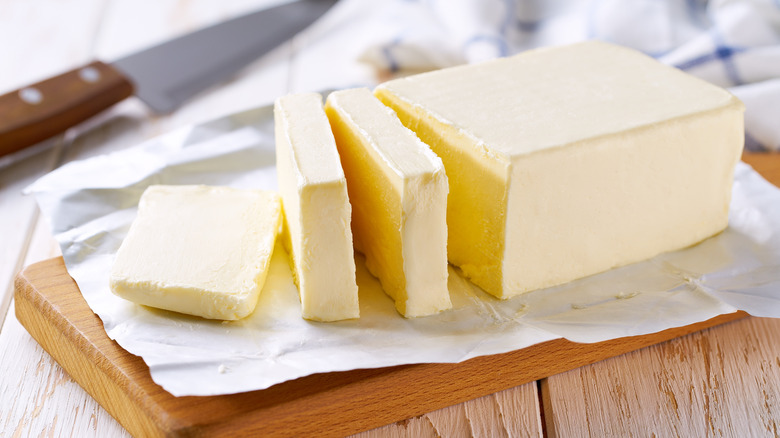
Wisconsin is so hard core about its dairy that even the most old-school of alternative ingredients went through a long period of being banned. Still self-declared as "America's Dairyland," Wisconsin has a storied history of producing cheese, milk, and butter, and even though California overtook it as the top milk producer in the U.S. in the '90s, the Badger State occupied the number two spot. With that comes a certain defensiveness around the use of dairy in cooking, which is part of the reason margarine is still banned for some uses in Wisconsin to this day.
There were stricter rules completely banning the sale of some margarine in Wisconsin that were repealed in 1967, but there is still a law on the books that makes it illegal for restaurants to give customers margarine unless they specifically ask for it. Margarine may also not be served as a substitute for butter at state institutions. That means schools, prisons, and state-owned hospitals can't give you margarine unless it's deemed medically necessary by a doctor. And this law has some teeth as well. First-time margarine offenders can be fined anywhere from $100 to $500, and multiple-time offenders can actually spend up to a year in prison. Interestingly, Wisconsin didn't used to be alone in having strict laws around margarine. It has just held onto them the longest. An effort to repeal the ban in the state was even defeated in 2011.
Wisconsin's ban on margarine in restaurants and state institutions is leftover from a larger 19th century ban
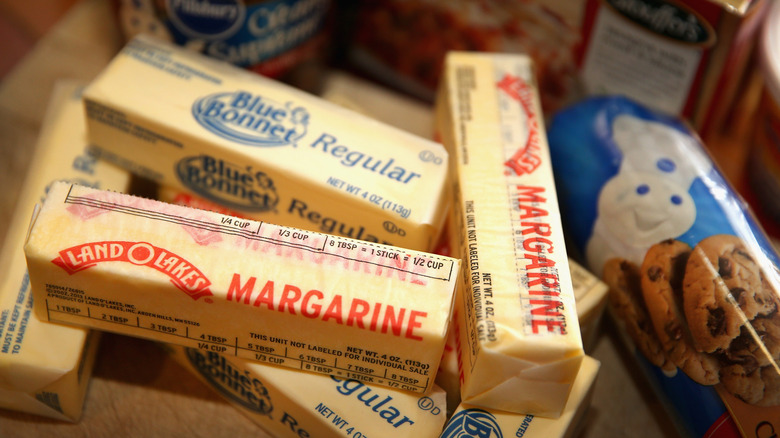
As might be expected the Wisconsin ban on margarine had to do with the dairy industry, but those concerns were widely shared throughout the country. Margarine had been invented in 1869 as a cheap substitute for butter to be used by the French military. Not long after what was then called oleomargarine had started to spread around the world because of its low price, and it was being manufactured in the United States. The dairy industry didn't take too kindly to this new competition, and Congress passed an act in 1886 regulating the new product and taxing it cut down on its popularity.
It wasn't just anti-competitive behavior from the dairy industry. In contrast to butter, margarine is naturally white, but companies would dye it yellow to make it look like butter. Sometimes it would be falsely labeled as the latter, or real butter would be cut with margarine to make it cheaper. Multiple states, including Wisconsin, responded by banning the sale of dyed margarine, forcing it to be sold in its natural white state. This was partially about honesty in advertising, but it also helped the dairy industry because goopy white margarine is pretty unappealing. Wisconsin outlawed dyed yellow margarine in 1895, but it also prohibited the use of margarine in restaurants and institutions. Thirty-one other states passed similar bans.
Wisconsin residents used to have to smuggle in margarine for decades
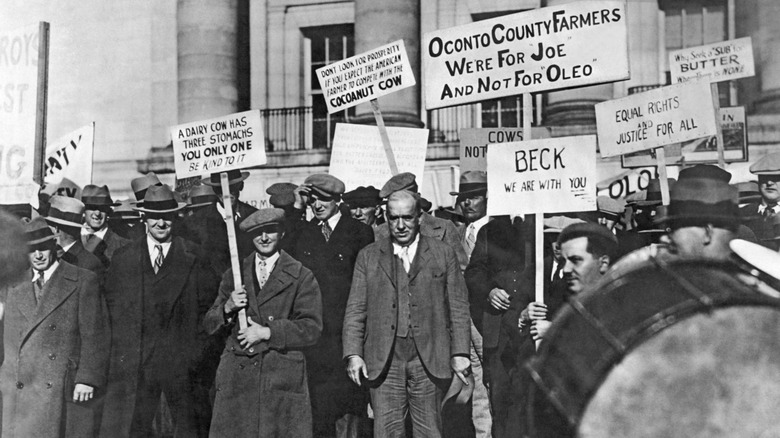
Things started to change for margarine in the 1950s, but dairy-loving Wisconsin was a longtime holdout against relaxing restrictions. The national change of heart came about because of the Great Depression and then World War II. First came the economic crash. Then wartime rationing caused a butter shortage that led to people embracing margarine as a cheap cooking fat, and suspicions about it waned. With public opinion shifting, Washington repealed its margarine tax and restrictions in 1950, as did most other states around the same time. The product became a symbol of cheap post-war cooking in the '50s and '60s, but Wisconsin and Minnesota held out. With neighboring states having repealed anti-margarine laws, people in Wisconsin would often drive across the border to buy it. Stores in Illinois prominently advertised oleo to desperate residents of the Badger State.
Today the ban on serving margarine in Wisconsin isn't really enforced, and this butter alternative isn't the force it used to be either. However, the state hasn't totally relaxed its attitude towards the product. In late 2025 a new bill was introduced that would further crack down on the use of margarine in schools, not just as a substitute for "table butter," as the law currently says, but any use of butter. Wisconsinites may be able to get margarine at the store now, but the dairy industry likely won't give up without a fight.