

Before It Became A Dinner Staple, Meatloaf Was Breakfast
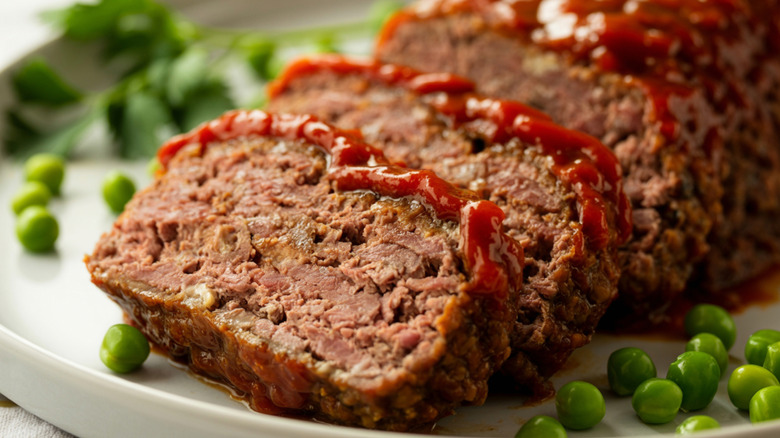
While loaves of meat have been around since ancient Rome, the version of American meatloaf that we know and love today — that classic combination of ground meat, eggs, herbs and spices, onions, breadcrumbs, and maybe some ketchup, mustard or Worcestershire sauce — became popular in the U.S. in the late 1800s as a breakfast food. You heard that right. But why did meatloaf start out next to our eggs and pancakes, and when did it transition to evening fare?
First, we must thank the Romans, who used to combine animal brains, offal, and other less desirable parts of the animal into what eventually transformed into what we know as meatloaf. Thie Roman tradition evolved into what was known in Medieval Europe as pastez, patties of this ground meat mixed with pine nuts and spices. Good news (and dishes) travel fast, and soon the idea of ground meat bulked up with other ingredients made its way to countries like Germany and Sweden, whose people developed their own renditions. The idea was always to make more of the meat they had by adding things to it — spices and veggies but also bread, potatoes, or eggs.
How did meatloaf go from a daytime delicacy to nighttime nosh?
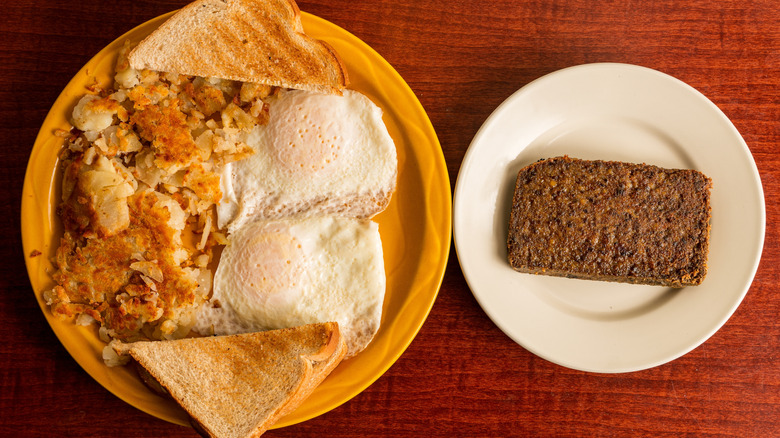
The Germans must have really loved their meatloaf because they brought it all the way to the United States. In the 1700s, the Pennsylvania Dutch, a group of German-speaking immigrants who settled in Pennsylvania, ate scrapple like you would bacon or sausage or any other breakfast meat. Scrapple is made from meat scraps, including organ meat and pieces of skin, which are often boiled and mixed with cornmeal and spices to form, well, a meat loaf. In the past, meaty breakfasts were essential to give good sustenance for physical days of work and scrapple remains a traditional breakfast dish.
By the 1800s, meatloaf recipes more closely resembled what we know and love today. Recipes around this time used mostly beef and substituted scrapple's cornmeal for bread and milk as a binder. Once the Great Depression hit, meatloaf became a great option for a cheap, easy meal to make in the home, taking it out of strictly breakfast territory. Then, it naturally gained its status among the classic meals for housewives of the 1940s and '50s to prepare for their families.
The popularity of meatloaf continued to skyrocket from there, and it became a staple of pre-made TV dinners and diners throughout the '60s, '70s, and beyond. Meatloaf may have transitioned to the dinner table, but we're not going to lie: A piece of morning meatloaf dunked in a dippy egg kind of sounds incredible.
How to eat meatloaf for breakfast
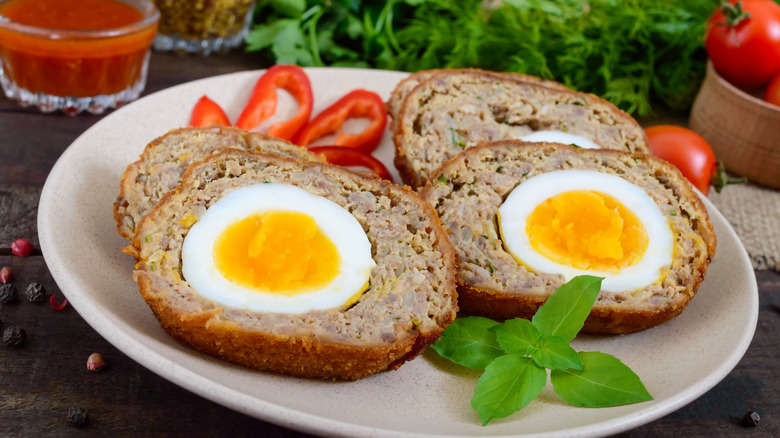
If you're looking for a meaty breakfast recipe to start your day, don't shove aside that leftover meatloaf in your fridge from the night before. Instead, slice up that bad boy, fry it up in a pan, and add it to your favorite breakfast sandwich. Or — especially if you're all about a one-pan breakfast — scramble it with your eggs or chop it up and add it to an omelet. If you're thinking ahead, why not bake your eggs right into the middle of your meatloaf to begin with?
You could also use leftover meatloaf for a breakfast bake, including eggs, veggies, and potatoes. It's basically the entire food pyramid in one delicious dish. Make your meatloaf with pork sausage or add a sweet ingredient — grated apples — for an even breakfastier (yeah, we're making it a word) vibe. Take things even a step further and caramelize your slice of meatloaf in a little bit of maple syrup for a sweet and savory flavor profile that would pair perfectly with pancakes, waffles, or eggs.