

Ketchup Is The Unexpected Star Of This Retro Japanese Pasta
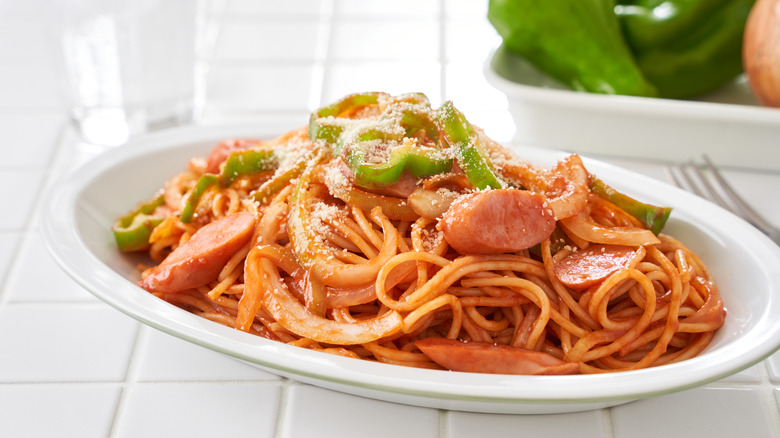
Walk into any Japanese restaurant in the U.S. and you probably have a good idea of what's going to feature on the menu. Beloved dishes such as sushi, teriyaki, tempura, and ramen have all made their way into everyday dining halfway across the world from where they were first created. What you're less likely to find however, is what's known as yoshoku, aka dishes inspired by Western cuisine that are given an undeniably Japanese twist. One such dish is napolitan (or naporitan), which is essentially spaghetti dressed in a ketchup sauce studded with sausage, bell peppers, onions, and often mushrooms.
The dish is believed to have been invented by chef Irie Shigetada at Yokohama's New Grand Hotel in the 1950s. He was reportedly inspired by the American soldiers eating simple meals of spaghetti and ketchup and sought to make an elevated version using tomato purée that would be more worthy of a hotel menu. But, after the war, certain ingredients became costly or hard to find, and it was copycat versions using ketchup that began to spread, quickly becoming a staple of Japanese coffee houses.
Although the name of the dish is a nod to Italian pasta dishes, the technique is wholly Japanese, made in the style of a fried noodle dish such as yaki udon. Spaghetti is cooked until very soft, then left to chill for a chewier texture (sometimes even overnight!). The vegetables are sautéed in oil, along with sliced smoked sausages or ham. The pasta is then added to the frying pan to heat through, with the ketchup added as the final step.
Other popular dishes from yoshoku cuisine
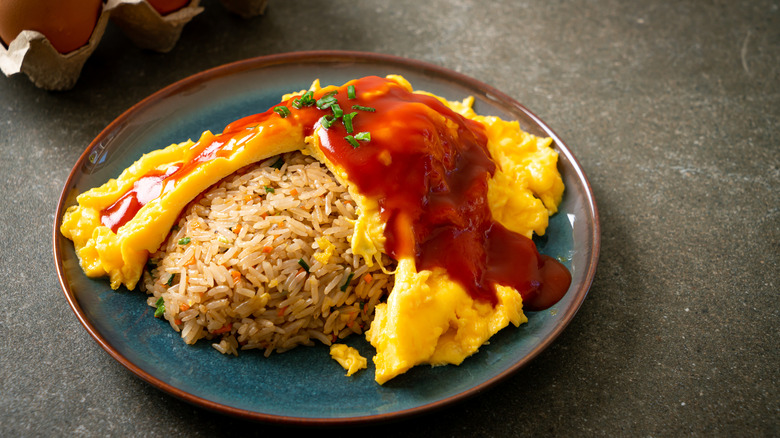
The adaptation of Western dishes in Japan goes back further than you might think. The island nation spent more than 200 years largely cut off from other countries, but in 1868, Japan finally opened up again and a ban on red meat was lifted too, leading Western influence to heavily impact the cuisine. The term "yoshoku" was used to describe these dishes as early as 1872. Some, like the napolitan pasta, are obvious in their Western origin while the hambagu, or hamburger steak, although prepared and served differently, is a Japanese take on the hamburger.
Curry rice may not read as Western, but it's widely believed that the Indian dish made its way to the Japanese menu via the British. Other dishes have been incorporated so well into Japanese menus that you might be surprised to learn that they are part of yoshoku cuisine too. The viral omurice takes its name from the words "omelet" and "rice," and is a Japanese take on a traditional French omelet. Even tonkatsu, the breaded pork that's a staple of Japanese restaurants, has its origins in Western food. The name derives from the word "cutlet" and it's generally considered one of the oldest yoshoku dishes overall.