

The Easy No-Roll Sushi Home Cooks Can Make Anytime They Like
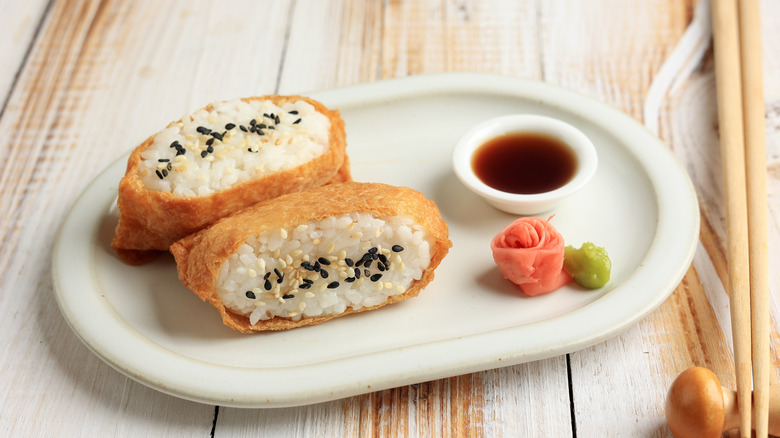
Making sushi is a precarious endeavor for many home chefs, and understandably so. There are a lot of moving parts to the process, requiring skills that everyday chefs may not have yet acquired. That said, there's an excellent alternative to lengthy pro-level sushi creation: A no-roll version called inari, or commonly, inarizushi. It's named after the Shinto deity Inari Okami, the god of rice, agriculture, and prosperity. Traditional inari bypasses the usual seaweed and raw fish, opting instead for seasoned sushi rice tucked inside a sweet and savory "aburaage" pouch made from fried tofu.
To get some insight on perfecting inari skills in home kitchens, we turned to two experts in the field, Andrew Oh, executive chef at Momoya SoHo, and Akira Hiratsuka, executive chef of KEI, a Japanese ramen and izakaya bar. Making it at home requires no rolling or trained expertise, but some simple tips do help understand things like working with the aburaage, what to look for on labels, and which ingredients are best for beginners.
First, there's choosing the tofu aburaage pocket, which chef Hiratsuka recommends home-chefs buy premade, rather than making from scratch. But he does caution to check labels for excess sugar in some products. Chef Oh adds that, for allergy purposes, it's possible to buy gluten-free aburaage or ones seasoned with or without soy sauce. "I personally enjoy the tofu pockets that are seasoned with soy sauce," he says, "as the soy allows the texture of the tofu to be soft, easily consumed, and seasoned so that no extra seasoning is required."
Prepping aburaage pockets for inari sushi
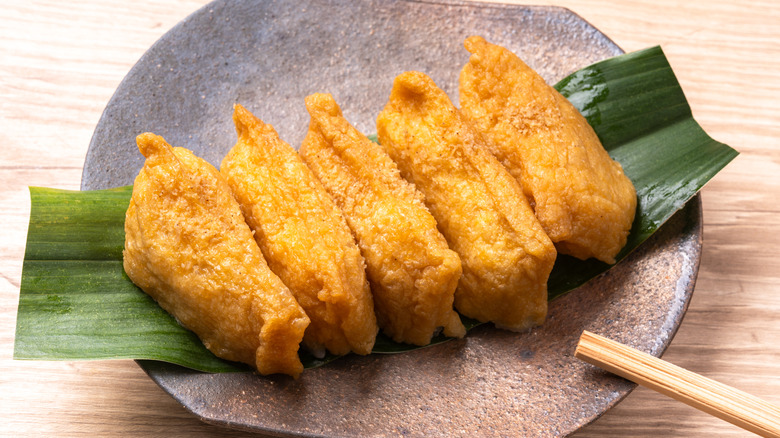
Appropriately prepping the aburaage pockets can make or break your inari sushi, and Hiratsuka suggests removing excess oil from the fried tofu. "Boil water in a pot, open the tofu pouches, and soak them in the hot water," he says. "This removes the oil and significantly improves the flavor absorption." Then it's time for actually adding that flavor, as they're otherwise pretty bland. This chef recommends using sugar, soy sauce, and mirin to create a rich, flavorful, strong seasoning that's less likely to spoil when transporting to picnics and outings.
The type of sugar makes a difference in the outcome. "You can make delicious sushi with regular sugar," he shares, "but using coarse sugar, which dissolves slowly during cooking, prevents burning and results in a better taste. Medium-grain sugar is also good for a richer flavor."
To make sure the flavor gets fully absorbed, simmer the tofu slowly with the seasoning, using a wide-bottomed pan or skillet for even distribution. If you don't like sweet flavors, Hiratsuka suggests reducing the amount of sugar and mirin to lessen the sweetness, and adding dashi Japanese broth for a lighter, Kyoto-style finish. "The key to delicious inari sushi is its moistness," he explains. "Since the fried tofu has absorbed all that delicious flavor, leave a little broth in it to maintain that moistness. When squeezing out the broth, the trick is to stack several pieces of tofu together." He also cautions that sushi made with dashi broth is more likely to spoil, so be careful.
Best ingredients for filling inari sushi
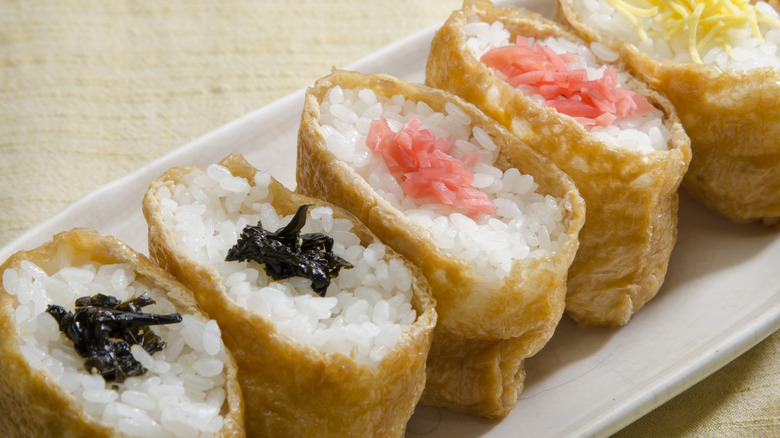
When it's time to fill those flavorful little pockets, Chef Hiratsuka believes that beginners making inarizushi should start with basic roll ingredients such as avocado, salmon, and cucumber. Chef Oh largely agrees, noting the versatility of avocado and the accessibility of sushi-grade salmon. Noting that fish butchery is very difficult for most people, even sushi chefs, he feels it's important for beginners to avoid seafood that's trickier to handle, such as whole fish or seafood that are still alive. A simple option is to use proteins that are already processed and ready to cut for sushi.
"There needs to be a certain amount of skill level in order to plate sushi dishes beautifully," Oh believes. "In general, there is always a learning experience to be had when trying to make new dishes or trying new cuisines." Due to the casual, no-roll construction of inari sushi, it does tend to be more flexible than other sushi preparations. He even recommends "stuffing the tofu pocket first with sushi rice and turning the inari upside down so that you can put ingredients on top and make the dish visually appealing."
Rather than sticking to traditional forms, modern sushi eateries are playing loose with different styles of inari sushi. For example, according to Oh, some leave out the sushi rice and toasted sesame seeds altogether, and stuff the face-up pocket with different proteins of choice. For other interesting sushi options, check out our deep dive into 16 sushi rolls that don't contain any raw fish.