

Buffets Vs Smörgåsbords: How These Restaurants Differ
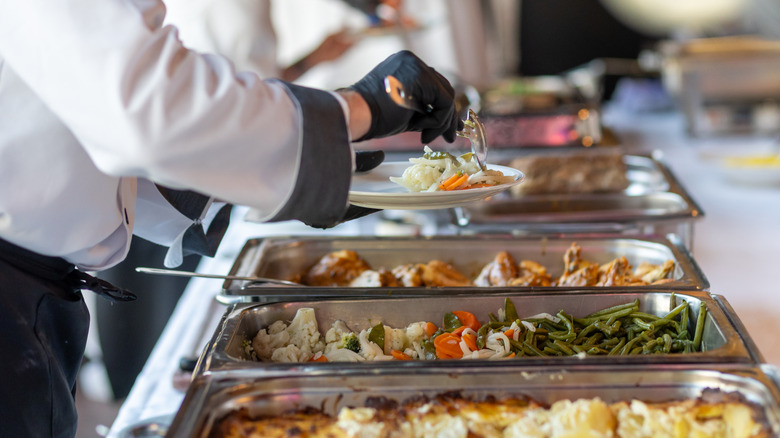
When we think of buffets and smörgåsbords, we think of food in plenty: Long tables groaning beneath a multifarious range of culinary options greater than any diner –- with the possible exception of Homer Simpson – could tackle single-handedly. Yet there are major cultural differences that make these two types of restaurant distinct.
Confusing the two is easy – just last year, USA Today ranked Pennsylvania's Shady Maple Smorgasbord as the best all-you-can-eat buffet in the United States –- and the conflation is understandable, given how much the smörgåsbord inspired our modern conception of the buffet. While elaborate spreads that married abundance with variety have been around since the social dining of ancient Rome and the banquets of the medieval age, the smörgåsbord –- roughly translated as "buttered table" –- has its origins in Sweden.
Ahead of a Swedish feast, it was traditional for guests to be presented with a brännvinsbord, which was essentially a selection of hors d'oeuvres to accompany drinks. In the 18th century, this pre-dinner ritual became the main event and the smörgåsbord was born. This style of eating first hit it big in the United States during the 1939/40 World's Fair in New York, when it was laid on by the Swedish-run Three Crowns restaurant.
The modern buffet was born in Las Vegas
It was in Las Vegas where an Americanized evolution of the smörgåsbord came into its own. In 1946, the El Rancho Vegas hotel opened the Buckaroo Buffet for only $1 per person. The innovation spread rapidly once casino-owners realized that providing an inexpensive and convenient source of nourishment would keep their gamblers from straying too far from the tables. Buffets, many offering the classic all-you-can-eat deal for a pre-set price, soon began to appear throughout the rest of the country, and the rest is history.
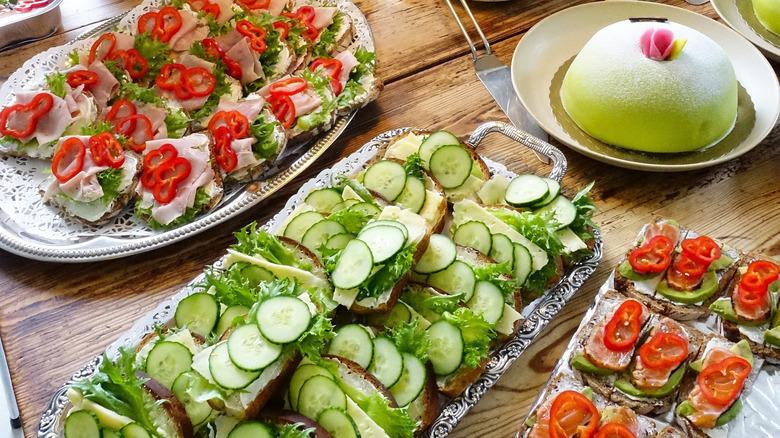
To understand the difference between the smörgåsbord and the buffet today, it should be remembered that while the modern buffet is a business model at its core, the smörgåsbord is more of a cultural practice. A classic Swedish smörgåsbord will focus less on large quantities, but instead on Nordic delicacies such as cured or pickled fish like gravlax or herring, cold cuts, hard boiled eggs, cheeses, Swedish meatballs, and casseroles.
By contrast, while some buffets do restrain themselves to a specific national cuisine or type of food, many offer a level of variety that can be a little overwhelming. For habitués of this kind of buffet however, part of the appeal is being able to go somewhere you can get spring rolls, fettucine alfredo, deviled eggs and chicken-fried steak all on the same plate –- and then, of course, go back for seconds.