

The Type Of Fish To Skip When Frying
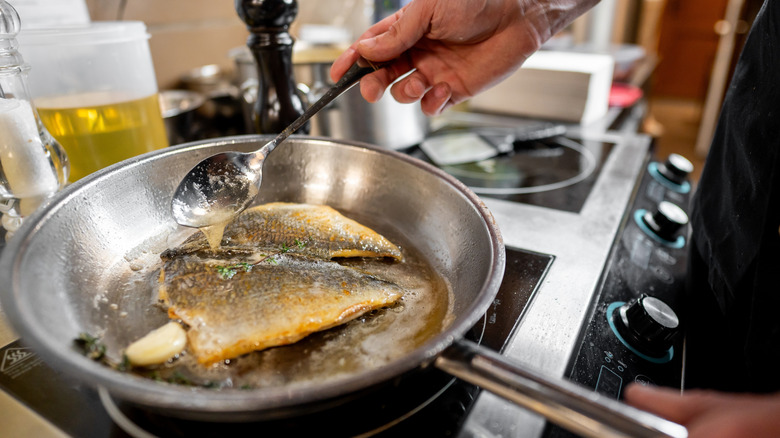
We all love that golden-crisp coating and the tender, moist interior you get with fried fish. But cooking it perfectly depends a lot on the cooking temperature, oil, and, of course, the fish itself. Some fish just aren't built for this ultra-hot and fast cooking method, whether you're deep- or pan-frying. That's why we asked Chef Franklin Becker, of the upscale Point Seven seafood restaurant in New York City, which fish we should avoid frying and which ones are worth cooking this way.
"Never fry super-delicate fish, as they fall apart," recommends Chef Becker. This means you should steer clear of frying fish like tilapia, branzino, sole, and flounder. When flipping them over, these fragile fish can easily break apart and overcook faster than you think. You'll either end up with breading that isn't crisp enough or an overly dry interior. Either way, it won't be an enjoyable meal.
In addition to delicate varieties, Chef Becker warns against frying "super-oily fish like salmon, because it is overwhelmingly strong." Other oily fish like mackerel, sardines, and herring have a relatively high fat content in relation to their size and body mass, which can make them taste fishier. Frying these fish rich in omega-3 fatty acids can also make them taste heavy and greasy, not light and crispy as you expect from a typical fried fish.
How to fry fish the right way
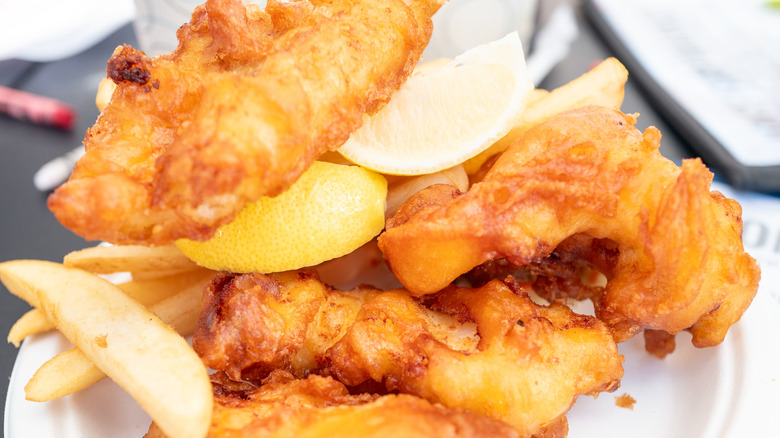
Now that you know which fish to avoid dunking into hot oil, it's good to know the best types of fish that hold up well to frying. We recommend going with cod, haddock, hake, pollock, and catfish. Generally, lean and mild-tasting fish work best for this cooking method and prevent them from breaking up during the cooking process. But it's not just about choosing the right fish. The right prep ensures you get that classic crispy and flaky crust and a soft interior, not a soggy and mushy mess.
"I am not a big fried fish fan unless it is battered or in a format that gets breaded to protect it," states Chef Becker. Whether it's breading, batter, or dredge, a light coating essentially protects the inside from the hot oil, giving the coating a crisp finish and keeping the inside tender and moist. The type of coating you use depends on the cooking method. In our article on essential tips for frying fish, we recommend pan frying dredged and breaded fish and deep frying breaded and battered fish.
And then there's the pan to consider. If you're deep frying, choose a large Dutch oven or stock pot to avoid messy splatters and oil burns. Pan frying works well with cast-iron skillets and deep sauté pans to give the fish enough room to be submerged in oil without overflowing. Additionally, handy tools like a thermometer help keep the temperature just right, while a wire cooling rack and sheet tray combo allows the excess oil to drip efficiently instead of using paper towels that trap heat and make food soggy. As you can see, frying fish can be simple, but only if you have the right tools, fish, and techniques to get the best flavor and texture.