

The Old-School Meat You Rarely See On Dinner Tables Today

Americans are famously avid meat-eaters, but some meats are unofficially off-limits on U.S. dinner tables. For some controversial meats, like foie gras and ortolan, the contentious ethical status is linked to preparations that don't minimize cruelty. In other cases, however, "cuteness factor" indicates where the boundary line is drawn. Even as epicurean opinions shift and expand to welcome tinned fish, nose-to-tail butchering, and offal (monkfish liver, anyone?) into the fashionable contemporary dining scene, rabbit meat is still not a common part of U.S. diets. Why?
A Reddit thread in r/homestead (with 1.4K upvotes) inquires, "Why aren't meat rabbits more popular in the US?" noting the animal's rapid reproduction rate and low-cost maintenance. Indeed, rabbits reach sexual maturity at three to seven months of age and produce multiple litters (four to 12 baby rabbits each) per year. Commenters echo, "It's a shame, it's one of the most sustainable meat sources along with guinea pigs," a popular protein in South American countries like Ecuador, Peru, and Colombia. Another comment from an apparent rabbit farmer writes, "It's hard to not get attached because the babies are so cute, but we went for hybridization vigor and mixed breeds so it was well worth the effort in meat and hides," noting that rabbits are substantially easier to process than other small meat animals like chickens ("no feathers to pluck and you can desleeve the whole pelt, skin and all"). Still, the profitability of raising rabbits as meat animals isn't waterproof.
Rabbit meat remains unpopular in the U.S.
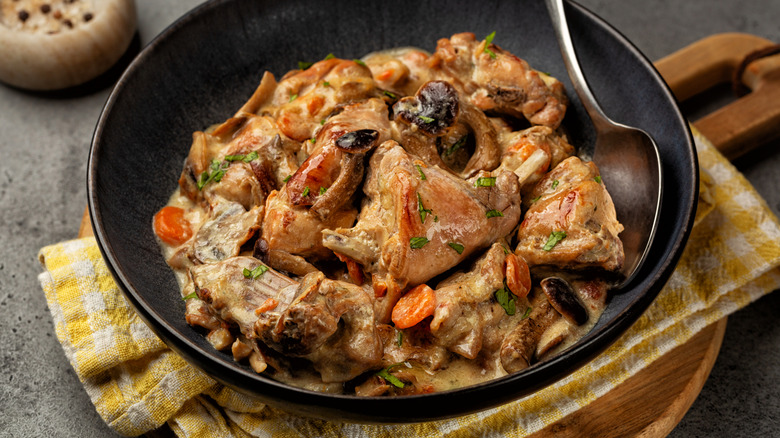
Domesticated rabbit flocks may boast primo reproductive biology, but one rabbit produces substantially less meat per-unit than other common meat animals like cows and pigs. Additionally, rabbits do not offer dual-purpose benefits like chickens' egg-laying, pigs' waste-eating, and cows' milk production. The caveat to this is that rabbits' manure can be used to fertilize crops.
Beyond to-be-determined agricultural profitability, international attitudes also play a role in rabbit meat's popularity (or lack thereof). Rabbit consumption is notably higher in Europe than it is in the Americas. Many of the traditional dishes of French fine dining — the most highly revered cuisine in the world — star rabbit and hare meat (aka lapin and lièvre). Dishes like lapin à la moutarde (rabbit in mustard sauce) are a French bistro menu staple, and even inspired our elevated, dinner-party-worthy braised rabbit with crème fraîche, bacon, and quince recipe. Baked rabbit pie and rustic rabbit stew are also historical classics of British cuisine. Still, in the U.S., public perception of rabbits as belonging more to the "pet" than the "food" category makes it difficult and often unprofitable to sell rabbit meat at the commercial level. This perception might also be compounded by the American public's shifting stance on hunting. According to 2024 surveys by the Council to Advance Hunting and the Shooting Sports (via Bowhunter), public approval of hunting is declining.
Don't knock it till you rabbit
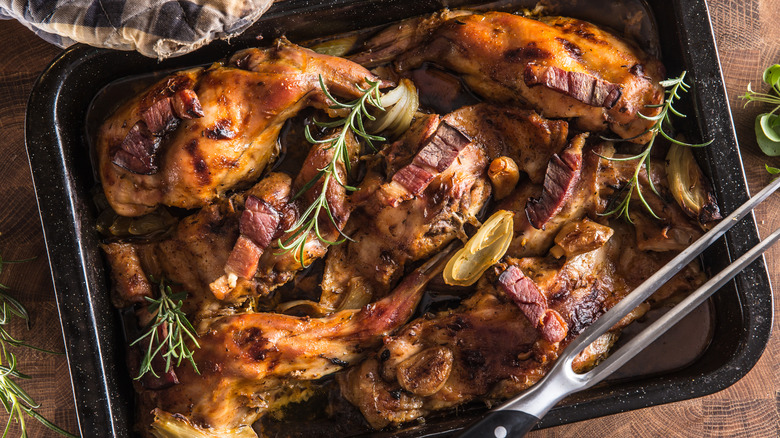
At one time in America, rabbit meat was a familiar and embraced ingredient. During WWII, the U.S. Department of Agriculture released rabbit recipes to help home cooks cope with meat rationing shortages — and the case could be made to bring this old-school protein back again. On the palate, low-cholesterol rabbit meat has a texture similar to chicken but with a richer, more robust flavor, not unlike sweet pork. Due to its natural leanness, it fares best with low-and-slow cooking methods that add moisture; Dutch-oven braising and Instant Pot cooking perform fabulously for rabbit. Think pies, stews, casseroles, and terrines.
Cooking with rabbit meat can be a thrifty, resourceful way for foodies living in rural areas to use their trapping or hunting skills. Pro tip: Wild-caught rabbits and hares can be soaked in milk to reduce gamey taste. For foodies located in more urban areas, however, cooking with rabbit probably means visiting your local butchershop or an online butcher like D'Artagnan, which sells whole rabbits, rabbit legs, loin, saddle, and sausage for myriad culinary uses. Keep in mind, though, that some regional grocery stores do carry rabbit meat. For instance, to make our simple rabbit stew recipe, Tasting Table recipe developer Stephanie Rapone found her rabbit at Wegmans.