

Why Those Jumbo-Sized Vegetables In The Grocery Store Should Ring Alarm Bells
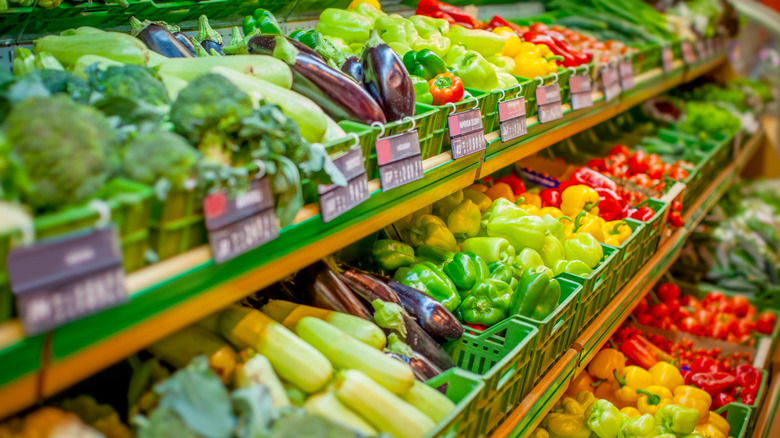
We've all heard the adage that bigger is better — but is it actually true? Apparently not when it comes to vegetables from mainstream supermarkets. Some perfectly tasty jumbo-sized produce is inherently huge (think pumpkins, elephant garlic, and beefsteak tomatoes), but averaged-sized veggies morphing into monsters is often a bad sign. It can indicate growing practices that bulk up standard crops with excess water and growth fertilizer, leaving you with inferior produce in your fridge and meals.
To get some insight into the visual-versus-quality conundrum of oversized veggies, we reached out to Jane Olivia, a nutrition-based holistic private chef based in Arizona. Whether shoppers should avoid jumbo-sized vegetables at the grocery store, she explains that's not always necessary, but it's definitely something of which to be mindful. "Jumbo vegetables often grow fast and can sacrifice flavor for size," Jane says. "They also tend to have more water content, which can dilute taste and affect texture." Consider common kitchen favorites, such as zucchini and cucumbers. Jane notes the larger ones can become watery and bland, while smaller versions often harbor more sweetness and concentrated flavor. The same goes for smaller carrots, beets, and Brussels sprouts, which tend to be more tender and tastier. For normal everyday cooking, she recommends using average-sized produce for the best flavor and tenderness.
Vegetable size is nuanced
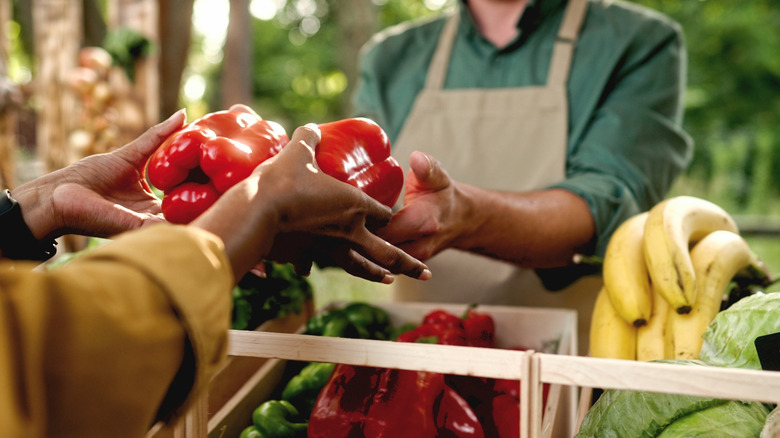
Large commercial farms sometimes interfere with natural growth cycles, distorting perceptions and lowering standards for supermarket shoppers. Ideally, you want to stick to the generally accepted average size for produce. This includes those that are naturally robust, according to Jane Olivia, who notes, "Larger vegetables like cabbage, squash, or eggplant can work well because they develop structure and depth without becoming tough."
It's worth specifying these standard expected sizes generally apply to supermarket and grocery-store produce. When shopping directly from farmers markets, the size equations can be slightly (or significantly) different. Many small farmers favor health-conscious growing standards for high-quality vegetable varieties. They're not necessarily bred for high yields and picture-perfect uniformity. As a result, these small growers can let the produce have a natural growth cycle. This means potentially letting them linger longer before harvest, during which time they flourish, develop deeper flavor, and, yes, get bigger, without sacrificing quality through artificial means. In this farmers market scenario, bigger really can mean better.
In the end, Jane advises that choosing produce based on size depends on how (and where) the vegetable grows and how you plan to use it. Additionally, it also helps to consider other quality factors, such as choosing the freshest produce at the grocery store.