

Tennessee Vs Irish Whiskey: What's The Difference?

Any bar worth its salt will usually have a bottle of Jameson or Jack Daniel's on display. If you're new to the world of whiskey, you'll probably look at both and assume the biggest difference is the brand, rather than anything else. But the reality is that Irish and Tennessee whiskey are two very distinct spirits — to the point where you can tell one from the other based solely on taste.
So what do you actually taste when you take a sip? When it comes to Tennessee whiskey, there's a deeper and more full-bodied flavor, with notes of caramel, oak, and vanilla. Irish whiskey, on the other hand, is smoother and mellower, with lighter notes of white fruit, honey, and vanilla. This is why Irish whiskey is considered the best option for beginners.
The reason for these different flavor profiles is partly thanks to the type of grain used. Tennessee whiskey is primarily made from at least 51% corn alongside a mix of other cereal grains like wheat, rye, and malted barley. Many popular Tennessee whiskeys also contain a higher percentage of corn in their mash bill, meaning they tend to be a little sweeter. Meanwhile, the foundation of Irish whiskey is malted barley, though some variations also include unmalted barley and other unmalted cereals. And while there are different types of Irish whiskey, the most ubiquitous is pot still whiskey, which is made from a minimum of 30% malted and 30% unmalted barley.
The proof is in the process
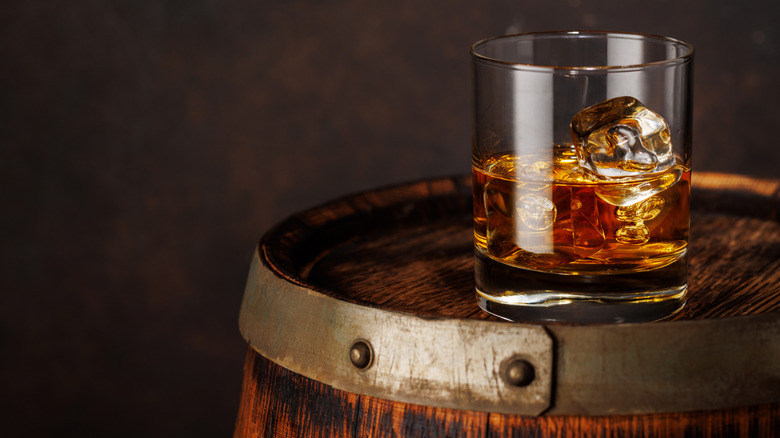
While the different grains help explain why these two whiskeys taste different, the way they're produced also impacts their flavor. When it comes to Irish whiskey, the process can vary depending on the distillery and style of whiskey. However, most are triple distilled in copper pot stills, with column stills sometimes used for grain whiskeys. The whiskey must then be aged for at least three years in wooden barrels under Irish law, and it's common for distilleries to use old bourbon or sherry casks. This triple distillation process creates a lighter, smoother whiskey by removing heavier compounds with every pot still pass, while the casks impart subtle flavor notes.
Meanwhile, Tennessee whiskey begins by combining its aforementioned mixture of corn and other cereal grains into what's known as a sour mash, which means the new batch contains a portion of previously fermented mash. But what makes Tennessee whiskey unique is what happens after the fermentation and distillation processes, as it goes through a special charcoal-filtration process known as the Lincoln County Process. Before the whiskey is aged in new, charred oak barrels, it'll be filtered through sugar maple charcoal chips. This gives it a more mellow and smoother flavor, while the aging gives it richness and depth.
Needless to say, there's a lot that goes into both Irish and Tennessee whiskey. But between the grains, distillation, and aging processes, it's clear the two couldn't be more different — and now you'll know excatly what to look for at the bar.