

The 130-Year-Old Alabama Roasters Where Waffle House Gets Its Coffee
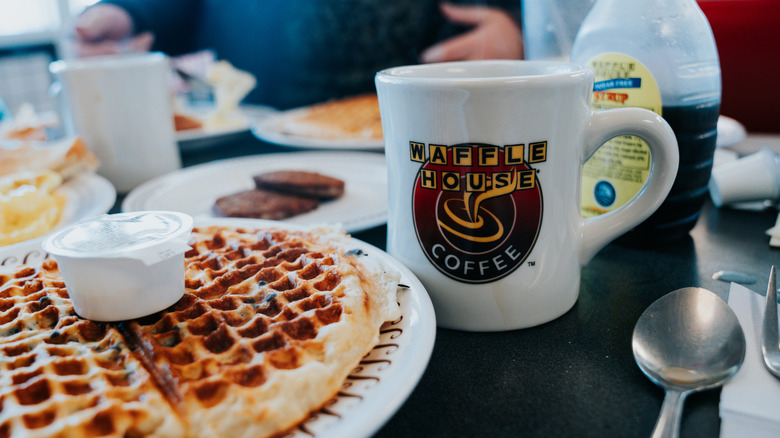
When settling into a booth at Waffle House, savoring a cup of steaming-hot coffee, you're cradling a legacy dating back 130 years. The story of that brew began long before the first Waffle House opened in 1955, dropping batter-to-griddle in Avondale Estates, Georgia. Decades earlier, in 1896, a coffee entrepreneur named Henry T. Battertonin began selling coffee in Birmingham, Alabama, peddling it to customers from his horse-drawn carriage. While perfecting his techniques and gaining loyal clientele, he formed what would later be called the Royal Cup Coffee and Tea company, an enterprise now scattering those well-known beans across the coffee landscapes of America — including the kitchens of 2000-plus Waffle House restaurants.
Royal Cup formed a solid, enduring coffee-supplier partnership with the burgeoning Waffle House chain of restaurants in 1977 — and the rest is java-and-waffle history. The long-brewing love affair between customers, Waffle House, and Royal Cup has been going strong now for five decades and counting. But Waffle House is certainly not the only clientele of Royal Cup; after well more than a century, its beans now bubble and brew in countless restaurants, hotels, offices, and specialty markets from coast to coast and into Mexico and the Caribbean.
In late 2025, an investment by Dallas-based Braemont Capital signaled potential change in the air for Royal Cup, but with a stated commitment to keeping the legacy and culture of the company intact. It still sells coffee, tea, juices, and beverage supplies such as condiments, water-filtration systems, and more.
About those coffee beans, love em or not
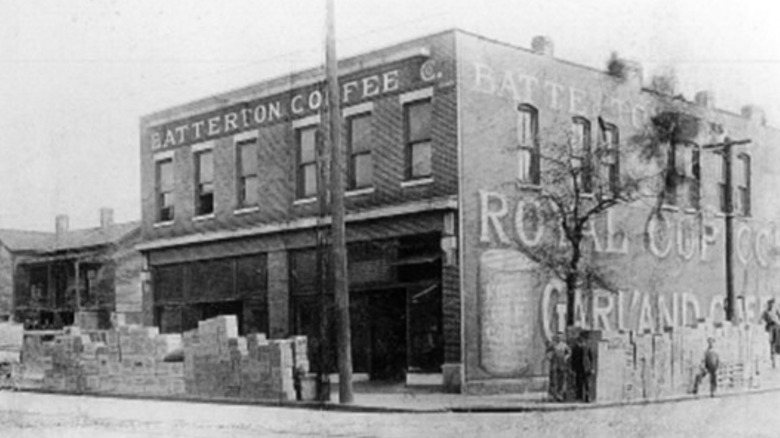
Of course, the real story of Waffle House coffee digs even deeper than its relationship with Royal Cup. It goes way back to the fertile volcanic soils where Royal Cup sources its beans, namely the family-owned coffee farms dotted across the coffee-producing regions of South and Central America. The high-grown, hand-picked Arabica beans make their way to Birmingham, where they're custom-roasted and blended for clients like Waffle House, including the 3 million-plus pounds of coffee beans per year for the Waffle House Classic Blend, Specialty Dark Roast, and Premium Decaf.
There's no question that Royal Cup is a major player in the world of coffee, but it's worth mentioning that some folks aren't big fans of Waffle House brews. Our own Tasting Table reviewers have been less than enthusiastic at times, including advice to avoid ordering the "merely-satisfactory" coffee. It also landed on our list of 10 dishes to avoid ordering at Waffle House, with a note that, depending on the individual Waffle House location, the coffee could feel watered down, bitter, or burnt. If you're a fan of high-end coffee shops and barista-made brews, you may have nuanced feelings about the cuppa joe at a waffle parlor.
That said, plenty of folks do stick by their love or nostalgia for Waffle House coffee, evidenced by the 58 million cups of it served every year. The chain also released a limited cold brew coffee in 2025, which comes canned and slightly sweetened with cream.