

Why Your Turkey Meatloaf Always Ends Up So Mushy
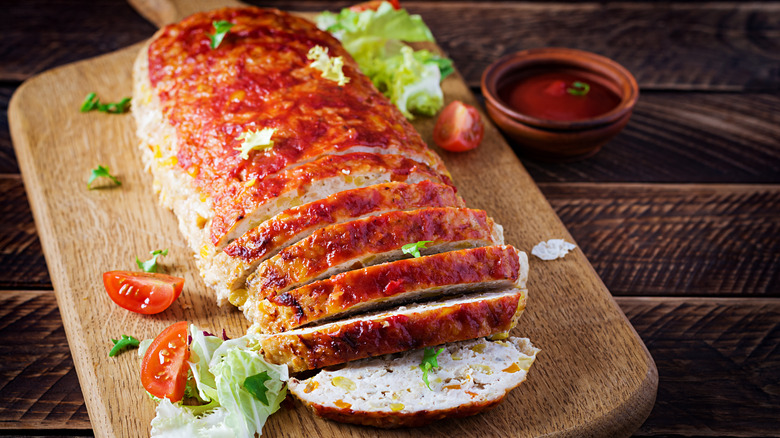
Classic meatloaf is made with ground beef, but the name itself invites you to use other meats. Any meat can be used in a meatloaf, but the recipe often needs adjustments to account for differences in fat, flavor, and moisture. Turkey is a great option for those who avoid beef, want leaner meat, or simply prefer the way it tastes. Because turkey has a different fat ratio than beef, the amount of filler often needs adjustment, which can sometimes lead to mush. If your turkey meatloaf consistently turns out mushy, excess liquid may be part of the problem, but the type or amount of bread you use can also play a role.
Because it has little fat, the moisture in turkey meatloaf is mostly controlled by what you add to it. We've addressed some of the differences between ground turkey and ground beef in the past. Turkey also has a different texture and consistency from beef, so fillers like bread are needed to help bind it. Fresh bread has a much higher moisture content than stale bread or dried breadcrumbs. That means your end product can be mushier even if you follow the recipe exactly. Because ground turkey is more crumbly than ground beef, it doesn't have that structure that you'd expect from a beef meatloaf. Even the ultimate turkey meatloaf recipe can go wrong if you use fresh bread instead of a drier option.
Don't be chicken to use turkey
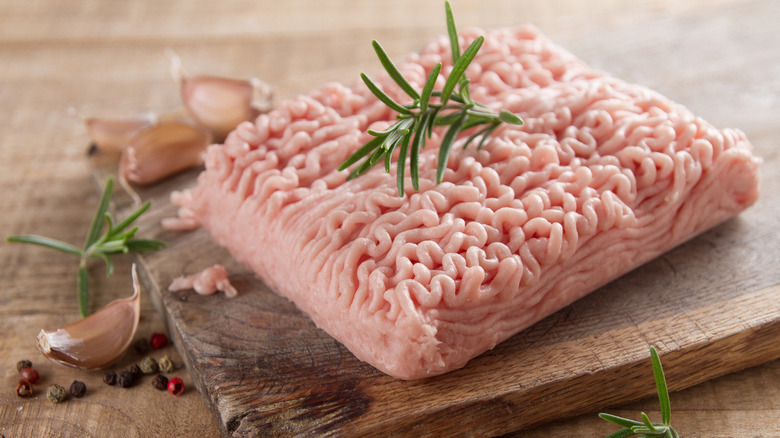
The ideal meat-to-fat ratio for ground beef meatloaf is about 80% meat to 20% fat. Ground turkey is most often sold as 93% meat and 7% fat, so right away adjustments need to be made. You can get ground turkey and ground beef at the same percentages, but they're harder to find.
When you're adding breadcrumbs and milk to turkey meatloaf, if your ratio is off, the cooked loaf can end up too moist and mushy even without the use of fresh bread. The purpose of breadcrumbs is not just to add flavor and texture, but also to help retain moisture. Meat is not very good at holding moisture. That is why dryness is a constant risk in many cooking methods. Breadcrumbs hold liquid, but if there are too many, the liquid will not evaporate as intended. Instead of a tender and moist meatloaf, you get a mushy one.
There are a few ways to combat mushiness in your meatloaf if it's caused by the bread. First of all, don't use fresh bread if the recipe doesn't specifically ask for it. Stick with dried breadcrumbs that provide the right moisture retention. If it still comes out mushy, you can reduce the breadcrumbs slightly, but doing so risks losing structure and causing it to fall apart.
One option is to try changing not what goes into the meatloaf but what the meatloaf goes into. If you're cooking your meatloaf in a loaf pan, there's nowhere for excess moisture to go. Try making a freeform meatloaf on a sheet pan instead. Excess moisture can then run off, and you might end up with a better texture and moisture level. Just make sure you never skip the bread entirely.