

The Jarred Ingredient You Need For An Easier Homemade Chili
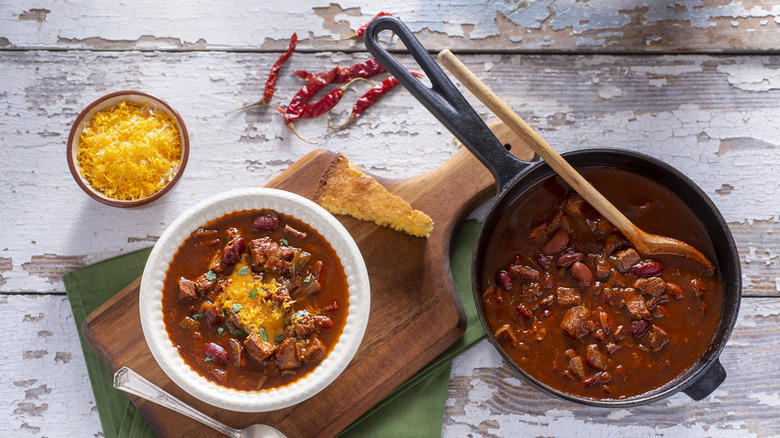
Cold, blustery winter days were made for chili. This incredibly versatile and flavorful dish is warming for both the body and the soul and can be brought together in virtually no time at all. That being said, we're always looking for shortcuts that cut down on the time it takes to make dinner while simultaneously boosting the dish's heartiness, which is precisely why we like adding jarred salsa to our favorite chili recipe.
It might seem a bit odd to crack open this condiment, which is a staple on taco nights and with a side of chips, and add it to your chili as it cooks, but it does make for a filling and flavorful upgrade. Salsas have some of the same ingredients as chili, namely jalapeños, tomatoes, onions, and spice, and you may not even know that your chili has been kissed by this Tex-Mex essential because it blends in so seamlessly.
The amount of salsa you'll want to add to your recipe depends on the amount that you're making and how prominent you want its flavor to be. You may be able to get away with adding anywhere between a cup and 2 cups to your recipe. Start with a 16-ounce can of salsa for each pound of meat and adjust from there.
Chunky, restaurant-style, pico, and everything in between
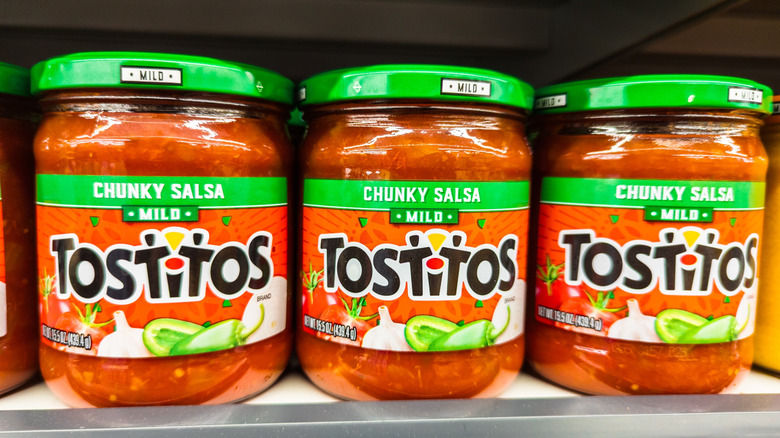
If you want to make a high-quality chili, you'll want to start with a high-quality salsa. When one of our writers did a tasting of the jarred salsa brands, they ruled Mi Rancho, Desert Pepper Trading Co., and 365 by Whole Foods Market the tastiest of the bunch.
That being said, you may also want to select a salsa for your recipe based on its texture. There are many salsa types to choose from; go for a chunky tomato salsa if you prefer a chili with pieces in it, or opt for a restaurant-style salsa if you prefer something that blends in better with the beans and the meat.
You'll also want to go about selecting a good recipe to pair with your salsa. For example, if you try a smoked turkey chili, you'll want to opt for a salsa that meshes well with the existing spice notes, whereas if you make a white chicken chili, you may want to go with a mild tomatillo-based salsa to not override the flavor of the chicken.