

The Type Of Grits Most Often Used In Southern Cooking
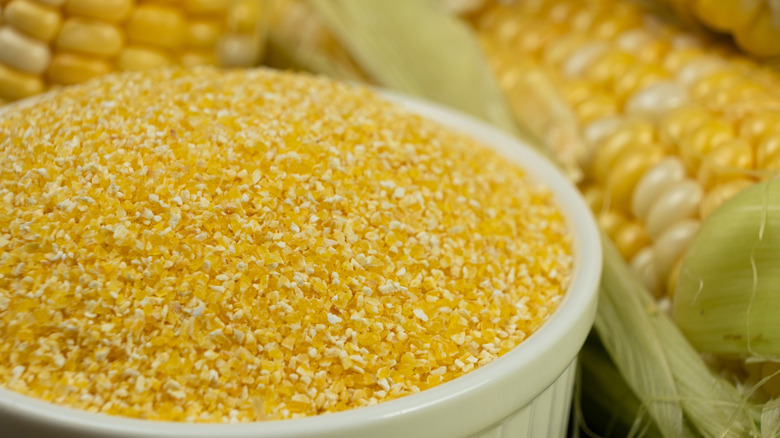
You've probably read the word "gritty" somewhere — it might even be in your personal vocabulary. Fun fact: It shares roots with a simple, but nourishing food that had fed Southerners for generations. It's a good thing that this culinary staple is still around today (despite being a mystery to anyone north of Virginia), and if you're interested in making a bowl of classic creamy grits for yourself, start by finding some authentic grits.
Ask any Southern cook, and they'll tell you there's only one kind worth cooking: Corn crushed between granite millstones — each stone weighing upward of 2,000 pounds — which produces an irregular, textured grain called stone-ground grits. The instant varieties filling grocery aisles just don't compare. Stone-ground grits preserve the corn's natural sweetness, subtle earthiness, and that substantive bite you won't find in processed versions. The grinding takes time. The cooking takes time. But that's how flavor gets built into every bowl.
What sets stone-ground apart is that nothing gets stripped away. You're getting the whole story of the corn in every spoonful, which is why they've defined Southern breakfast tables for centuries and why chefs across the country keep coming back to them.
How's stone-ground grits versus hominy grits?
Beyond stone-ground grits, you may also run into hominy grits or quick-cooking varieties at the supermarket. They cook in less than ten minutes, but you're trading speed for flavor. Both are heavily processed — hominy especially, since it's made by soaking corn in an alkaline bath until the hull slides away, then grinding the dried kernels into powder. What you get is thin and forgettable, the kind of breakfast that needs plenty of butter or cheese before it registers as food. The alkaline treatment speeds things up, sure, but it also strips away the corn's actual taste and leaves you with something closer to library paste than a proper Southern breakfast.
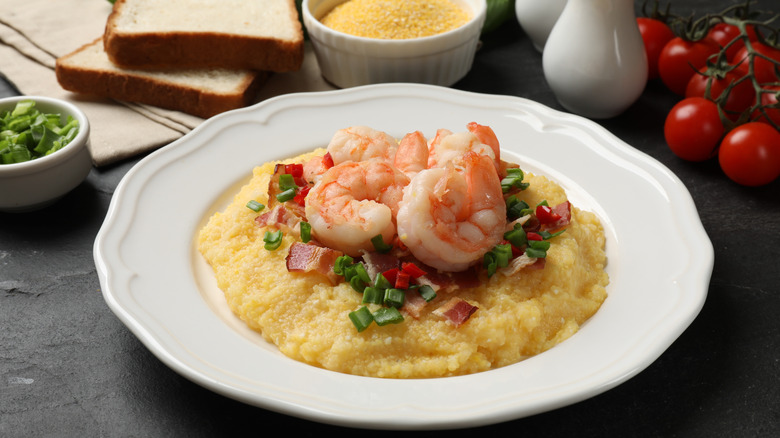
Stone-ground grits operate differently, and the difference shows up in your bowl. Plan on 20 to 45 minutes at the stove, stirring now and then. That's a genuine time investment, especially before your first cup of coffee. But what comes out of that pot has presence — a slightly rough texture that doesn't dissolve into paste, and a sweet corn flavor that's there because the germ never got removed. The whole kernel gets ground together, which means you're tasting everything: The starchy body, the sweet germ, even subtle earthy notes that instant versions completely miss. Eat them with just salt and butter and you'll be satisfied, or top them with garlicky shrimp and watch them hold up under bold seasonings. One kind fills the bowl. The other kind fills the bowl with something you actually want to eat.